


Güde - Santoku 14 cm Kulle - Serie Alpha - with cuts - The knife of the three virtues: fish, meat and vegetables. Blade length: 14 cm Blade: high carbon-chromiumvanadium, stainless, icehardened, hand ground cutting edge. Handle: Hostaform, mirror polished. Quality - Made in Germany - Solingen. The Alpha Series knives begin as a single piece of specially alloyed Chrome-Vanadium-Moly cutlery steel. Each knife is hand forged and continues through more than thirty separate steps in the production process before completion. The finely polished grips are made from a robust, long-lasting plastic called Hostaform. Ice hardened stainless steel, hand sharpened and dishwasher safe! The Alpha Series knives are manufactured in accordance with the standards for use in restaurants and the food processing industry and offer the widest model range of any Güde Knife Series. Ice hardened stainless steel; hand sharpened – not for the dishwasher!

Güde - Santoku 18 cm - Serie Alpha - The knife of the three virtues: fish, meat and vegetables. Blade length: 18 cm Blade: high carbon-chromiumvanadium, stainless, icehardened, hand ground cutting edge. Handle: Hostaform, mirror polished. Quality - Made in Germany - Solingen. The Alpha Series knives begin as a single piece of specially alloyed Chrome-Vanadium-Moly cutlery steel. Each knife is hand forged and continues through more than thirty separate steps in the production process before completion. The finely polished grips are made from a robust, long-lasting plastic called Hostaform. Ice hardened stainless steel, hand sharpened and dishwasher safe! The Alpha Series knives are manufactured in accordance with the standards for use in restaurants and the food processing industry and offer the widest model range of any Güde Knife Series. Ice hardened stainless steel; hand sharpened – not for the dishwasher!

Güde - Santoku 18 cm - Serie Alpha - This knife is designed with indents so virtually nothing sticks to the blade, making it ideal for vegetables, fish and meats. The perfect knife for chopping vegetables and raw meat, also suitable for roasts and fish. For the most delicate filleting and artistic presentation.Blade length: 18 cm (7,5")Blade: high carbon-chromiumvanadium, stainless, icehardened, hand ground cutting edge.Handle: olive wood, aluminum rivets Quality - Made in Germany - Solingen.The handles of the Alpha Olive series are made from selected olive wood that is up to 500 years old. The wood of the olive is very hard and weatherproof. This makes this wood the ideal material for knife handles. The strong grain and the distinctive light-dark effects of the olive wood make each knife an elegant one-of-a-kind.

Güde - Santoku 18 cm fluted - Serie Alpha - This knife is designed with indents so virtually nothing sticks to the blade, making it ideal for vegetables, fish and meats. The perfect knife for chopping vegetables and raw meat, also suitable for roasts and fish. For the most delicate filleting and artistic presentation. Blade length: 18 cm (7,5") Blade: high carbon-chromiumvanadium, stainless, icehardened, hand ground cutting edge. Handle: Hostaform, mirror polished. Quality - Made in Germany - Solingen. The Alpha Series knives begin as a single piece of specially alloyed Chrome-Vanadium-Moly cutlery steel. Each knife is hand forged and continues through more than thirty separate steps in the production process before completion. The finely polished grips are made from a robust, long-lasting plastic called Hostaform. Ice hardened stainless steel, hand sharpened and dishwasher safe! The Alpha Series knives are manufactured in accordance with the standards for use in restaurants and the food processing industry and offer the widest model range of any Güde Knife Series. Ice hardened stainless steel; hand sharpened – not for the dishwasher!

Güde - Santoku with Kulle - Alpha Olive series - Blade length: 14 cm Blade: Chrome-vanadium-molybdenum, stainless, ice-hardened, hand-sharpened. Handle: Olive wood, aluminum rivets Quality - Made in Germany - Solingen. The handle scales of the Alpha Olive series are made from selected olive wood that is up to 500 years old. The olive wood is very hard and weatherproof. This makes this wood the ideal material for knife handles. The strong grain and the distinctive light-dark effects of the olive wood make each knife an elegant, unique piece. Güde. No compromises for four generations. The classic knife shapes that were optimized in the 1930s are both timeless and contemporary. Today, in a time in which uncompromising craftsmanship is again enjoying a much higher priority, in which originality and natural taste are again decisive criteria when choosing food, at this time the knives from Güde are finding numerous fans. p> Still among professionals, but increasingly also among ambitious hobby chefs. However, even in the fourth generation, this does not change the company principle: Güde produces forged knives by hand in small quantities.

Güde - Sharpening steel 26 cm - Serie Alpha - Ideal for sharpening your Güde knife. Length: 26 cm Blade: high carbon-chromiumvanadium, stainless, icehardened, hand ground cutting edge. Handle: Hostaform, mirror polished. Quality - Made in Germany - Solingen. The Alpha Series knives begin as a single piece of specially alloyed Chrome-Vanadium-Moly cutlery steel. Each knife is hand forged and continues through more than thirty separate steps in the production process before completion. The finely polished grips are made from a robust, long-lasting plastic called Hostaform. Ice hardened stainless steel, hand sharpened and dishwasher safe! The Alpha Series knives are manufactured in accordance with the standards for use in restaurants and the food processing industry and offer the widest model range of any Güde Knife Series. Ice hardened stainless steel; hand sharpened – not for the dishwasher!

Güde - Sharpening steel 26 cm - Serie Kappa - Ideal for sharpening your Güde knife. Blade length: 26 cm Blade: high carbon-chromiumvanadium, stainless, icehardened, hand ground cutting edge. Quality - Made in Germany - Solingen. The Kappa Series knives begin as a single piece of specially alloyed Chrome-Vanadium-Moly cutlery steel. Each knife is hand forged and continues through more than thirty separate steps in the production process before completion. Each knife is fully stainless, ice hardened and dishwasher safe. The Kappa knives are crafted entirely of steel – including the grips – which gives these knives an ideal weight distribution and balance in the hand. Our traditional production process and the innovative design of the Kappa Series were acknowledged by the Red Dot Design Award

Güde - Slicing knife 16 cm - Serie Kappa - Slicing delicate fish or preparing carpaccio - it´s easier with this extra thin blade. Blade length: 16 cm / 6" Blade: high carbon-chromiumvanadium, stainless, icehardened, hand ground cutting edge. Quality - Made in Germany - Solingen. The Kappa Series knives begin as a single piece of specially alloyed Chrome-Vanadium-Moly cutlery steel. Each knife is hand forged and continues through more than thirty separate steps in the production process before completion. Each knife is fully stainless, ice hardened and dishwasher safe. The Kappa knives are crafted entirely of steel – including the grips – which gives these knives an ideal weight distribution and balance in the hand. Our traditional production process and the innovative design of the Kappa Series were acknowledged by the Red Dot Design Award
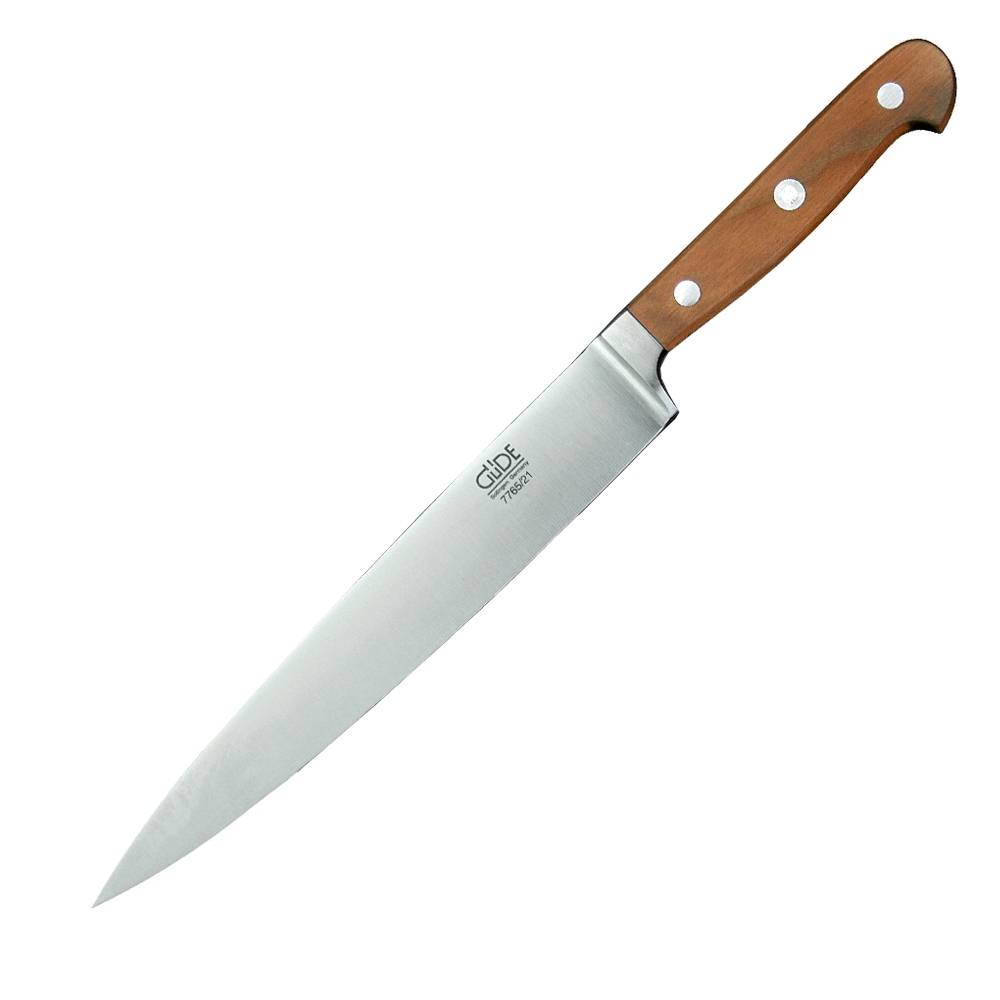
Güde - Slicing Knife 21 cm - Series Franz Güde - Filleting delicate fish or preparing carpaccio - it´s easier with this extra thin blade. Blade length: 21 cm (9") Blade: high carbon-chromiumvanadium, stainless, icehardened, hand ground cutting edge. Handle: stain plum wood, mirror polished. Quality - Made in Germany - Solingen. Named for the inventor of the "Güde serrated blade", the Franz Güde Series knives are handcrafted from stainless cutlery steel and feature grips made from fine plum wood in the timeless, traditional style of the early Güde knives. Ice hardened stainless steel; hand sharpened – not for the dishwasher!

Güde - Spitknife 10 cm - Alpha - For picking meat, but also for peeling and cutting fruit and vegetables. Blade length: 10 cm Blade: high carbon-chromiumvanadium, stainless, icehardened, hand ground cutting edge. Handle: Hostaform, mirror polished. Quality - Made in Germany - Solingen. The Alpha Series knives begin as a single piece of specially alloyed Chrome-Vanadium-Moly cutlery steel. Each knife is hand forged and continues through more than thirty separate steps in the production process before completion. The finely polished grips are made from a robust, long-lasting plastic called Hostaform. Ice hardened stainless steel, hand sharpened and dishwasher safe! The Alpha Series knives are manufactured in accordance with the standards for use in restaurants and the food processing industry and offer the widest model range of any Güde Knife Series. Ice hardened stainless steel; hand sharpened – not for the dishwasher!

Güde - Spitknife 10 cm - Serie Alpha Pear - For picking meat, but also for peeling and cutting fruit and vegetables. Blade length: 10 cm Blade: high carbon-chromiumvanadium, stainless, icehardened, hand ground cutting edge. Handle: Pearwood, mirror polished. Quality - Made in Germany - Solingen. This series was created on the occasion of Güde joining the circle of preferred suppliers for the German chapter of the Jeunes Restaurateurs d‘Europe. The blade is hand-forged in a single piece from chromium-vanadium-molybdenum knife steel, worked manually in more than 40 individual steps. The handle is made of finely structured, velvety pear wood. Ice-hardened stainless steel, sharpened by hand. The handle is not dishwasher safe.

Güde - Spitknife 13 cm - Serie Alpha Pear - For picking meat, but also for peeling and cutting fruit and vegetables. Blade length: 13 cm Blade: high carbon-chromiumvanadium, stainless, icehardened, hand ground cutting edge. Handle: Pearwood, mirror polished. Quality - Made in Germany - Solingen. This series was created on the occasion of Güde joining the circle of preferred suppliers for the German chapter of the Jeunes Restaurateurs d‘Europe. The blade is hand-forged in a single piece from chromium-vanadium-molybdenum knife steel, worked manually in more than 40 individual steps. The handle is made of finely structured, velvety pear wood. Ice-hardened stainless steel, sharpened by hand. The handle is not dishwasher safe.

Güde - Spitknife 8 cm - Alpha - For picking meat, but also for peeling and cutting fruit and vegetables. Blade length: 8 cm Blade: high carbon-chromiumvanadium, stainless, icehardened, hand ground cutting edge. Handle: Hostaform, mirror polished. Quality - Made in Germany - Solingen. The Alpha Series knives begin as a single piece of specially alloyed Chrome-Vanadium-Moly cutlery steel. Each knife is hand forged and continues through more than thirty separate steps in the production process before completion. The finely polished grips are made from a robust, long-lasting plastic called Hostaform. Ice hardened stainless steel, hand sharpened and dishwasher safe! The Alpha Series knives are manufactured in accordance with the standards for use in restaurants and the food processing industry and offer the widest model range of any Güde Knife Series. Ice hardened stainless steel; hand sharpened – not for the dishwasher!

Güde - Spitknife 8 cm- Alpha Olive - For picking meat, but also for peeling and cutting fruit and vegetables.Blade length: 8 cmBlade: high carbon-chromiumvanadium, stainless, icehardened, hand ground cutting edge.Handle: Olive woodQuality - Made in Germany - Solingen.The blade made of chrome-vanadium-molybdenum knife steel is forged by hand from one piece of steel. In over 40 additional manual operations, it becomes a unique piece of Solingen knife-making art. The handles made of finely structured, velvety olive wood should not be put in the dishwasher. The blade is rust-free, ice-hardened and of course hand-sharpened.Ice hardened stainless steel; hand sharpened – not for the dishwasher!

Güde - Steak knife 12 cm - Alpha - Cuts steaks and roasts effortlessly and smoothly. Blade length: 12 cm Blade: high carbon-chromiumvanadium, stainless, icehardened, hand ground cutting edge. Handle: Hostaform, mirror polished. Quality - Made in Germany - Solingen. The Alpha Series knives begin as a single piece of specially alloyed Chrome-Vanadium-Moly cutlery steel. Each knife is hand forged and continues through more than thirty separate steps in the production process before completion. The finely polished grips are made from a robust, long-lasting plastic called Hostaform. Ice hardened stainless steel, hand sharpened and dishwasher safe! The Alpha Series knives are manufactured in accordance with the standards for use in restaurants and the food processing industry and offer the widest model range of any Güde Knife Series. Ice hardened stainless steel; hand sharpened – not for the dishwasher!

With the special GÜDE serrated edge, bread is sawn and not crushed. We revolutionised cutting with THE KNIFE. We are continuing the evolution with SYNCHROS! The name says it all – SYNCHROS synchronises the hand and knife and enables a flexible gripping position for universal use thanks to its innovative design. A totally new cutting experience. Innovative handle design Cutting-edge higher gripping position Always the same handle size Continuous shank underneath Convex solid smoked oak wooden handle Smooth transition between the handle and blade Forged from one piece Ground blade on bolster Slightly curved grind Blade length: 32 cm Handle: Smoked oak Blade: high carbon-chromiumvanadium, stainless, icehardened, hand ground cutting edge. Quality - Made in Germany - Solingen.

With a slim, semi-flexible blade. For all applications of a classic fillet or carving knife. We revolutionised cutting with THE KNIFE. We are continuing the evolution with SYNCHROS! The name says it all – SYNCHROS synchronises the hand and knife and enables a flexible gripping position for universal use thanks to its innovative design. A totally new cutting experience. Innovative handle design Cutting-edge higher gripping position Always the same handle size Continuous shank underneath Convex solid smoked oak wooden handle Smooth transition between the handle and blade Forged from one piece Ground blade on bolster Slightly curved grind Blade length: 26 cm Handle: Smoked oak Blade: high carbon-chromiumvanadium, stainless, icehardened, hand ground cutting edge. Quality - Made in Germany - Solingen.

For all applications of a classic chef’s knife, santoku or herb knife. We revolutionised cutting with THE KNIFE. We are continuing the evolution with SYNCHROS! The name says it all – SYNCHROS synchronises the hand and knife and enables a flexible gripping position for universal use thanks to its innovative design. A totally new cutting experience. Innovative handle design Cutting-edge higher gripping position Always the same handle size Continuous shank underneath Convex solid smoked oak wooden handle Smooth transition between the handle and blade Forged from one piece Ground blade on bolster Slightly curved grind Blade length: 23 cm Handle: Smoked oak Blade: high carbon-chromiumvanadium, stainless, icehardened, hand ground cutting edge. Quality - Made in Germany - Solingen.

With a pointed blade. To be used like a chef’s knife, paring knife, tomato knife or chef’s paring knife and also ideal for small hands. The innovative design allows the hobby chef "The Knife" to automatically grab you like a professional chef. Thumb and forefinger form a U and surely cover the blade. The middle finger is conveniently "parked" in the finely machined bulge at the end of the blade. We revolutionised cutting with THE KNIFE. We are continuing the evolution with SYNCHROS! The name says it all – SYNCHROS synchronises the hand and knife and enables a flexible gripping position for universal use thanks to its innovative design. A totally new cutting experience. Innovative handle design Cutting-edge higher gripping position Always the same handle size Continuous shank underneath Convex solid smoked oak wooden handle Smooth transition between the handle and blade Forged from one piece Ground blade on bolster Slightly curved grind Blade length: 14 cm Handle: Smoked oak Blade: high carbon-chromiumvanadium, stainless, icehardened, hand ground cutting edge. Quality - Made in Germany - Solingen.

The traditional Solingen factory GÜDE has looked the chefs on the finger and "reinvented" the chef's knife with "The Knife". The innovative design allows the hobby chef "The Knife" to automatically grab you like a professional chef. Thumb and forefinger form a U and surely cover the blade. The middle finger is conveniently "parked" in the finely machined bulge at the end of the blade. So the center of gravity lies perfectly inside the hand and ensures fatigue-free working. No transition disturbs, all lines are fluent. This automatically guarantees always the right grip position and a pleasant hand rest. A breathtakingly beautiful chef's knife forged from one piece. Blade length: 26 cm Handle: barrel oak Blade: high carbon-chromiumvanadium, stainless, icehardened, hand ground cutting edge. Quality - Made in Germany - Solingen.

The traditional Solingen factory GÜDE has looked the chefs on the finger and "reinvented" the chef's knife with "The Knife". The innovative design allows the hobby chef "The Knife" to automatically grab you like a professional chef. Thumb and forefinger form a U and surely cover the blade. The middle finger is conveniently "parked" in the finely machined bulge at the end of the blade. So the center of gravity lies perfectly inside the hand and ensures fatigue-free working. No transition disturbs, all lines are fluent. This automatically guarantees always the right grip position and a pleasant hand rest. A breathtakingly beautiful chef's knife forged from one piece. Blade length: 26 cm Handle: Grenadilla Blade: Damascus steel, hand forged, over 300 layers Quality - Made in Germany - Solingen.

Güde - Tomato Knife 13 cm - Kappa Series - For larding meat, but also for peeling and cutting fruit and vegetables. Blade Length: 13 cm - Serrated Edge Blade: Chrome-vanadium-molybdenum, rustproof, ice-hardened, hand-sharpened. Handle: Chrome-vanadium-molybdenum, rustproof, ice-hardened Quality - Made in Germany - Solingen. The knives in the Kappa series are hand-forged from a single piece of chrome-vanadium-molybdenum knife steel and then finished in over 30 manual steps. They are rust-proof, ice-hardened, and dishwasher-safe, and their solid metal construction offers unique weight distribution and balance. The traditional manufacturing process and innovative, high-quality design earned the Kappa series the Red Dot Design Award. Güde. No compromises for four generations. The classic knife shapes, optimized in the 1930s, are both timeless and contemporary. Today, in an era when uncompromising craftsmanship is once again enjoying much greater importance, when authenticity and natural flavor are once again decisive criteria when choosing food, Güde knives have found numerous fans. They are still among professionals, but increasingly also among ambitious home cooks. However, even in the fourth generation, this doesn't change the company's principle: Güde produces forged knives by hand in small batches.

Güde - Tomato knife 13 cm - Serie Alpha Olive - For picking meat, but also for peeling and cutting fruit and vegetables.Blade length: 13 cm - serrated edgeBlade: high carbon-chromiumvanadium, stainless, icehardened, hand ground cutting edge.Handle: pear wood, aluminum rivets, dishwasher safe.Quality - Made in Germany - Solingen.The handles of the Alpha Olive series are made from selected olive wood that is up to 500 years old. The wood of the olive is very hard and weatherproof. This makes this wood the ideal material for knife handles. Due to the strong grain and the distinctive light-dark effects of the olive wood, each knife is an elegant one-of-a-kind.

Güde - Tomato knife 13 cm - Serie Alpha Pear - For picking meat, but also for peeling and cutting fruit and vegetables. Blade length: 13 cm - serrated edge Blade: high carbon-chromiumvanadium, stainless, icehardened, hand ground cutting edge. Handle: Pearwood, mirror polished. Quality - Made in Germany - Solingen. This series was created on the occasion of Güde joining the circle of preferred suppliers for the German chapter of the Jeunes Restaurateurs d‘Europe. The blade is hand-forged in a single piece from chromium-vanadium-molybdenum knife steel, worked manually in more than 40 individual steps. The handle is made of finely structured, velvety pear wood. Ice-hardened stainless steel, sharpened by hand. The handle is not dishwasher safe.

Güde - universal knife 10 cm - olive Blade length: 10 cm Blade: Stainless special knife steel, ice-hardened, double-sided hollow grinding with fine teeth Handle: Olive wood, aluminum rivets Quality - Made in Germany - Solingen. Güde. No compromises for four generations. The classic knife shapes, which were optimized in the 1930s, are both timeless and contemporary. Today, in a time in which uncompromising craftsmanship is again enjoying a much higher priority, in which originality and natural taste are again decisive criteria when choosing food, at this time the knives from Güde are finding numerous fans. Still among professionals, but increasingly also among ambitious amateur chefs. However, even in the fourth generation, this does not change the company principle: Güde produces forged knives by hand in small quantities.

Güde - universal knife 10 cm Blade length: 10 cm Blade: Stainless special knife steel, ice-hardened, double-sided hollow grinding with fine teeth Handle: Black/white plastic, aluminum rivets Quality - Made in Germany - Solingen. Güde. No compromises for four generations. The classic knife shapes, which were optimized in the 1930s, are both timeless and contemporary. Today, in a time in which uncompromising craftsmanship is again enjoying a much higher priority, in which originality and natural taste are again decisive criteria when choosing food, at this time the knives from Güde are finding numerous fans. Still among professionals, but increasingly also among ambitious amateur chefs. However, even in the fourth generation, this does not change the company principle: Güde produces forged knives by hand in small quantities.

Güde - Utility knife 16 cm - Alpha - The all-rounder in the kitchen. Blade length: 16 cm Blade: high carbon-chromiumvanadium, stainless, icehardened, hand ground cutting edge. Handle: Hostaform, mirror polished. Quality - Made in Germany - Solingen. The Alpha Series knives begin as a single piece of specially alloyed Chrome-Vanadium-Moly cutlery steel. Each knife is hand forged and continues through more than thirty separate steps in the production process before completion. The finely polished grips are made from a robust, long-lasting plastic called Hostaform. Ice hardened stainless steel, hand sharpened and dishwasher safe! The Alpha Series knives are manufactured in accordance with the standards for use in restaurants and the food processing industry and offer the widest model range of any Güde Knife Series. Ice hardened stainless steel; hand sharpened – not for the dishwasher!

perfect complement to mono concavePure vegetable produced and processed ecologicallyfor indoors and outdoors700 MLPlease note that due to the risk class of this item international shipping can not be guaranteed. We will contact you if necessary.

The citro orange peeler is a graceful tool for a mundane task. Score the orange peel into segments, and with the angled blade lift and remove the strips. Go for the vitamins!Material stainless steel brushed 18/10dimension 10,3 cm

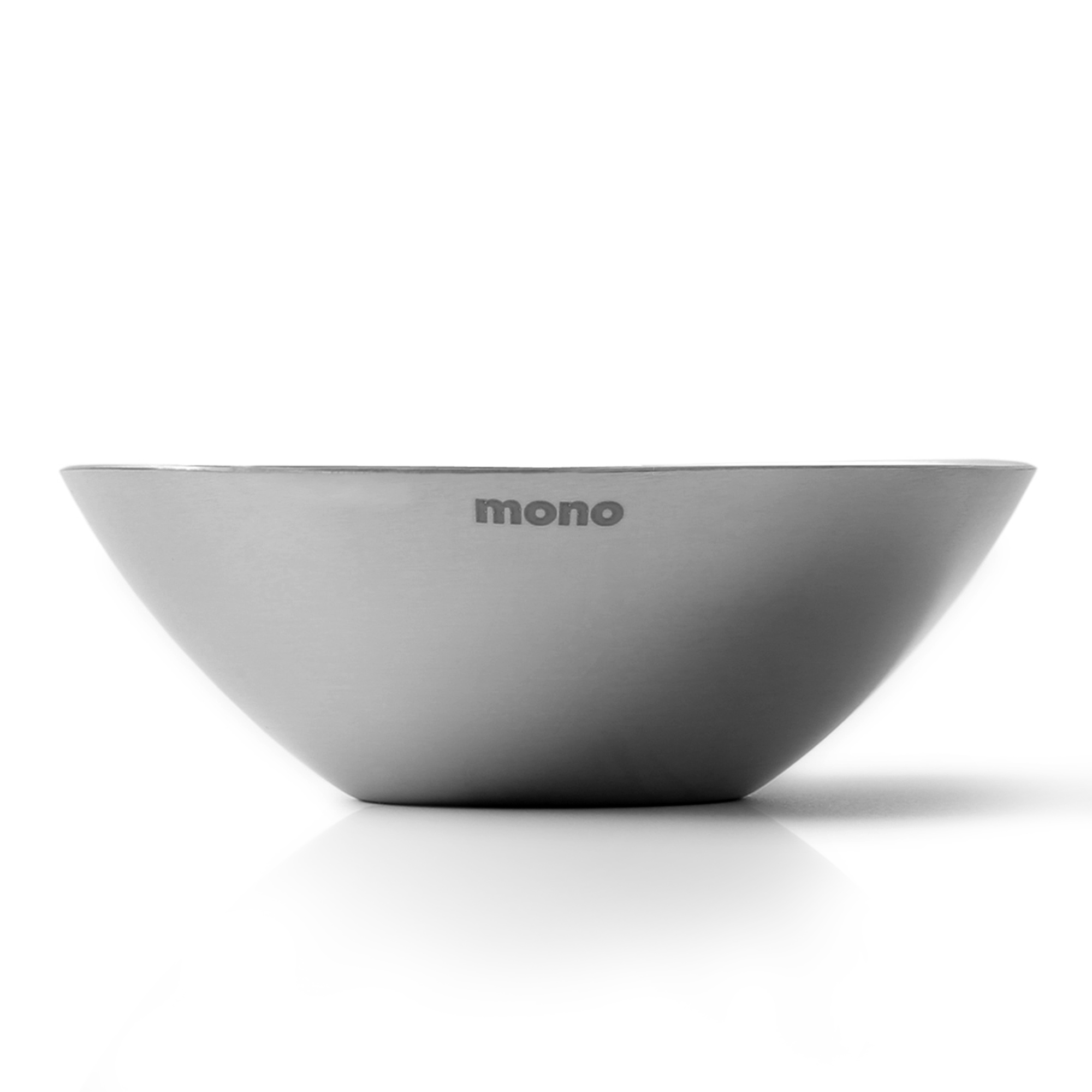
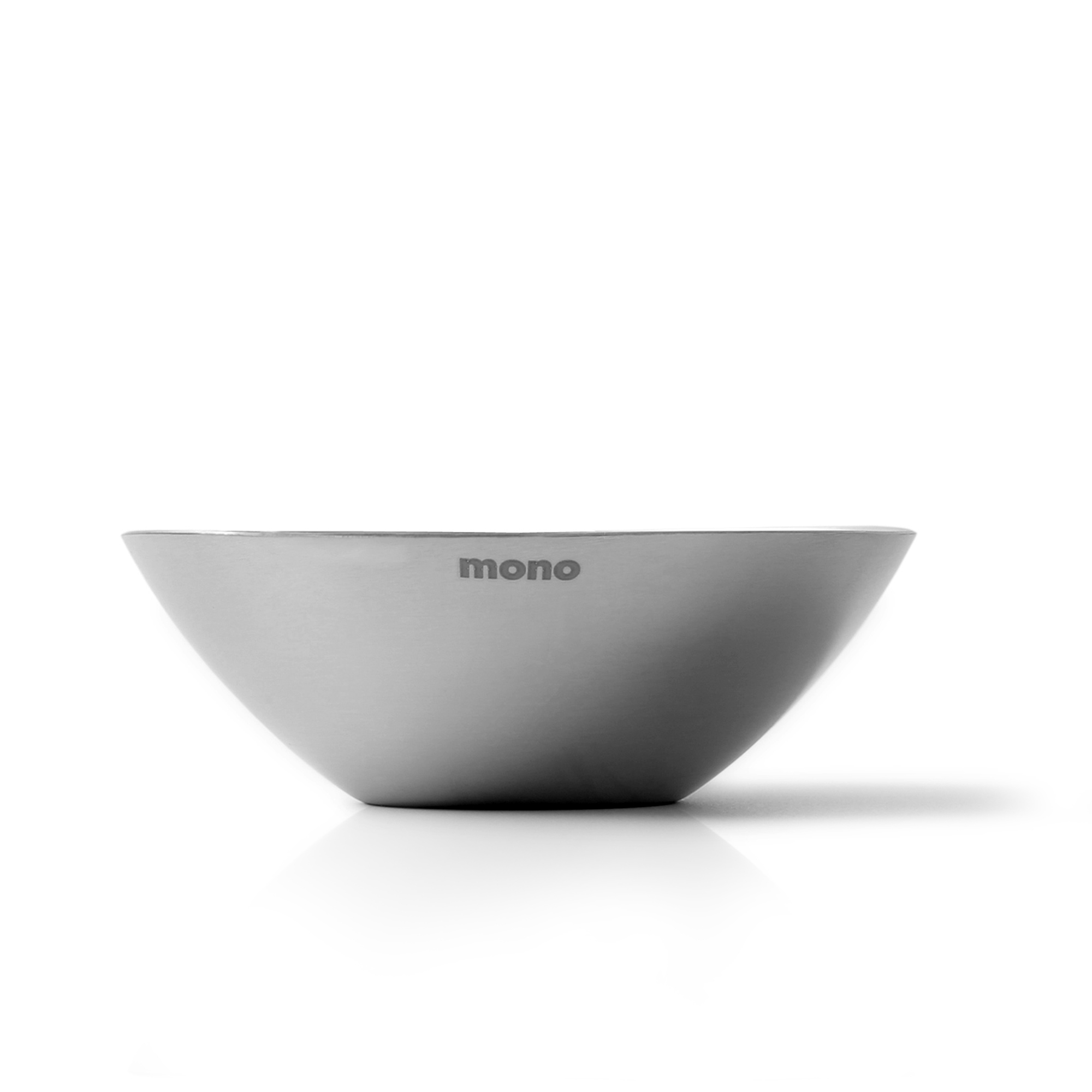
A flame - fed by oil lamp - hovering over a bowl brushed stainless steel. Your reflection immerses the entire room in a soft light. The art object is lovingly made in the mono-Manufaktur.Forget the time and enjoy the atmosphere à la concave - alone, in pairs or with our guest.Material stainless steel brushed 18/1013 cmDesign: Franz MaurerFranz Maurer, 42 lives and works as an independent designer in Vienna, Austria. He literally approaches his tasks from the ground on up. He researches materials, and their functionality. His works are expressive of a clear and functional interpretation of form. He takes most of his materials from the industrial world and expands their use to new applications. His concepts are always catalytic and thought provoking. His focus tends to be on product development, presentation and design of light and objects for good living.Some of his clients include: anthologie quartett,, artificial, Ingo Maurer, IRIS, Raunmgestaltd.Since 1959 mono’s goal has been to develop designer products that follow no trend, they simply outlast all trends. Striving to produce items that do not decorate but function and have the highest standards of production, material and origin.This has not been a rare occurrence. mono products have become part of permanent museum collections of modern and applied art. mono friends elicit pleasure on a daily basis.The mono manufactory is in the North Rhine-Westphalian town of Mettmann. That is where Wilhelm Seibel I set the cornerstone, in 1895 with the founding of the Britanniawarenfabrik W. Seibel – the basis for the family enterprise, which today is led by the 5th generation. In 1959 the brand mono was established with the introduction of mono-a.Much has changed since then, and much has remained the same in the production process at mono. With stubborn dedication traditional processes were kept under the belief that manual know how, the human eye and high end materials actually do make a difference.Some 30 steps are used until the final flatware product is finished. The product is under constant evaluation, and only then and when the final touch is made, and perfection is reached, is the product released from the manufactory.Many mono products (partially several times) have been recipients of awards, and are in the permanent collection of museums of modern and applied art.
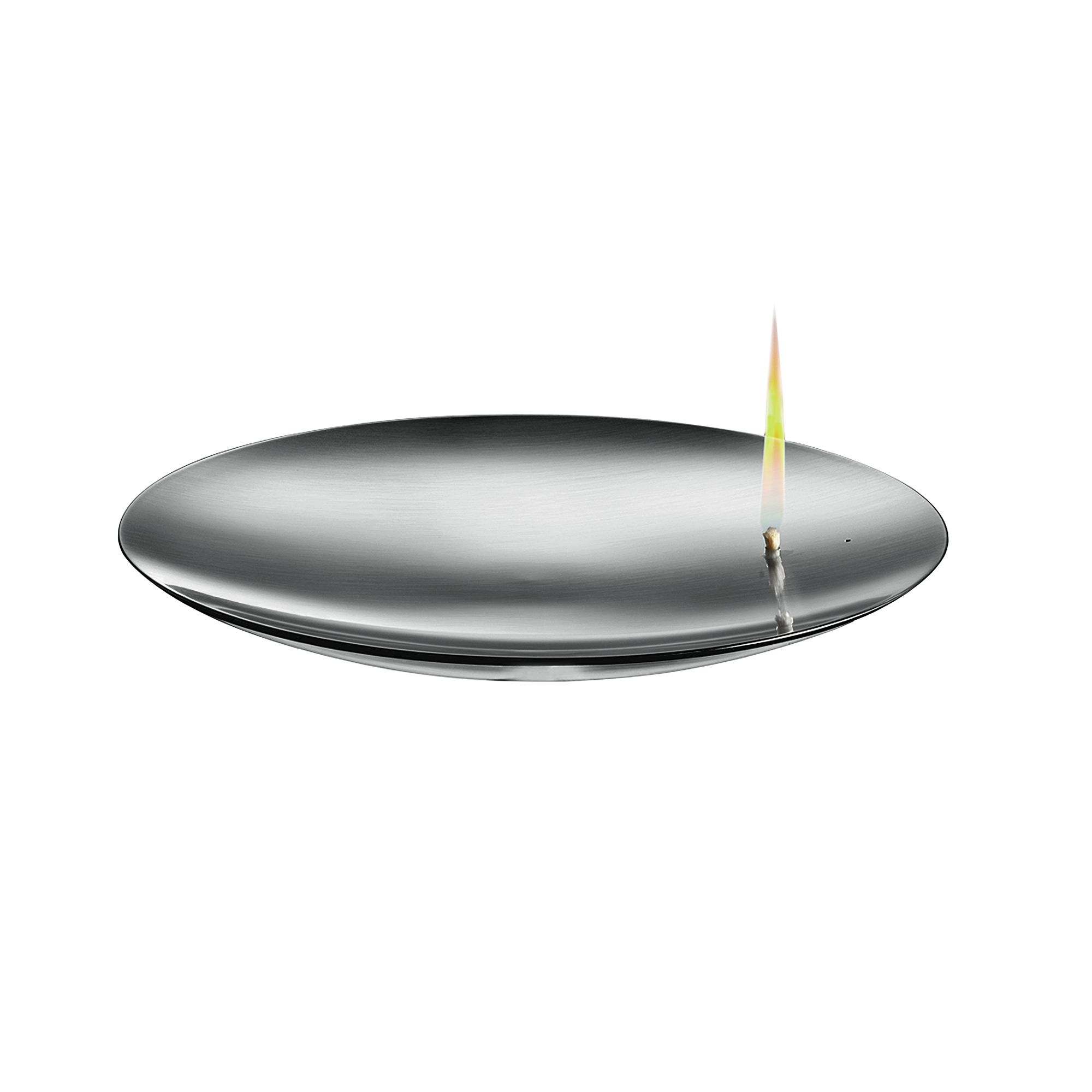
A flame - fed by oil lamp - hovering over a bowl brushed stainless steel. Your reflection immerses the entire room in a soft light. The art object is lovingly made in the mono-Manufaktur.Forget the time and enjoy the atmosphere à la concave - alone, in pairs or with our guest.Material stainless steel brushed 18/1020 cmDesign: Franz MaurerFranz Maurer, 42 lives and works as an independent designer in Vienna, Austria. He literally approaches his tasks from the ground on up. He researches materials, and their functionality. His works are expressive of a clear and functional interpretation of form. He takes most of his materials from the industrial world and expands their use to new applications. His concepts are always catalytic and thought provoking. His focus tends to be on product development, presentation and design of light and objects for good living.Some of his clients include: anthologie quartett,, artificial, Ingo Maurer, IRIS, Raunmgestaltd.Since 1959 mono’s goal has been to develop designer products that follow no trend, they simply outlast all trends. Striving to produce items that do not decorate but function and have the highest standards of production, material and origin.This has not been a rare occurrence. mono products have become part of permanent museum collections of modern and applied art. mono friends elicit pleasure on a daily basis.The mono manufactory is in the North Rhine-Westphalian town of Mettmann. That is where Wilhelm Seibel I set the cornerstone, in 1895 with the founding of the Britanniawarenfabrik W. Seibel – the basis for the family enterprise, which today is led by the 5th generation. In 1959 the brand mono was established with the introduction of mono-a.Much has changed since then, and much has remained the same in the production process at mono. With stubborn dedication traditional processes were kept under the belief that manual know how, the human eye and high end materials actually do make a difference.Some 30 steps are used until the final flatware product is finished. The product is under constant evaluation, and only then and when the final touch is made, and perfection is reached, is the product released from the manufactory.Many mono products (partially several times) have been recipients of awards, and are in the permanent collection of museums of modern and applied art.

A flame - fed by oil lamp - hovering over a bowl brushed stainless steel. Your reflection immerses the entire room in a soft light. The art object is lovingly made in the mono-Manufaktur. Forget the time and enjoy the atmosphere à la concave - alone, in pairs or with our guest. Material stainless steel brushed 18/10 26,5 cm Design: Franz Maurer Franz Maurer, 42 lives and works as an independent designer in Vienna, Austria. He literally approaches his tasks from the ground on up. He researches materials, and their functionality. His works are expressive of a clear and functional interpretation of form. He takes most of his materials from the industrial world and expands their use to new applications. His concepts are always catalytic and thought provoking. His focus tends to be on product development, presentation and design of light and objects for good living. Some of his clients include: anthologie quartett,, artificial, Ingo Maurer, IRIS, Raunmgestaltd. mono - Home of the German producer of handcrafted design originals Since 1959 mono’s goal has been to develop designer products that follow no trend, they simply outlast all trends. Striving to produce items that do not decorate but function and have the highest standards of production, material and origin. This has not been a rare occurrence. mono products have become part of permanent museum collections of modern and applied art. mono friends elicit pleasure on a daily basis. The mono manufactory is in the North Rhine-Westphalian town of Mettmann. That is where Wilhelm Seibel I set the cornerstone, in 1895 with the founding of the Britanniawarenfabrik W. Seibel – the basis for the family enterprise, which today is led by the 5th generation. In 1959 the brand mono was established with the introduction of mono-a. Much has changed since then, and much has remained the same in the production process at mono. With stubborn dedication traditional processes were kept under the belief that manual know how, the human eye and high end materials actually do make a difference. Some 30 steps are used until the final flatware product is finished. The product is under constant evaluation, and only then and when the final touch is made, and perfection is reached, is the product released from the manufactory. Many mono products (partially several times) have been recipients of awards, and are in the permanent collection of museums of modern and applied art.
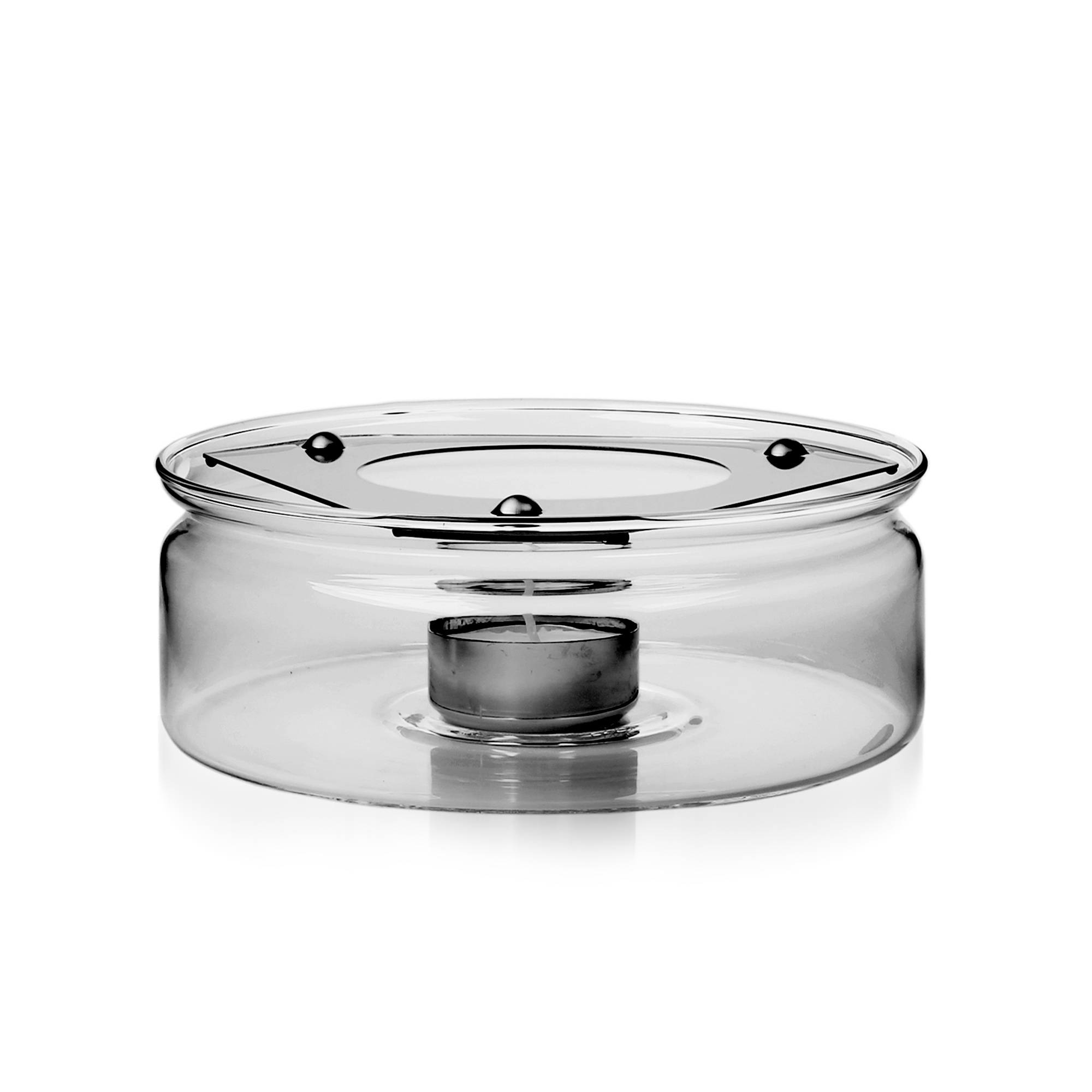
New thinking, confident design, intelligent enjoy. Tea stimulates experts and connoisseurs. mono-ellipse embodies elegance, dynamism and innovation in one.Try it yourself: tea inspires new actions.Ø 16 cm x H 6 cmborosilicate glass, stainless steelBorn in 1942, Tassilo von Grolman first trained as a machinist at AEG before attending the Kassel Institute of Design. Subsequently he gathered valuable experience while working with advertising agencies and architectural companies. He established his own company in 1975, and since then has been active in the design of product, packaging and corporate design. He has received numerous awards for his work.Vitae1942 born in Iserlohn, Germany1959 apprenticeship as engine fitter at AEG1962 studies engineering 1968 studies industrial design at the Design Institute in Kassel1973 various activities at the architectural firm and advertising agencies of TBWA and Lürzer/Conrad in Frankfurt1975 to present heads his own design firm in Oberursel, a Frankfurt suburbmono - Home of the German producer of handcrafted design originalsSince 1959 mono’s goal has been to develop designer products that follow no trend, they simply outlast all trends. Striving to produce items that do not decorate but function and have the highest standards of production, material and origin.This has not been a rare occurrence. mono products have become part of permanent museum collections of modern and applied art. mono friends elicit pleasure on a daily basis.The mono manufactory is in the North Rhine-Westphalian town of Mettmann. That is where Wilhelm Seibel I set the cornerstone, in 1895 with the founding of the Britanniawarenfabrik W. Seibel – the basis for the family enterprise, which today is led by the 5th generation. In 1959 the brand mono was established with the introduction of mono-a.Much has changed since then, and much has remained the same in the production process at mono. With stubborn dedication traditional processes were kept under the belief that manual know how, the human eye and high end materials actually do make a difference.Some 30 steps are used until the final flatware product is finished. The product is under constant evaluation, and only then and when the final touch is made, and perfection is reached, is the product released from the manufactory.Many mono products (partially several times) have been recipients of awards, and are in the permanent collection of museums of modern and applied art.

mono - filio - Napkin rings - Napkin holder - Design classic - Material - 18/10 chrome-nickel stainless steel Material stainless steel brushed 18/10 Made in Germany L 5 cm
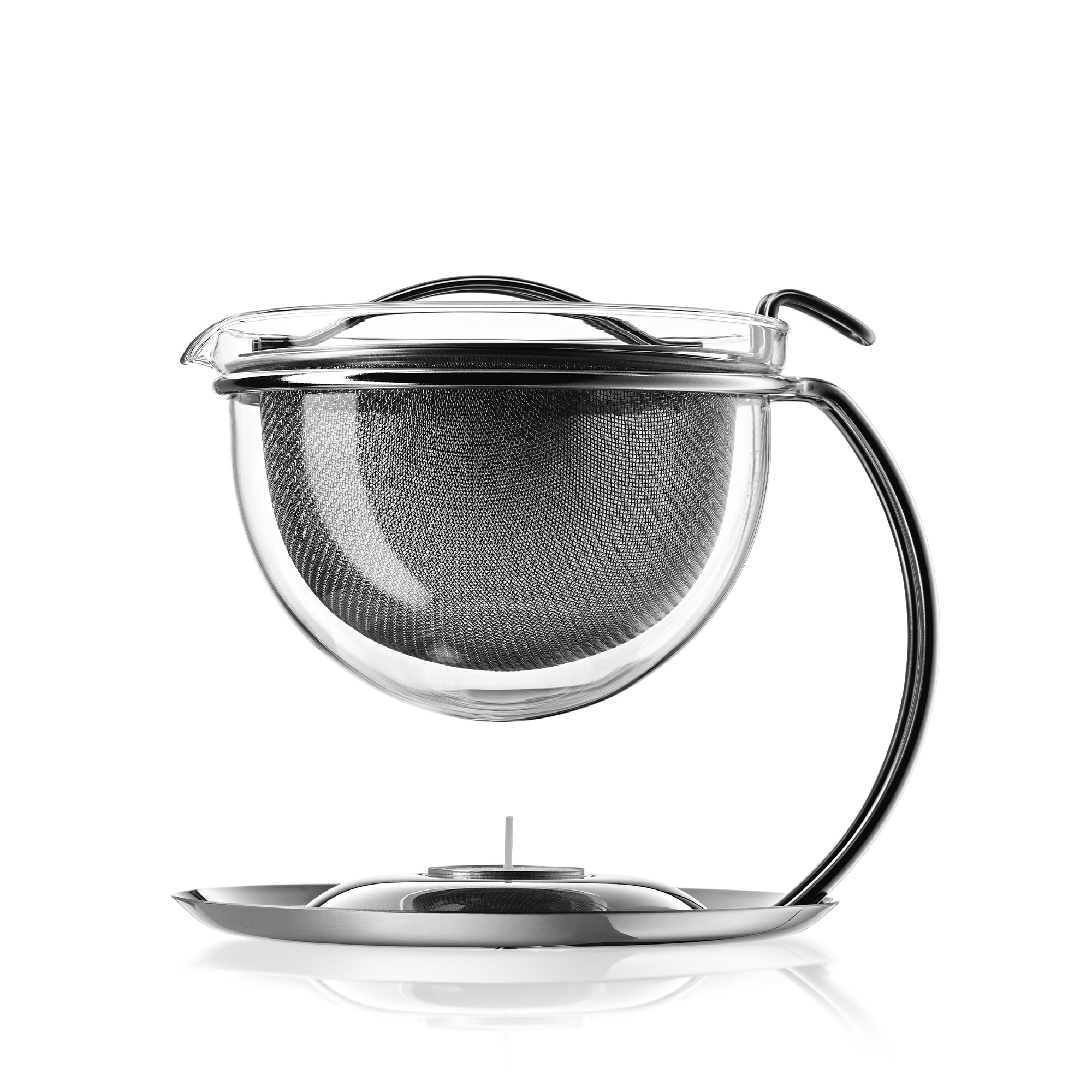
The traditional tea ceremony mono-style. Place your favorite tea in the stainless steel mesh sieve, and watch the leaves unfold freely, as they release their aroma. Keep the tea warm by placing the teapot on the filio warmer, then pour into the glass cups of the filio tea set. Sugar, cream, and jam are also ready for your toast in the filio accessory line. High grade 18/8 stainless steel are used for the filio tea set, lid and sieve, and heat resistant borosilicate glass for the bowls.l = 17,5 cmb = 14 cmh = 18 cmd = 14 cmVolumen 0,6 lBorn in 1942, Tassilo von Grolman first trained as a machinist at AEG before attending the Kassel Institute of Design. Subsequently he gathered valuable experience while working with advertising agencies and architectural companies. He established his own company in 1975, and since then has been active in the design of product, packaging and corporate design. He has received numerous awards for his work.
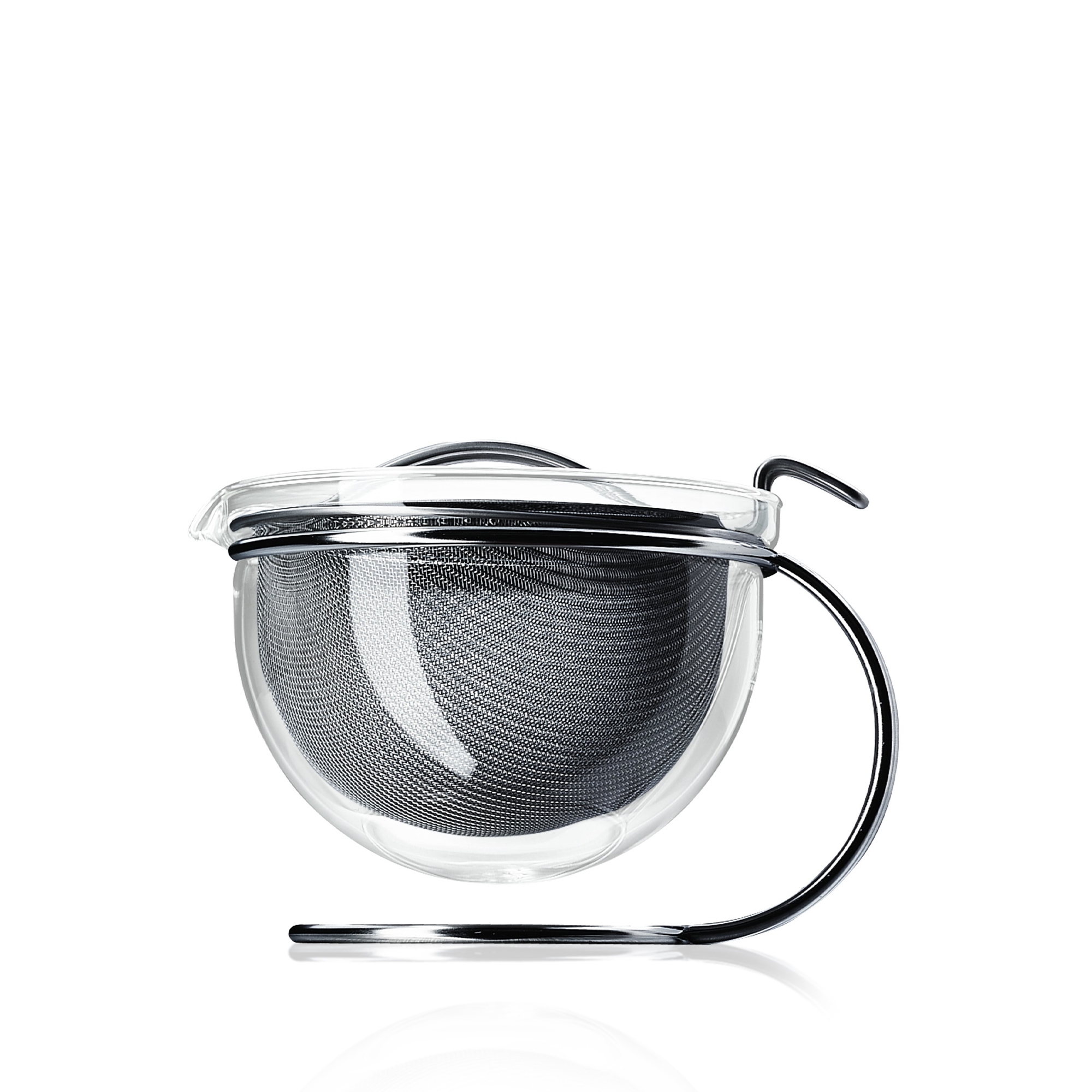
30 years "The Original". The design classic Made in GermanyThe traditional tea ceremony mono-style. Place your favorite tea in the stainless steel mesh sieve, and watch the leaves unfold freely, as they release their aroma. Keep the tea warm by placing the teapot on the filio warmer, then pour into the glass cups of the filio tea set. Sugar, cream, and jam are also ready for your toast in the filio accessory line. High grade 18/8 stainless steel are used for the filio tea set, lid and sieve, and heat resistant borosilicate glass for the bowls.l = 17,5 cmb = 14 cmh = 12,5 cmd = 14 cmVolumen 0,6 lBorn in 1942, Tassilo von Grolman first trained as a machinist at AEG before attending the Kassel Institute of Design. Subsequently he gathered valuable experience while working with advertising agencies and architectural companies. He established his own company in 1975, and since then has been active in the design of product, packaging and corporate design. He has received numerous awards for his work.
30 years "The Original". The design classic Made in GermanyThe traditional tea ceremony mono-style. Place your favorite tea in the stainless steel mesh sieve, and watch the leaves unfold freely, as they release their aroma. Keep the tea warm by placing the teapot on the filio warmer, then pour into the glass cups of the filio tea set. Sugar, cream, and jam are also ready for your toast in the filio accessory line. High grade are used for the filio tea set, lid and sieve, and heat resistant borosilicate glass for the bowls.18/10 stainless steeld =14 cmBorn in 1942, Tassilo von Grolman first trained as a machinist at AEG before attending the Kassel Institute of Design. Subsequently he gathered valuable experience while working with advertising agencies and architectural companies. He established his own company in 1975, and since then has been active in the design of product, packaging and corporate design. He has received numerous awards for his work.
30 years "The Original". The design classic Made in GermanyThe traditional tea ceremony mono-style. Place your favorite tea in the stainless steel mesh sieve, and watch the leaves unfold freely, as they release their aroma. Keep the tea warm by placing the teapot on the filio warmer, then pour into the glass cups of the filio tea set. Sugar, cream, and jam are also ready for your toast in the filio accessory line. High grade are used for the filio tea set, lid and sieve, and heat resistant borosilicate glass for the bowls.18/10 stainless steeld =10,5 cmBorn in 1942, Tassilo von Grolman first trained as a machinist at AEG before attending the Kassel Institute of Design. Subsequently he gathered valuable experience while working with advertising agencies and architectural companies. He established his own company in 1975, and since then has been active in the design of product, packaging and corporate design. He has received numerous awards for his work.
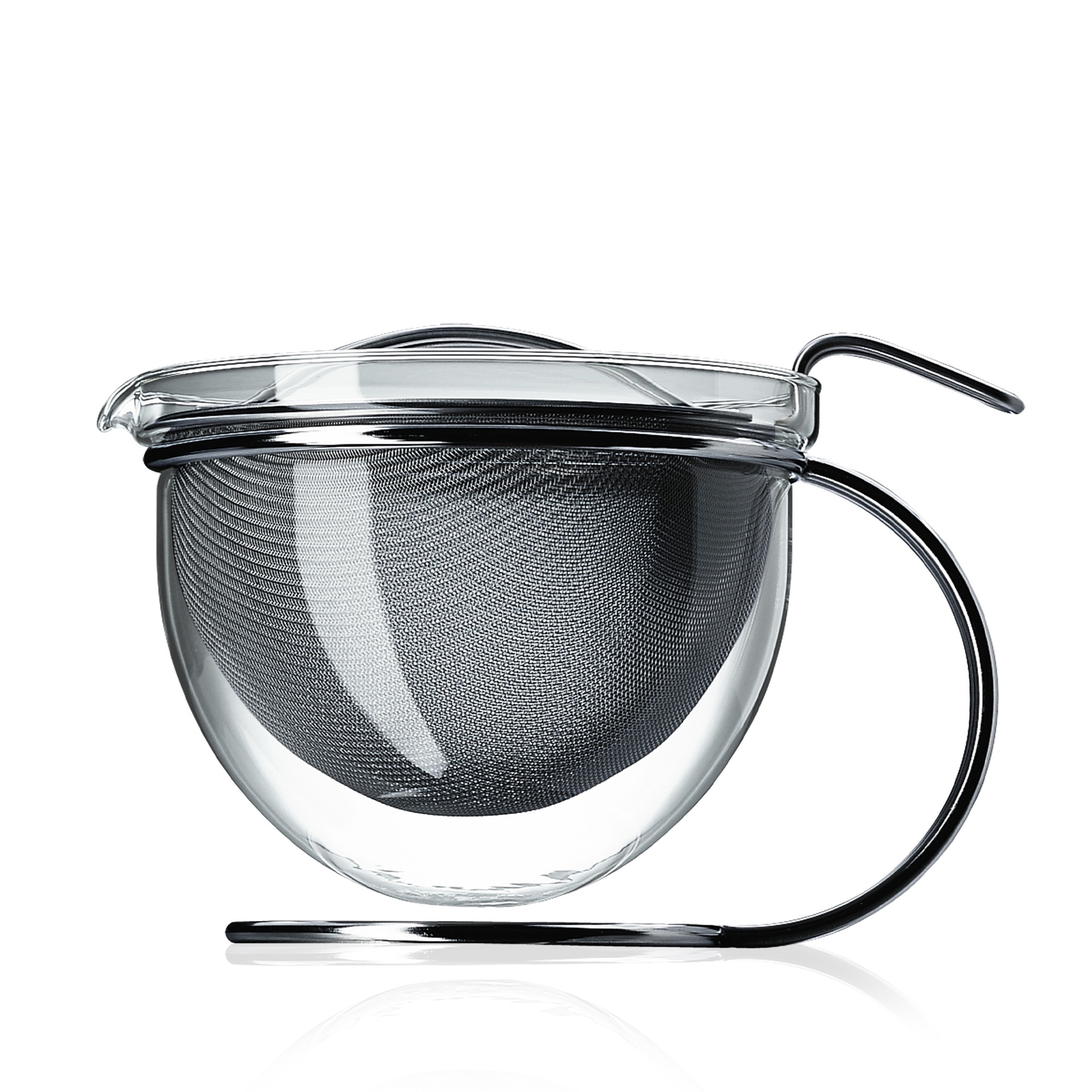
30 years "The Original". The design classic Made in GermanyThe traditional tea ceremony mono-style. Place your favorite tea in the stainless steel mesh sieve, and watch the leaves unfold freely, as they release their aroma. Keep the tea warm by placing the teapot on the filio warmer, then pour into the glass cups of the filio tea set. Sugar, cream, and jam are also ready for your toast in the filio accessory line. High grade 18/8 stainless steel are used for the filio tea set, lid and sieve, and heat resistant borosilicate glass for the bowls.l = 24 cmw = 17 cmh = 14 cmVolumen: 1,5 lBorn in 1942, Tassilo von Grolman first trained as a machinist at AEG before attending the Kassel Institute of Design. Subsequently he gathered valuable experience while working with advertising agencies and architectural companies. He established his own company in 1975, and since then has been active in the design of product, packaging and corporate design. He has received numerous awards for his work.
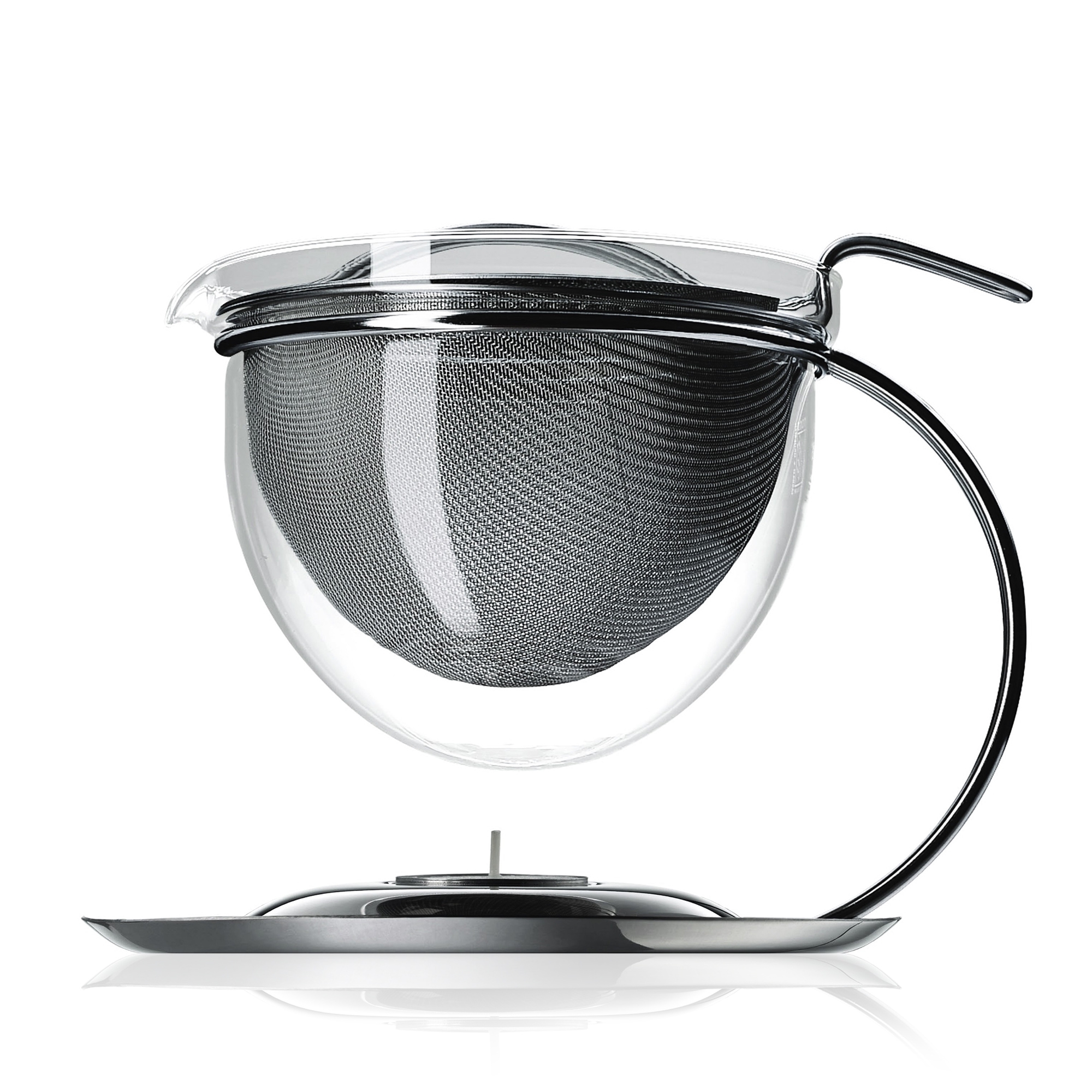
25 years "The Original". The design classic Made in GermanyThe traditional tea ceremony mono-style. Place your favorite tea in the stainless steel mesh sieve, and watch the leaves unfold freely, as they release their aroma. Keep the tea warm by placing the teapot on the filio warmer, then pour into the glass cups of the filio tea set. Sugar, cream, and jam are also ready for your toast in the filio accessory line. High grade 18/8 stainless steel are used for the filio tea set, lid and sieve, and heat resistant borosilicate glass for the bowls.l = 24 cmb = 17 cmh = 20 cmVolumen: 1,5 lBorn in 1942, Tassilo von Grolman first trained as a machinist at AEG before attending the Kassel Institute of Design. Subsequently he gathered valuable experience while working with advertising agencies and architectural companies. He established his own company in 1975, and since then has been active in the design of product, packaging and corporate design. He has received numerous awards for his work.

mono - filio plate for teapot 0,6 l - The traditional tea ceremony Mono-style. Material: 18/10 stainless steel suitable for Mono Filio portion jug Art. 44200 with integrated teapot warmer not suitable for the lower teapot Art. 44222, as the teapot frame is not designed for it and the minimum distance to the tealight flame is not given The traditional tea ceremony Mono-style. Place your favorite tea in the stainless steel mesh sieve, and watch the leaves unfold freely, as they release their aroma. Keep the tea warm by placing the teapot on the filio warmer, then pour into the glass cups of the Filio tea set. sugar, cream, and jam are also ready for your toast in the Filio accessory line. High grade 18/8 stainless steel are used for the filio tea set, lid and sieve, and heat resistant borosilicate glass for the bowls.

mono - filio plate for teapot 1,5 l - The traditional tea ceremony Mono-style. d = 20,5 cm The traditional tea ceremony Mono-style. Place your favorite tea in the stainless steel mesh sieve, and watch the leaves unfold freely, as they release their aroma. Keep the tea warm by placing the teapot on the filio warmer, then pour into the glass cups of the Filio tea set. sugar, cream, and jam are also ready for your toast in the Filio accessory line. High grade 18/8 stainless steel are used for the filio tea set, lid and sieve, and heat resistant borosilicate glass for the bowls.
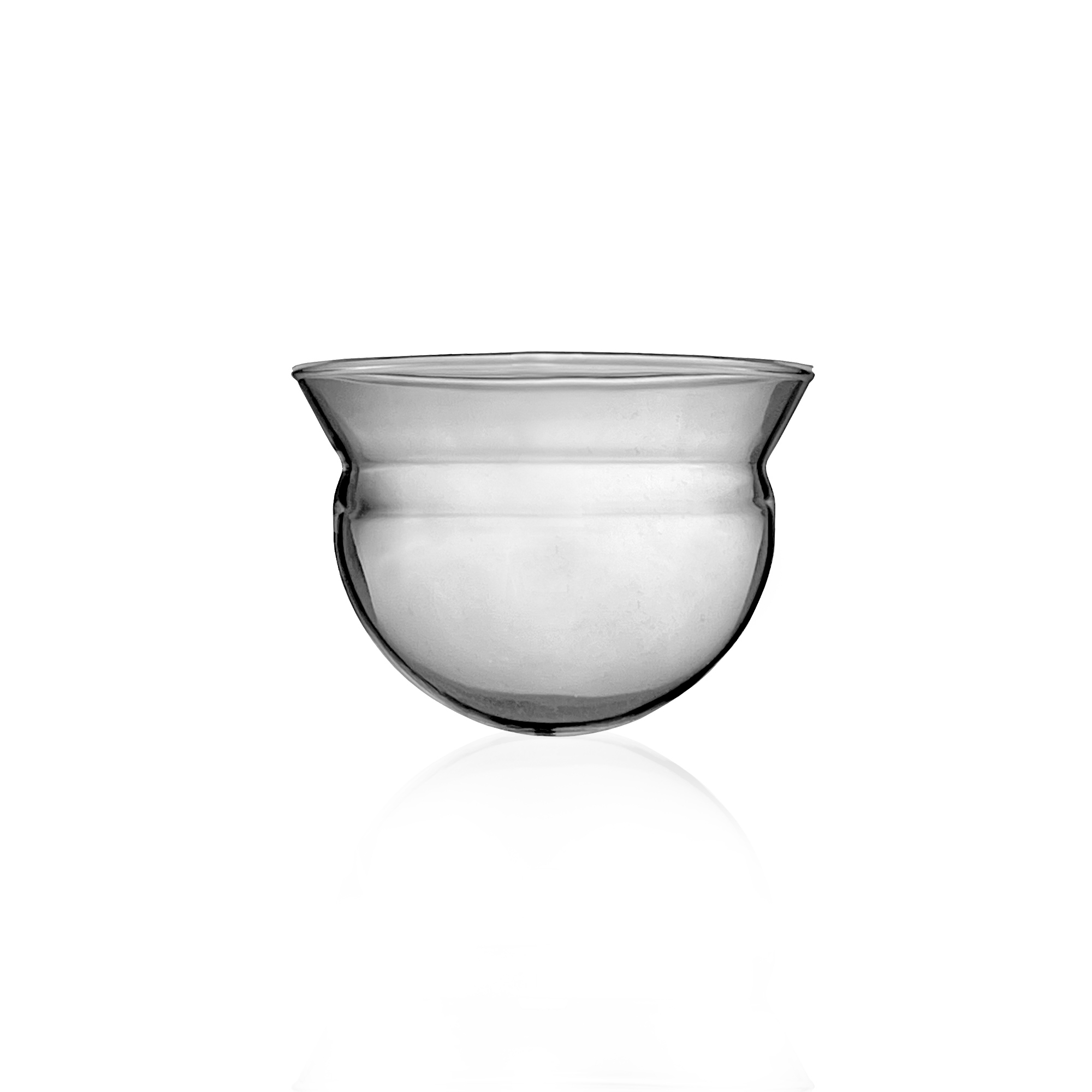
If your tea glass should break once, get of course with us a new one. The square glasses suit for mono-filio teacup or sugar bowl.heat resistant borosilicate glassd = 8,9 cm
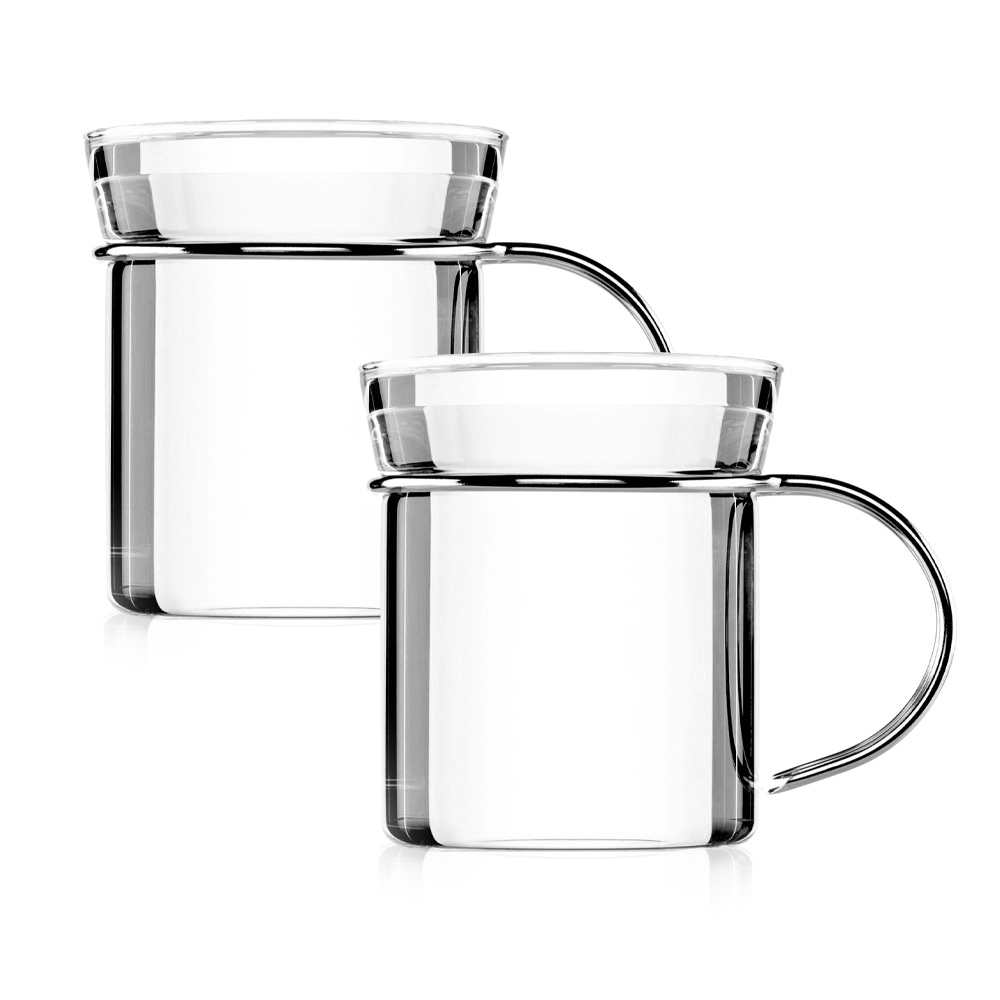
The traditional tea ceremony mono-style. Place your favorite tea in the stainless steel mesh sieve, and watch the leaves unfold freely, as they release their aroma. Keep the tea warm by placing the teapot on the filio warmer, then pour into the glass cups of the filio tea set. Sugar, cream, and jam are also ready for your toast in the filio accessory line. High grade 18/10 stainless steel are used for the filio tea set, lid and sieve, and heat resistant borosilicate glass for the bowls.h = 9,5 cm / d = 7,5 cmborosilicate glass18/10 stainless steelBorn in 1942, Tassilo von Grolman first trained as a machinist at AEG before attending the Kassel Institute of Design. Subsequently he gathered valuable experience while working with advertising agencies and architectural companies. He established his own company in 1975, and since then has been active in the design of product, packaging and corporate design. He has received numerous awards for his work.Vitae1942 born in Iserlohn, Germany1959 apprenticeship as engine fitter at AEG1962 studies engineering 1968 studies industrial design at the Design Institute in Kassel1973 various activities at the architectural firm and advertising agencies of TBWA and Lürzer/Conrad in Frankfurt1975 to present heads his own design firm in Oberursel, a Frankfurt suburbmono - Home of the German producer of handcrafted design originalsSince 1959 mono’s goal has been to develop designer products that follow no trend, they simply outlast all trends. Striving to produce items that do not decorate but function and have the highest standards of production, material and origin.This has not been a rare occurrence. mono products have become part of permanent museum collections of modern and applied art. mono friends elicit pleasure on a daily basis.The mono manufactory is in the North Rhine-Westphalian town of Mettmann. That is where Wilhelm Seibel I set the cornerstone, in 1895 with the founding of the Britanniawarenfabrik W. Seibel – the basis for the family enterprise, which today is led by the 5th generation. In 1959 the brand mono was established with the introduction of mono-a.Much has changed since then, and much has remained the same in the production process at mono. With stubborn dedication traditional processes were kept under the belief that manual know how, the human eye and high end materials actually do make a difference.Some 30 steps are used until the final flatware product is finished. The product is under constant evaluation, and only then and when the final touch is made, and perfection is reached, is the product released from the manufactory.Many mono products (partially several times) have been recipients of awards, and are in the permanent collection of museums of modern and applied art.
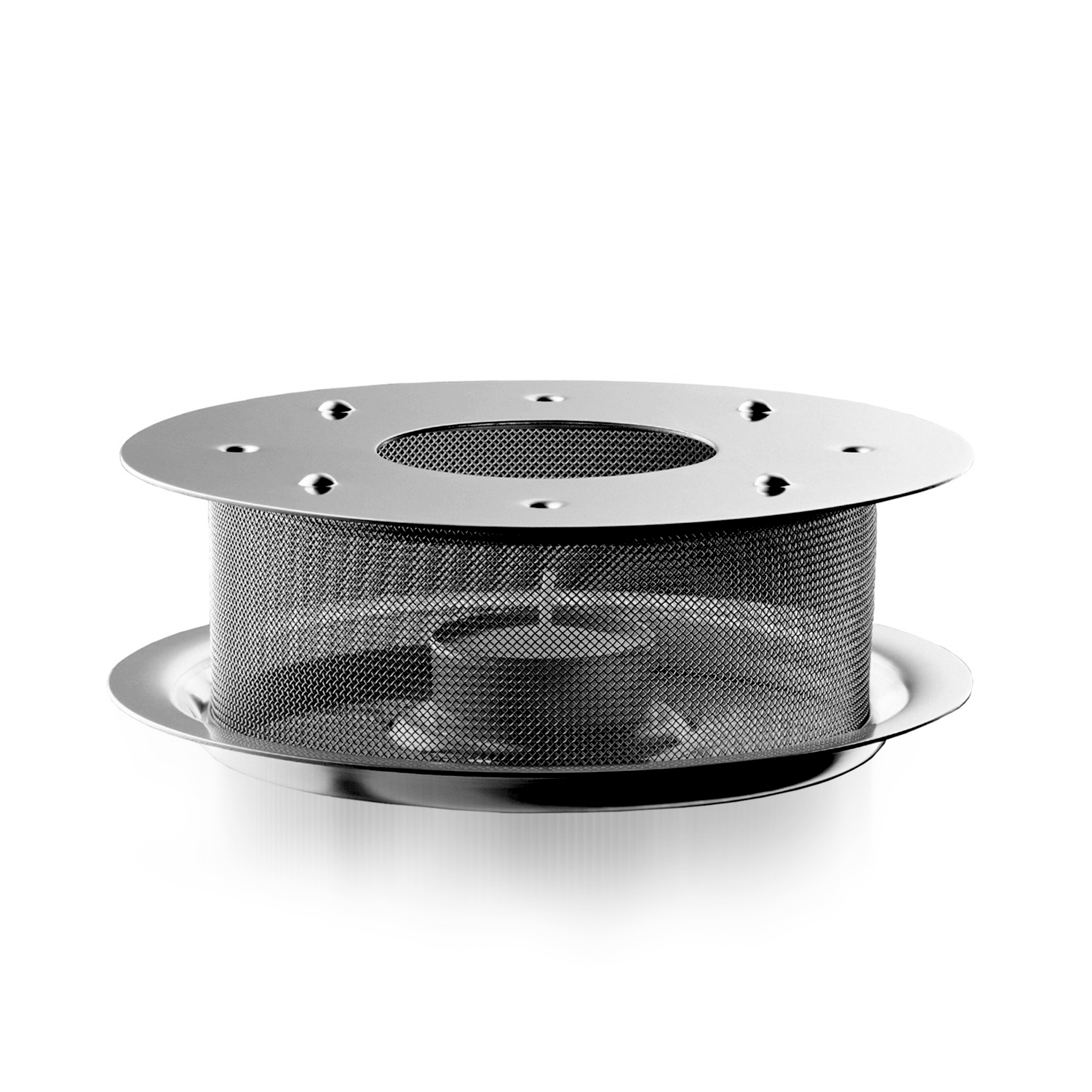
Top quality, made in Germany, well designed and with style - these are the mono-warmer.stainless steeltea light candle holderh = 5 cm, d = 15 cmMade in GermanyTassilo von GrolmanBorn in 1942, Tassilo von Grolman first trained as a machinist at AEG before attending the Kassel Institute of Design. Subsequently he gathered valuable experience while working with advertising agencies and architectural companies. He established his own company in 1975, and since then has been active in the design of product, packaging and corporate design. He has received numerous awards for his work.
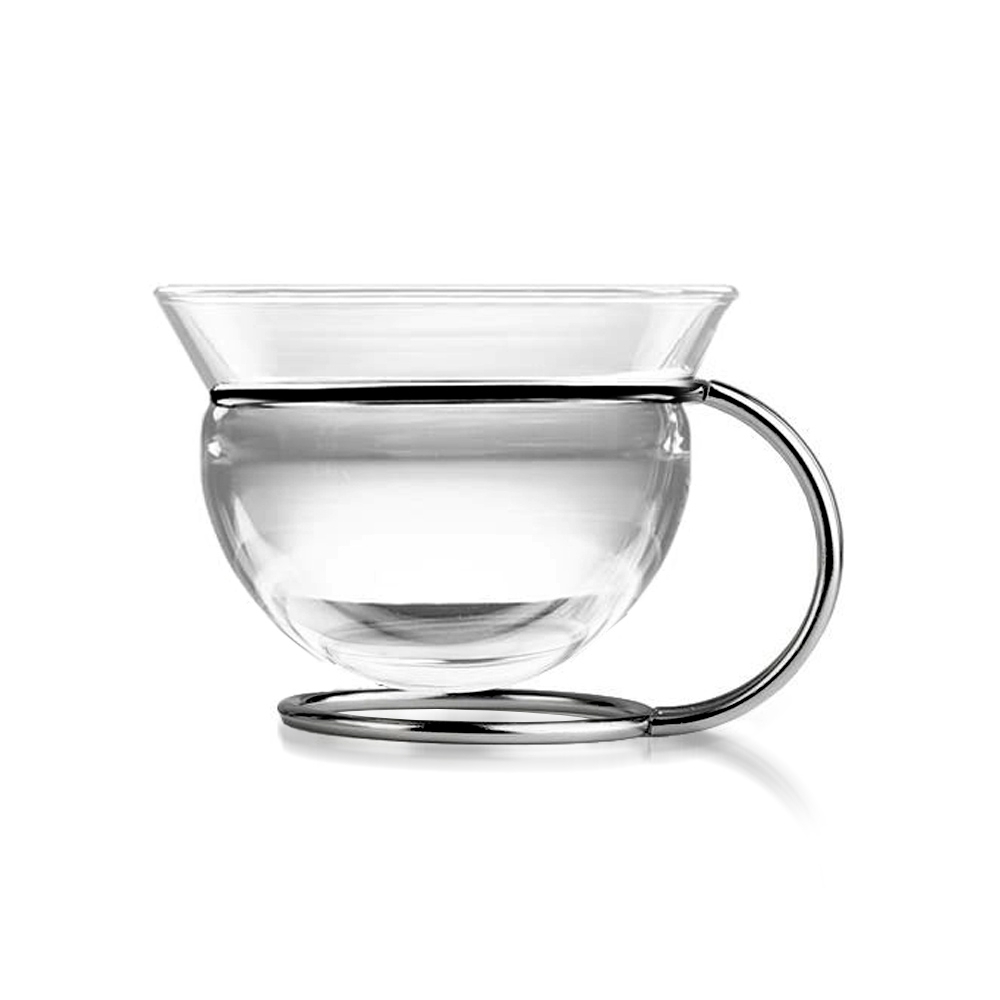
The traditional tea ceremony mono-style. Place your favorite tea in the stainless steel mesh sieve, and watch the leaves unfold freely, as they release their aroma. Keep the tea warm by placing the teapot on the filio warmer, then pour into the glass cups of the filio tea set. Sugar, cream, and jam are also ready for your toast in the filio accessory line. High grade 18/10 stainless steel are used for the filio tea set, lid and sieve, and heat resistant borosilicate glass for the bowls. Set of 2 0,125 L borosilicate glass 18/10 stainless steel Tassilo von Grolman Born in 1942, Tassilo von Grolman first trained as a machinist at AEG before attending the Kassel Institute of Design. Subsequently he gathered valuable experience while working with advertising agencies and architectural companies. He established his own company in 1975, and since then has been active in the design of product, packaging and corporate design. He has received numerous awards for his work. Vitae 1942 born in Iserlohn, Germany 1959 apprenticeship as engine fitter at AEG 1962 studies engineering 1968 studies industrial design at the Design Institute in Kassel 1973 various activities at the architectural firm and advertising agencies of TBWA and Lürzer/Conrad in Frankfurt 1975 to present heads his own design firm in Oberursel, a Frankfurt suburb mono - Home of the German producer of handcrafted design originals Since 1959 mono’s goal has been to develop designer products that follow no trend, they simply outlast all trends. Striving to produce items that do not decorate but function and have the highest standards of production, material and origin. This has not been a rare occurrence. mono products have become part of permanent museum collections of modern and applied art. mono friends elicit pleasure on a daily basis. The mono manufactory is in the North Rhine-Westphalian town of Mettmann. That is where Wilhelm Seibel I set the cornerstone, in 1895 with the founding of the Britanniawarenfabrik W. Seibel – the basis for the family enterprise, which today is led by the 5th generation. In 1959 the brand mono was established with the introduction of mono-a. Much has changed since then, and much has remained the same in the production process at mono. With stubborn dedication traditional processes were kept under the belief that manual know how, the human eye and high end materials actually do make a difference. Some 30 steps are used until the final flatware product is finished. The product is under constant evaluation, and only then and when the final touch is made, and perfection is reached, is the product released from the manufactory. Many mono products (partially several times) have been recipients of awards, and are in the permanent collection of museums of modern and applied art.
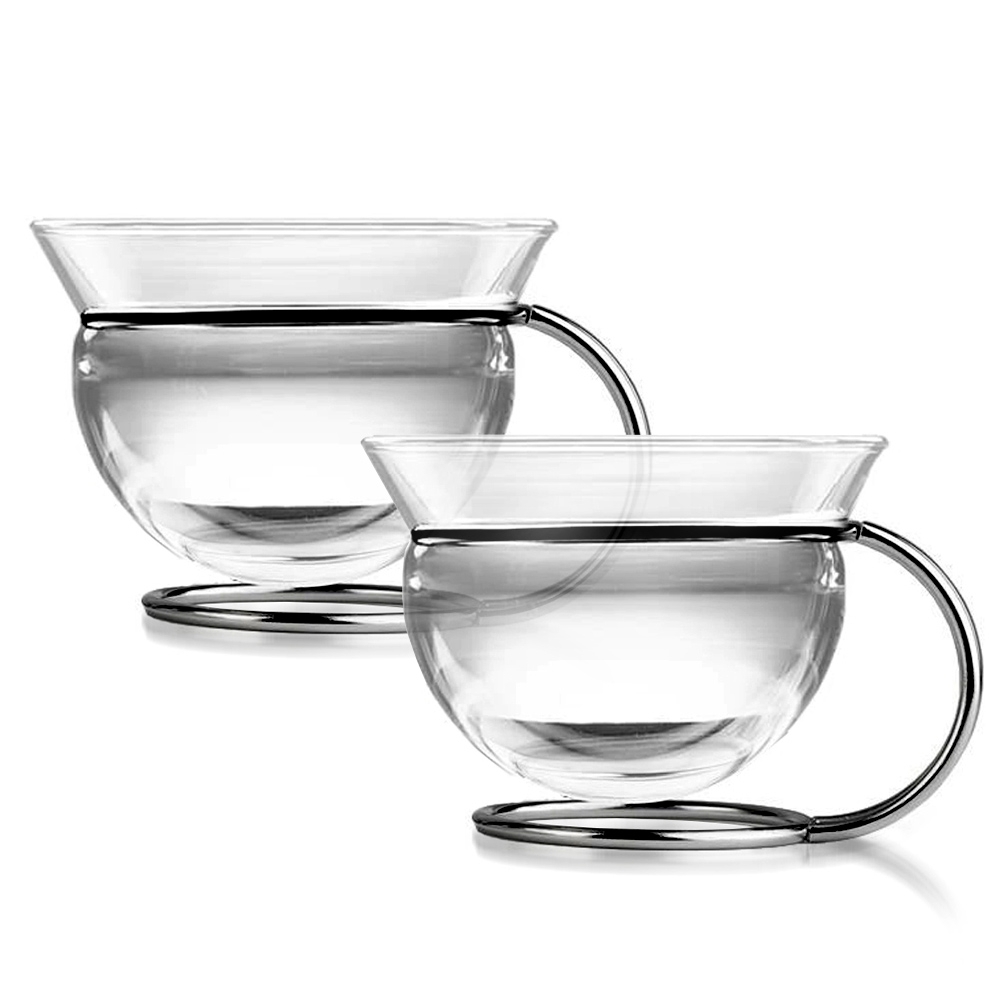
The traditional tea ceremony mono-style. Place your favorite tea in the stainless steel mesh sieve, and watch the leaves unfold freely, as they release their aroma. Keep the tea warm by placing the teapot on the filio warmer, then pour into the glass cups of the filio tea set. Sugar, cream, and jam are also ready for your toast in the filio accessory line. High grade 18/10 stainless steel are used for the filio tea set, lid and sieve, and heat resistant borosilicate glass for the bowls. Set of 2 0,125 L borosilicate glass 18/10 stainless steel Tassilo von Grolman Born in 1942, Tassilo von Grolman first trained as a machinist at AEG before attending the Kassel Institute of Design. Subsequently he gathered valuable experience while working with advertising agencies and architectural companies. He established his own company in 1975, and since then has been active in the design of product, packaging and corporate design. He has received numerous awards for his work. Vitae 1942 born in Iserlohn, Germany 1959 apprenticeship as engine fitter at AEG 1962 studies engineering 1968 studies industrial design at the Design Institute in Kassel 1973 various activities at the architectural firm and advertising agencies of TBWA and Lürzer/Conrad in Frankfurt 1975 to present heads his own design firm in Oberursel, a Frankfurt suburb mono - Home of the German producer of handcrafted design originals Since 1959 mono’s goal has been to develop designer products that follow no trend, they simply outlast all trends. Striving to produce items that do not decorate but function and have the highest standards of production, material and origin. This has not been a rare occurrence. mono products have become part of permanent museum collections of modern and applied art. mono friends elicit pleasure on a daily basis. The mono manufactory is in the North Rhine-Westphalian town of Mettmann. That is where Wilhelm Seibel I set the cornerstone, in 1895 with the founding of the Britanniawarenfabrik W. Seibel – the basis for the family enterprise, which today is led by the 5th generation. In 1959 the brand mono was established with the introduction of mono-a. Much has changed since then, and much has remained the same in the production process at mono. With stubborn dedication traditional processes were kept under the belief that manual know how, the human eye and high end materials actually do make a difference. Some 30 steps are used until the final flatware product is finished. The product is under constant evaluation, and only then and when the final touch is made, and perfection is reached, is the product released from the manufactory. Many mono products (partially several times) have been recipients of awards, and are in the permanent collection of museums of modern and applied art.
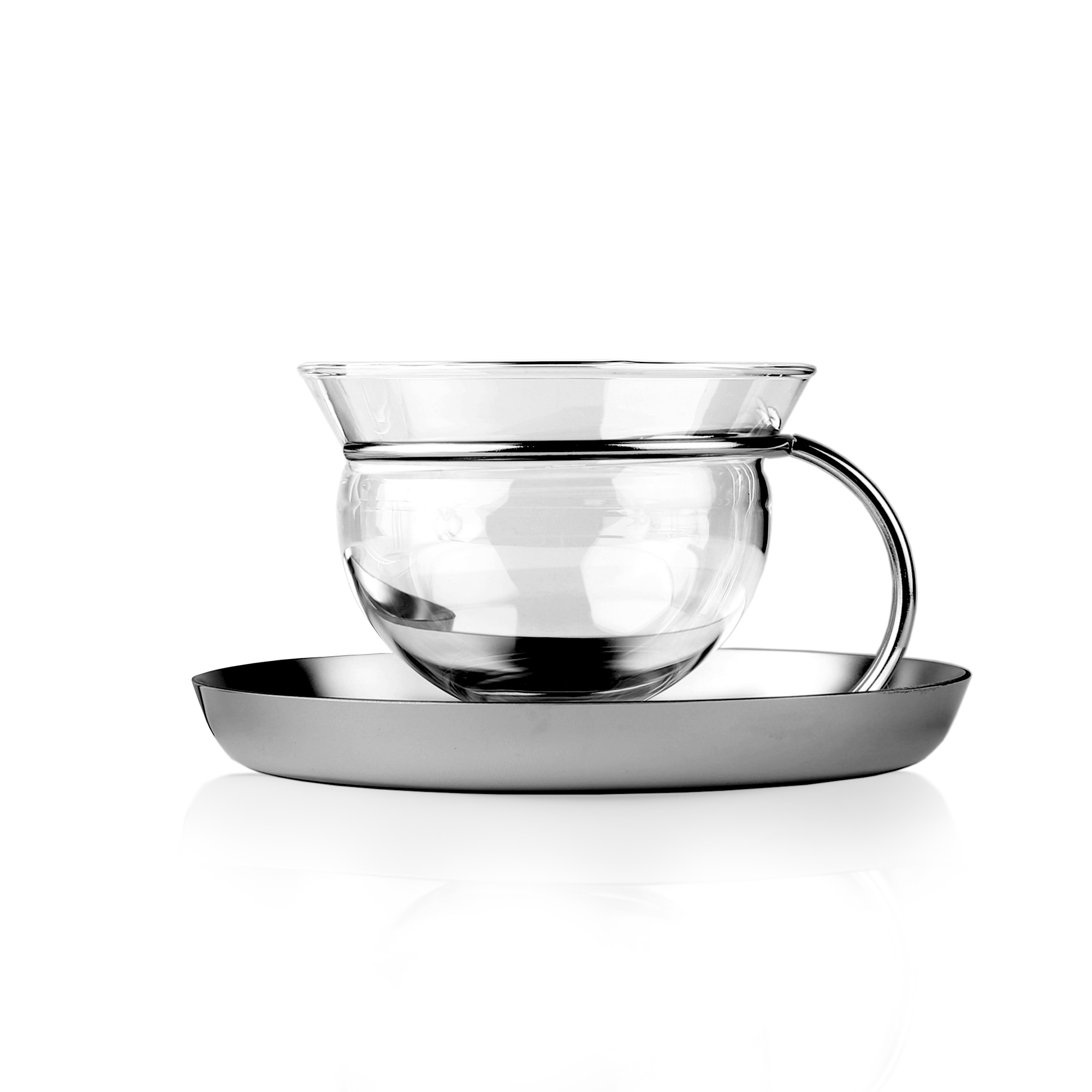
This set consists of a Mono Filio tea cup and a stainless steel saucer. The traditional tea ceremony mono-style. Place your favorite tea in the stainless steel mesh sieve, and watch the leaves unfold freely, as they release their aroma. Keep the tea warm by placing the teapot on the filio warmer, then pour into the glass cups of the filio tea set. Sugar, cream, and jam are also ready for your toast in the filio accessory line. High grade 18/10 stainless steel are used for the filio tea set, lid and sieve, and heat resistant borosilicate glass for the bowls. 0,125 L borosilicate glass 18/10 stainless steel Tassilo von Grolman Born in 1942, Tassilo von Grolman first trained as a machinist at AEG before attending the Kassel Institute of Design. Subsequently he gathered valuable experience while working with advertising agencies and architectural companies. He established his own company in 1975, and since then has been active in the design of product, packaging and corporate design. He has received numerous awards for his work. Vitae 1942 born in Iserlohn, Germany 1959 apprenticeship as engine fitter at AEG 1962 studies engineering 1968 studies industrial design at the Design Institute in Kassel 1973 various activities at the architectural firm and advertising agencies of TBWA and Lürzer/Conrad in Frankfurt 1975 to present heads his own design firm in Oberursel, a Frankfurt suburb mono - Home of the German producer of handcrafted design originals Since 1959 mono’s goal has been to develop designer products that follow no trend, they simply outlast all trends. Striving to produce items that do not decorate but function and have the highest standards of production, material and origin. This has not been a rare occurrence. mono products have become part of permanent museum collections of modern and applied art. mono friends elicit pleasure on a daily basis. The mono manufactory is in the North Rhine-Westphalian town of Mettmann. That is where Wilhelm Seibel I set the cornerstone, in 1895 with the founding of the Britanniawarenfabrik W. Seibel – the basis for the family enterprise, which today is led by the 5th generation. In 1959 the brand mono was established with the introduction of mono-a. Much has changed since then, and much has remained the same in the production process at mono. With stubborn dedication traditional processes were kept under the belief that manual know how, the human eye and high end materials actually do make a difference. Some 30 steps are used until the final flatware product is finished. The product is under constant evaluation, and only then and when the final touch is made, and perfection is reached, is the product released from the manufactory. Many mono products (partially several times) have been recipients of awards, and are in the permanent collection of museums of modern and applied art.

The mono-giro appleslicer lets you slice an apple in spiral form around the core. Place giro on the started apple, finish it later, and it will neither dry out or get brown. Material stainless steel brushed 18/10dimension 10 x 8 cm

mono multitop is a wide range cooking revolution. Due to its special curved shape mono multitop lid fits many different pot sizes. The two versions (22cm and 26cm) cover the entire range of common pot diameters. The side handle and the lid‘s curved shape create a space that can be used in a variety of ways, for holding cooking utensils while cooking or for setting aside some chopped vegetables. mono multitop also helps creating space when not in use by being stored either stacked or hung up. The silicone coating on the underside allows the pot to be opened seamlessly and with a soft touch. The handle and lid are made of stainless steel which makes mono multitop dishwasher safe.dishwasher safeMaterial stainless steel 18/1026 x 26 cmMade in GermanyThe side handle and the lid‘s curved shape create a space that can be used in a variety of ways. From holding cooking utensils while cooking, to keeping food warm, to setting aside herbs and spices, to placing a noodle too hot to taste. mono multitop also helps creating space when not in use by being stored either stacked or hung up.mono multitop becomes the third hand in the kitchen. The side handle makes handling practical and intuitive whether transporting chopped vegetables from the cutting board to the pot or when adding some liquid. The silicone coating on the underside allows the pot to be opened seamlessly and with a soft touch.Here are some examples: Lay down mono multitop makes the space on the pot usable such as placing cooking spoon or tasting fork. Prepare mono multitop is practical work space. E.g. while stirring starch with a little water before placing the mixture in the pot. Set aside mono multitop becomes a holding space. E.g. for chopped vegetables, which are stored on the lid before they go into the pot. Taste mono multitop cools. E.g. the too hot to taste noodle, or the gravy which should be tasted at the perfect temperature. Keep warm mono multitop keeps warm. E.g. the roasted pine nuts before they garnish the soup in the pot. Transport mono multitop is a transport aid. E.g. of fresh herbs on the way from the cutting board to the pot or for plates on the way to the dining room. Cover mono multitop fits on many. E.g. on salad bowls or on jars filled with fresh juice in need for cover.Since 1959 mono’s goal has been to develop designer products that follow no trend, they simply outlast all trends. Striving to produce items that do not decorate but function and have the highest standards of production, material and origin.This has not been a rare occurrence. mono products have become part of permanent museum collections of modern and applied art. mono friends elicit pleasure on a daily basis.The mono manufactory is in the North Rhine-Westphalian town of Mettmann. That is where Wilhelm Seibel I set the cornerstone, in 1895 with the founding of the Britanniawarenfabrik W. Seibel – the basis for the family enterprise, which today is led by the 5th generation. In 1959 the brand mono was established with the introduction of mono-a.Much has changed since then, and much has remained the same in the production process at mono. With stubborn dedication traditional processes were kept under the belief that manual know how, the human eye and high end materials actually do make a difference.Some 30 steps are used until the final flatware product is finished. The product is under constant evaluation, and only then and when the final touch is made, and perfection is reached, is the product released from the manufactory.Many mono products (partially several times) have been recipients of awards, and are in the permanent collection of museums of modern and applied art.

mono multitop is a wide range cooking revolution. Due to its special curved shape mono multitop lid fits many different pot sizes. The two versions (22cm and 26cm) cover the entire range of common pot diameters. The side handle and the lid‘s curved shape create a space that can be used in a variety of ways, for holding cooking utensils while cooking or for setting aside some chopped vegetables. mono multitop also helps creating space when not in use by being stored either stacked or hung up. The silicone coating on the underside allows the pot to be opened seamlessly and with a soft touch. The handle and lid are made of stainless steel which makes mono multitop dishwasher safe.dishwasher safeMaterial stainless steel 18/1022 x 22 cmMade in GermanyThe side handle and the lid‘s curved shape create a space that can be used in a variety of ways. From holding cooking utensils while cooking, to keeping food warm, to setting aside herbs and spices, to placing a noodle too hot to taste. mono multitop also helps creating space when not in use by being stored either stacked or hung up.mono multitop becomes the third hand in the kitchen. The side handle makes handling practical and intuitive whether transporting chopped vegetables from the cutting board to the pot or when adding some liquid. The silicone coating on the underside allows the pot to be opened seamlessly and with a soft touch.Here are some examples: Lay down mono multitop makes the space on the pot usable such as placing cooking spoon or tasting fork. Prepare mono multitop is practical work space. E.g. while stirring starch with a little water before placing the mixture in the pot. Set aside mono multitop becomes a holding space. E.g. for chopped vegetables, which are stored on the lid before they go into the pot. Taste mono multitop cools. E.g. the too hot to taste noodle, or the gravy which should be tasted at the perfect temperature. Keep warm mono multitop keeps warm. E.g. the roasted pine nuts before they garnish the soup in the pot. Transport mono multitop is a transport aid. E.g. of fresh herbs on the way from the cutting board to the pot or for plates on the way to the dining room. Cover mono multitop fits on many. E.g. on salad bowls or on jars filled with fresh juice in need for cover.Since 1959 mono’s goal has been to develop designer products that follow no trend, they simply outlast all trends. Striving to produce items that do not decorate but function and have the highest standards of production, material and origin.This has not been a rare occurrence. mono products have become part of permanent museum collections of modern and applied art. mono friends elicit pleasure on a daily basis.The mono manufactory is in the North Rhine-Westphalian town of Mettmann. That is where Wilhelm Seibel I set the cornerstone, in 1895 with the founding of the Britanniawarenfabrik W. Seibel – the basis for the family enterprise, which today is led by the 5th generation. In 1959 the brand mono was established with the introduction of mono-a.Much has changed since then, and much has remained the same in the production process at mono. With stubborn dedication traditional processes were kept under the belief that manual know how, the human eye and high end materials actually do make a difference.Some 30 steps are used until the final flatware product is finished. The product is under constant evaluation, and only then and when the final touch is made, and perfection is reached, is the product released from the manufactory.Many mono products (partially several times) have been recipients of awards, and are in the permanent collection of museums of modern and applied art.

A flame - fed by oil lamp - hovering over a bowl brushed stainless steel. Your reflection immerses the entire room in a soft light. The art object is lovingly made in the mono-Manufaktur. Forget the time and enjoy the atmosphere à la concave - alone, in pairs or with our guest. Material stainless steel brushed 18/10 13 cm Design: Franz Maurer Franz Maurer, 42 lives and works as an independent designer in Vienna, Austria. He literally approaches his tasks from the ground on up. He researches materials, and their functionality. His works are expressive of a clear and functional interpretation of form. He takes most of his materials from the industrial world and expands their use to new applications. His concepts are always catalytic and thought provoking. His focus tends to be on product development, presentation and design of light and objects for good living. Some of his clients include: anthologie quartett,, artificial, Ingo Maurer, IRIS, Raunmgestaltd. mono - Home of the German producer of handcrafted design originals Since 1959 mono’s goal has been to develop designer products that follow no trend, they simply outlast all trends. Striving to produce items that do not decorate but function and have the highest standards of production, material and origin. This has not been a rare occurrence. mono products have become part of permanent museum collections of modern and applied art. mono friends elicit pleasure on a daily basis. The mono manufactory is in the North Rhine-Westphalian town of Mettmann. That is where Wilhelm Seibel I set the cornerstone, in 1895 with the founding of the Britanniawarenfabrik W. Seibel – the basis for the family enterprise, which today is led by the 5th generation. In 1959 the brand mono was established with the introduction of mono-a. Much has changed since then, and much has remained the same in the production process at mono. With stubborn dedication traditional processes were kept under the belief that manual know how, the human eye and high end materials actually do make a difference. Some 30 steps are used until the final flatware product is finished. The product is under constant evaluation, and only then and when the final touch is made, and perfection is reached, is the product released from the manufactory. Many mono products (partially several times) have been recipients of awards, and are in the permanent collection of museums of modern and applied art.
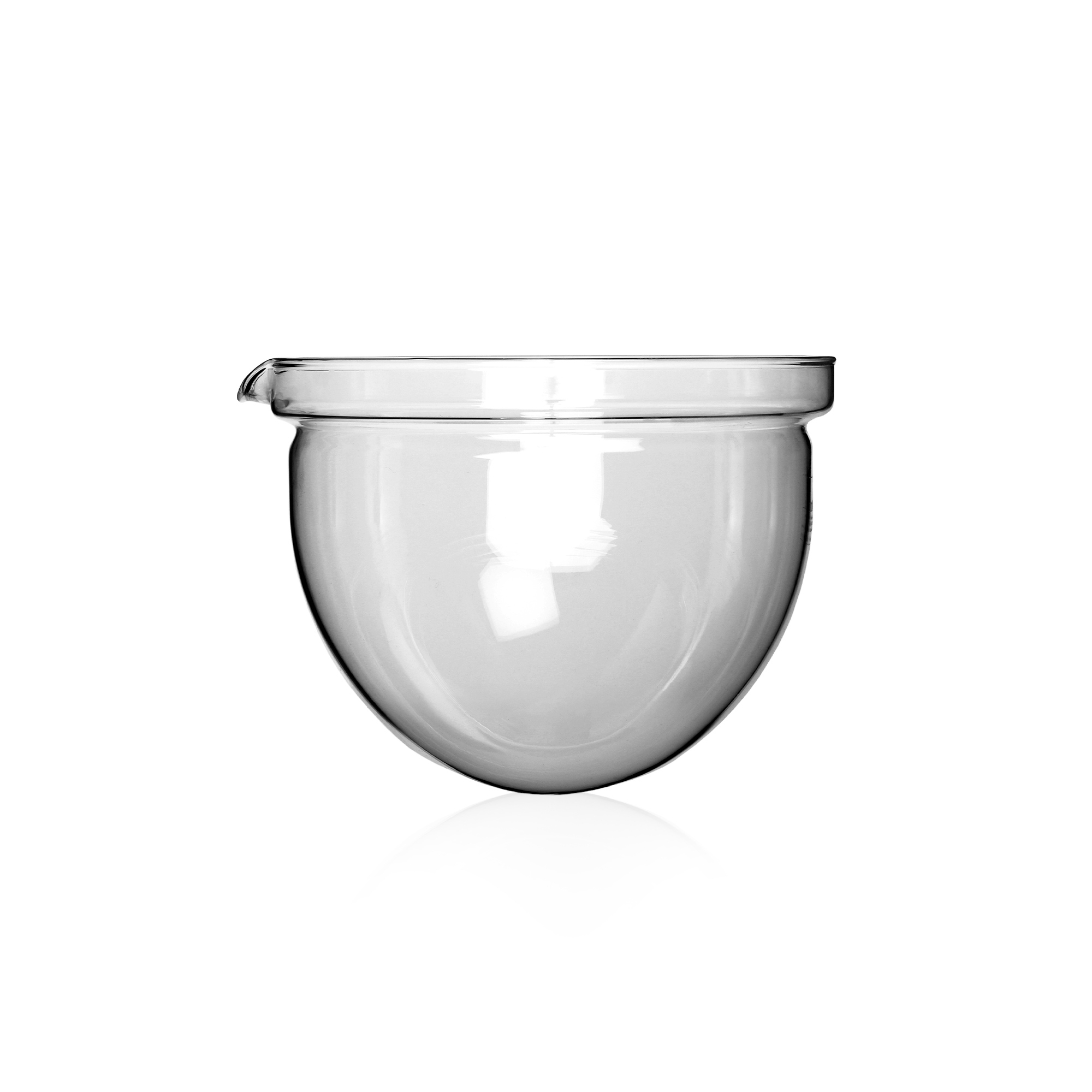
If your teapot glass should break once, get of course with us a new one. The square glasses suit for mono-filio and mono-classic teapots.ø 14 cm0,6 L
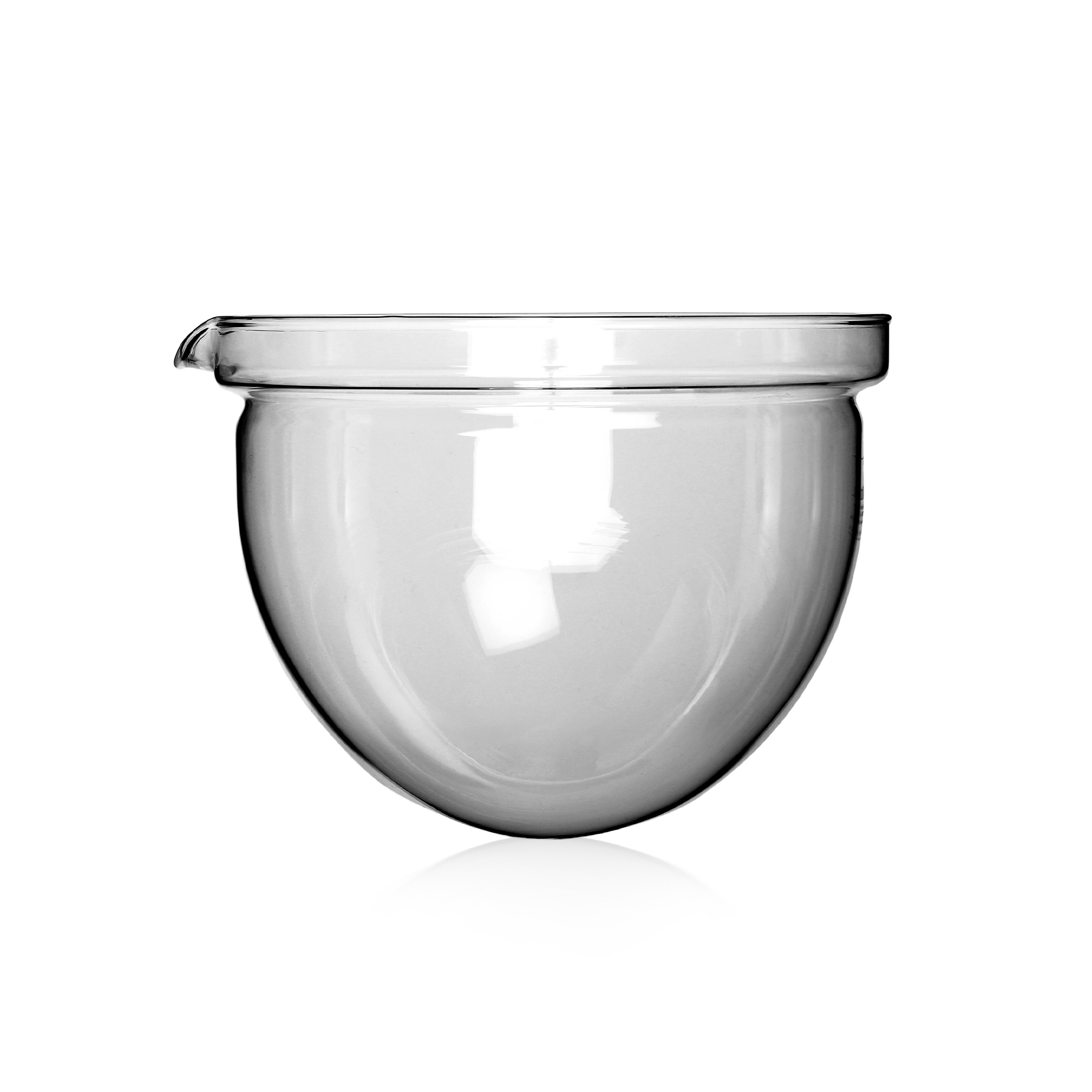
If your teapot glass should break once, get of course with us a new one. The square glasses suit for mono-filio and mono-classic teapots.ø 17 cm1,5 L

perfect complement to mono concave2 glass tubes1 fiberglass wickfor indoors and outdoors

fit for concave 13 cmperfect complement to mono concave2 glass tubes1 fiberglass wickfor indoors and outdoors
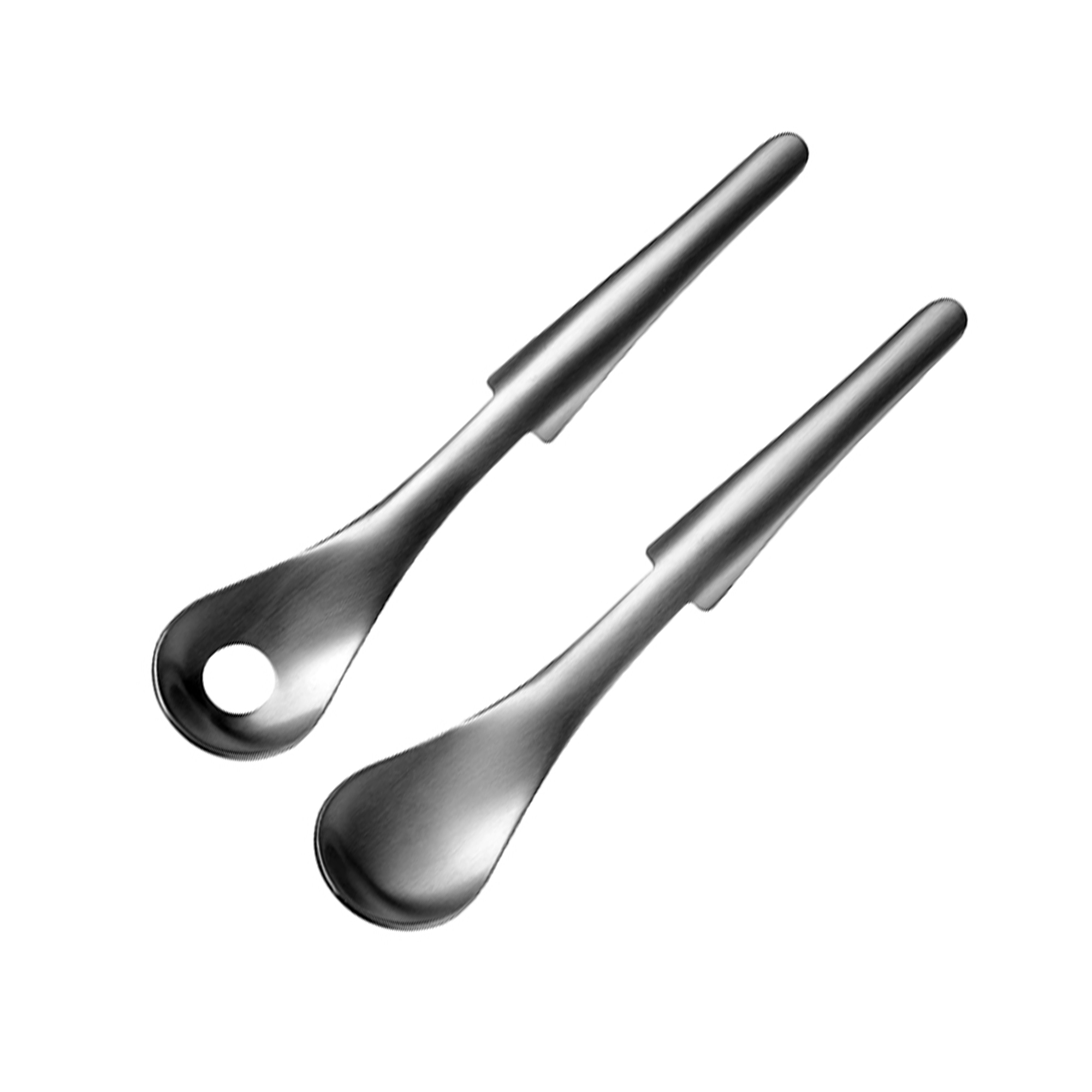
Large spoon, long handle - and a small, decisive detail: salado and saladino can be hung on the salad bowl. The advantage of this is "obvious". Salad serving set large 15 cmStainless Steel 18/10Design: Ralph Krämer Since 1959 mono’s goal has been to develop designer products that follow no trend, they simply outlast all trends. Striving to produce items that do not decorate but function and have the highest standards of production, material and origin.This has not been a rare occurrence. mono products have become part of permanent museum collections of modern and applied art. mono friends elicit pleasure on a daily basis.The mono manufactory is in the North Rhine-Westphalian town of Mettmann. That is where Wilhelm Seibel I set the cornerstone, in 1895 with the founding of the Britanniawarenfabrik W. Seibel – the basis for the family enterprise, which today is led by the 5th generation. In 1959 the brand mono was established with the introduction of mono-a.Much has changed since then, and much has remained the same in the production process at mono. With stubborn dedication traditional processes were kept under the belief that manual know how, the human eye and high end materials actually do make a difference.Some 30 steps are used until the final flatware product is finished. The product is under constant evaluation, and only then and when the final touch is made, and perfection is reached, is the product released from the manufactory.Many mono products (partially several times) have been recipients of awards, and are in the permanent collection of museums of modern and applied art.
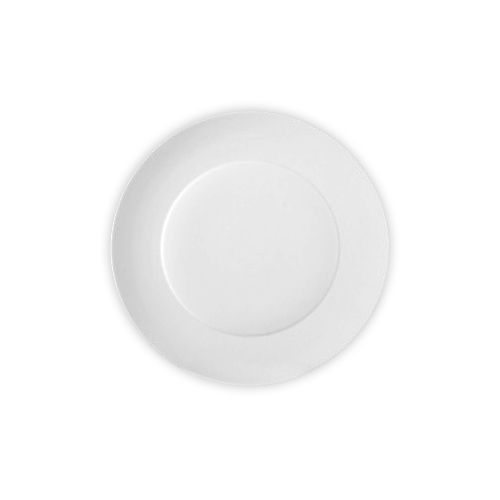
The service is characterised by clear, elegant lines and innovative functionality. The plates have a slightly raised mirror that emphasises the dining surface and makes it possible to stack place settings. Made in Germany 32 cm porcelain
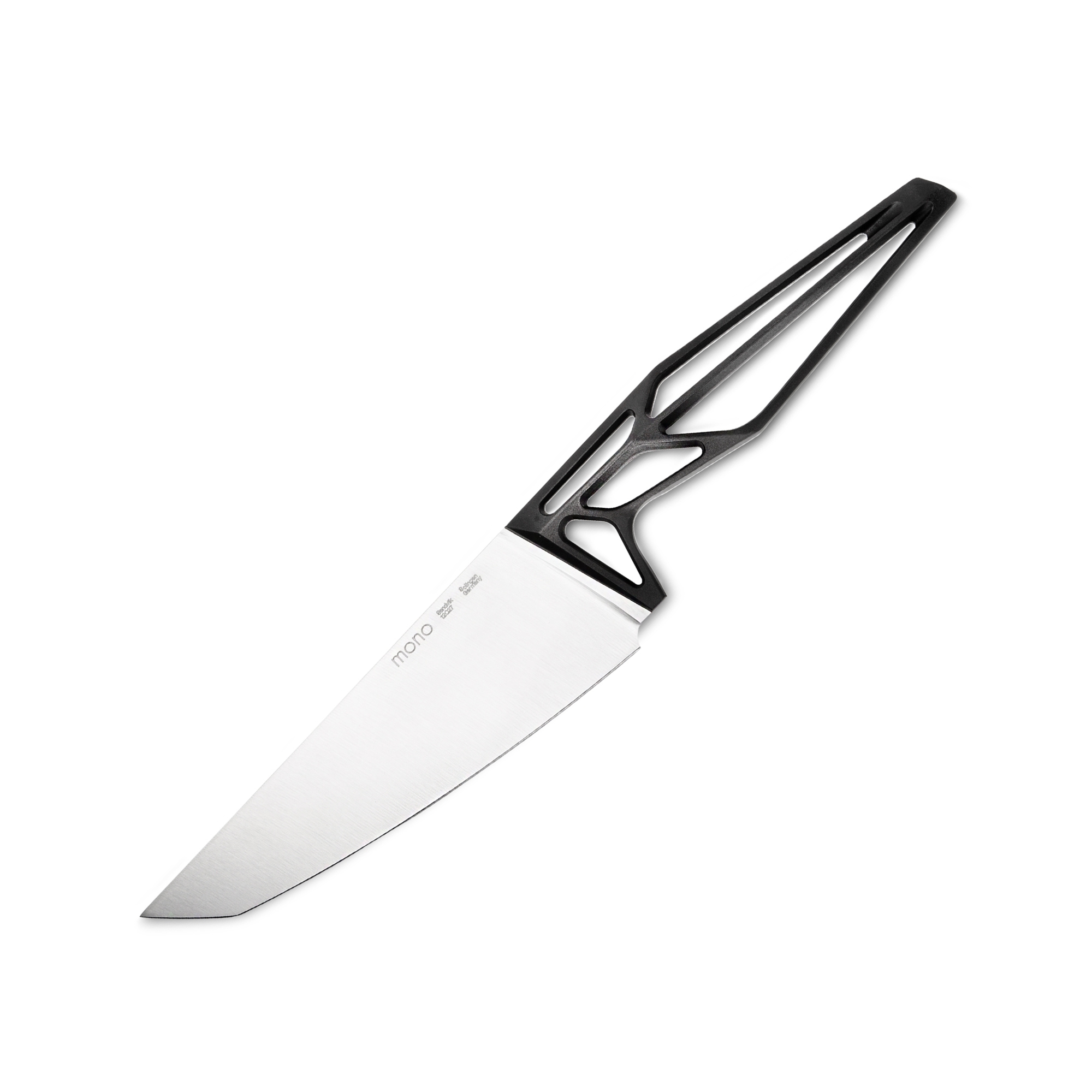
Mono - SK59 chef's knife - Mono SK59 chef's knife has a 17 cm long blade and a total length of 32 cm. It is a universal chef's knife for various cutting tasks.Unexpected in form, immediately familiar in application. Strong and angular in appearance, light and ergonomic in use. High-end knives Made in Germany. Mono SK59 knives are made of Sandvik 12C27TM steel, a high-performance steel that has been developed over 45 years, hardened to 59 Rockwell. Blades made of Sandvik 12C27TM deliver lasting cutting power, they rarely need to be resharpened. In addition, the blades have exceptional stability - they remain flexible and do not become porous - and are extremely resistant to corrosionDesigner: Gido WahrmannMaterial: Sandvik steel 12C27, PolyamidePublishing year: 2020Length: 32 cmBlade: 15 cmMade in Germany
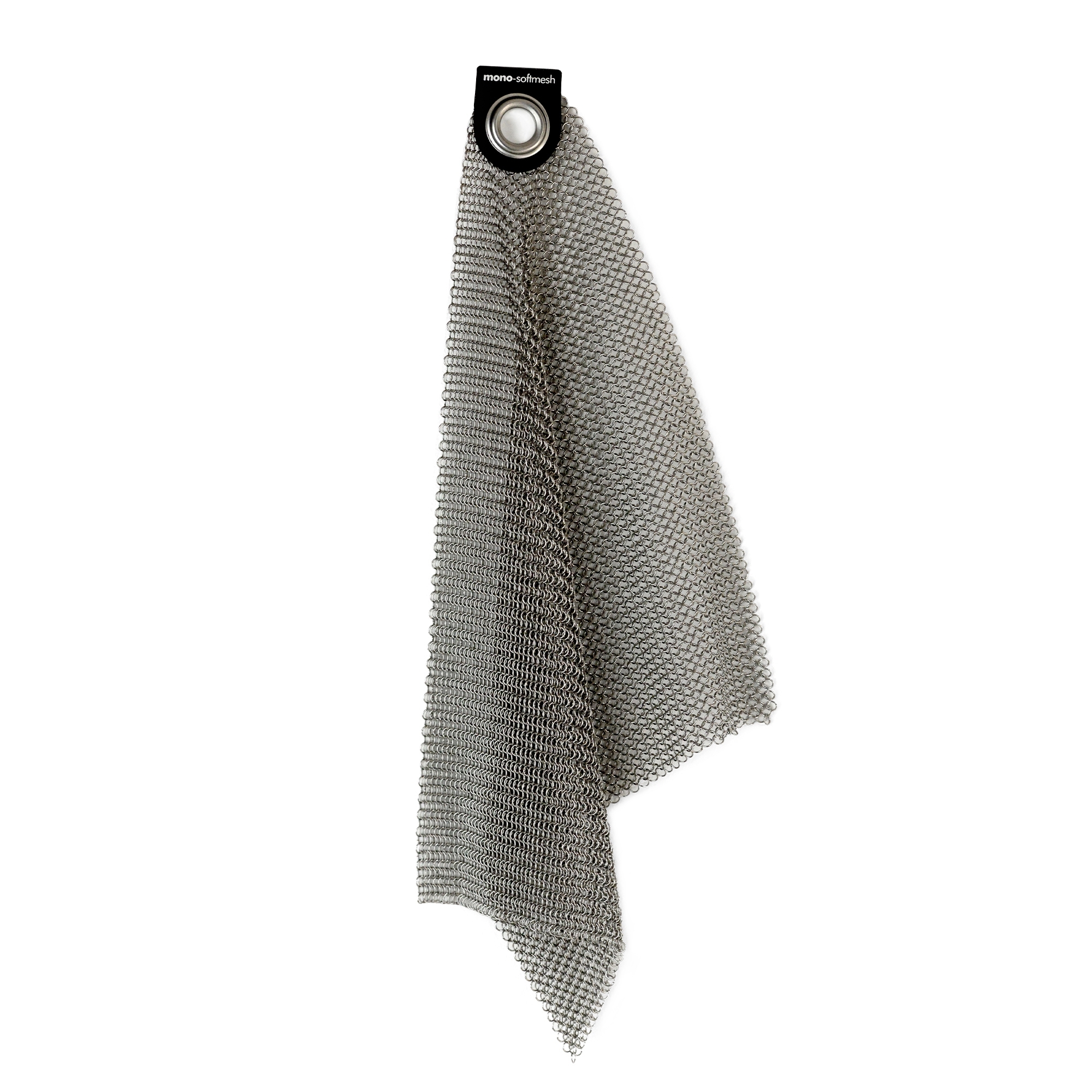
mono - softmesh cleaning mesh - Stainless steel cleaning mesh, dishwasher safe and hygienic, for cookware, frypans, vases, decanter, ...indestructibledishwasher safehygienicMaterial stainless steel 18/1025 x 25 cmMade in GermanyFranz Maurer, 42 lives and works as an independent designer in Vienna, Austria. He literally approaches his tasks from the ground on up. He researches materials, and their functionality. His works are expressive of a clear and functional interpretation of form. He takes most of his materials from the industrial world and expands their use to new applications. His concepts are always catalytic and thought provoking. His focus tends to be on product development, presentation and design of light and objects for good living.Some of his clients include: anthologie quartett,, artificial, Ingo Maurer, IRIS, Raunmgestaltd.Since 1959 mono’s goal has been to develop designer products that follow no trend, they simply outlast all trends. Striving to produce items that do not decorate but function and have the highest standards of production, material and origin.This has not been a rare occurrence. mono products have become part of permanent museum collections of modern and applied art. mono friends elicit pleasure on a daily basis.The mono manufactory is in the North Rhine-Westphalian town of Mettmann. That is where Wilhelm Seibel I set the cornerstone, in 1895 with the founding of the Britanniawarenfabrik W. Seibel – the basis for the family enterprise, which today is led by the 5th generation. In 1959 the brand mono was established with the introduction of mono-a.Much has changed since then, and much has remained the same in the production process at mono. With stubborn dedication traditional processes were kept under the belief that manual know how, the human eye and high end materials actually do make a difference.Some 30 steps are used until the final flatware product is finished. The product is under constant evaluation, and only then and when the final touch is made, and perfection is reached, is the product released from the manufactory.Many mono products (partially several times) have been recipients of awards, and are in the permanent collection of museums of modern and applied art.
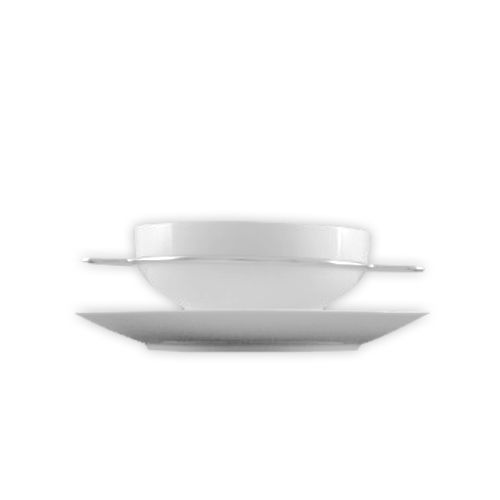
The service is characterised by clear, elegant lines and innovative functionality. The plates have a slightly raised mirror that emphasises the dining surface and makes it possible to stack place settings. Made in Germany 12 cm 200 ml porcelain
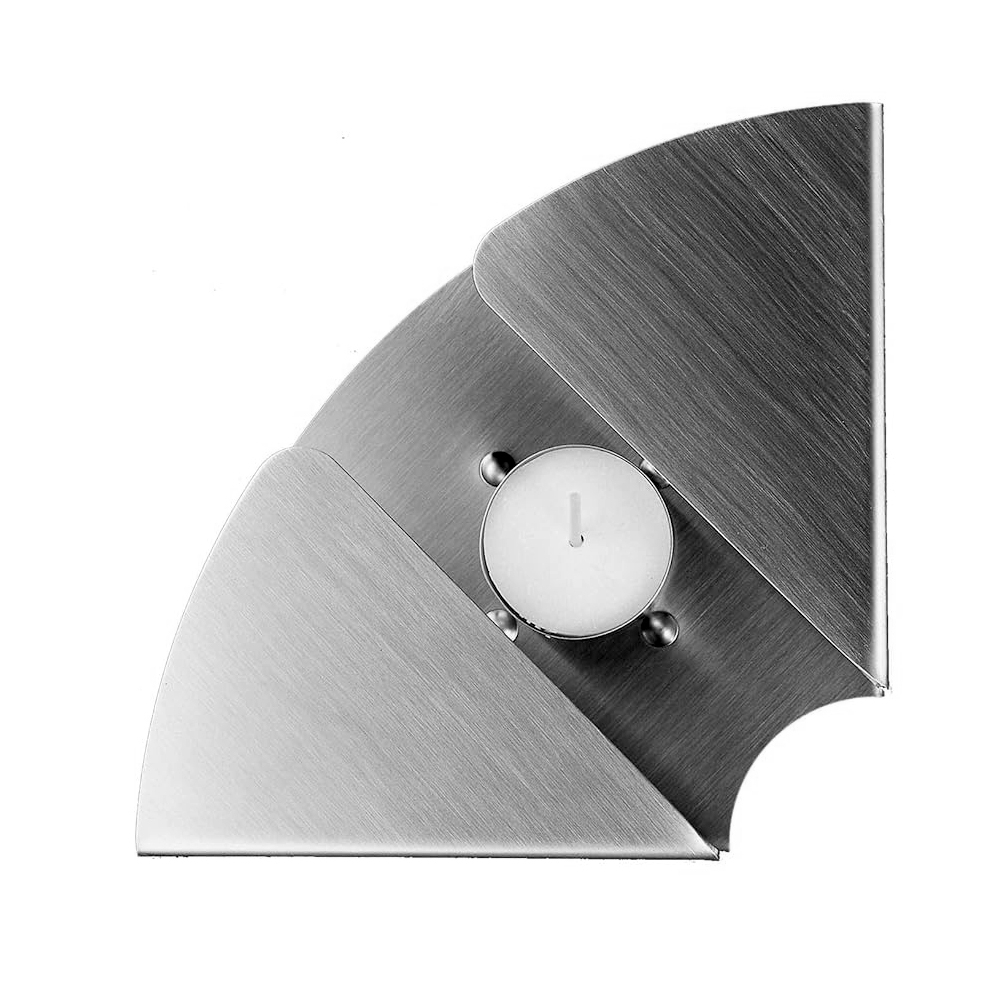
Elements whose basic shape is a quarter circle offer an astonishing wealth of possible combinations. This is the underlying design idea behind the mono-quarto rechaud, which can be used not only to keep food and drinks warm, but also to create imaginative table arrangements. As purely decorative elements, the high-quality puzzle pieces made of brushed stainless steel create atmospheric lighting accents. This makes you want to enjoy an extended meal for two, as a family or with good friends Design: Fried Ulber Material: Chrome-nickel stainless steel 18/10 Colour: silver (stainless steel) L 22 x W 12 x H 5 cm Made in Germany
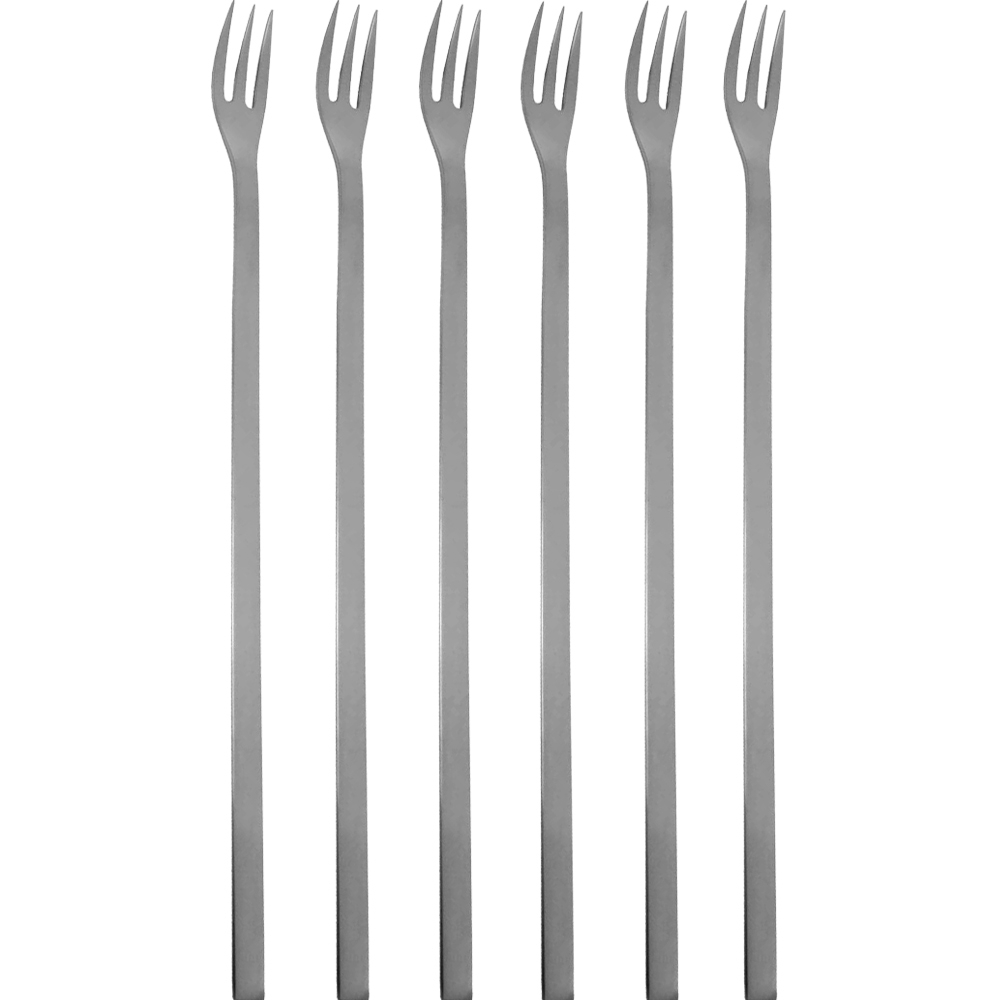
Mono A cheese fondue forks are the perfect complement to Mono Fondue. Because of the heat conduction they are not suitable for meat fondue, for this we recommend Mono Ring fondue forks. Designer: Peter Raacke Material: Stainless steel 18/10<, Matt brushed Publishing year: 1959 Length: 24.5 cm Made in Germany Mono A is the foundation of the history of Mono. The designer Peter Raacke created this reduced design on behalf of Herbert Seibel (3rd generation of the family business) at the end of the 1950s. The goal was to develop a flatware with a timeless design that could be produced easily and sustainably. After its launch in 1959, designer Raacke and manufacturer Seibel realized that the design was too progressive, the radical simplicity did not meet the taste of retailers and customers. In 1973, fourteen years later, Mono A won its first important design award, the Federal Prize for Good Form. Today, it is considered an absolute design classic, has won dozens of awards and has proven itself again and again in timeless aesthetics and relevance. Mono A is made of 18/10 stainless steel. The knife blade is made of hardened blade steel that ensures long cutting durability. All parts are suitable for cleaning in the dishwasher. For more tips on caring for Mono flatware, click here. The Mono A knife is available in two versions. The short blade is the original knife design by Peter Raacke. The long blade was added later as an alternative. Both variants are equally functional. The choice is based on personal preference. Complementary, various serving pieces are available by Mono A, from salad servers to cake servers to snail forks. All pieces have a satin brushed finish, alternatively Mono A is also available in mirror finish.

Material: plasticRubber stoppers bigColour: black

Material: plasticRubber stoppers bigColour: black

Material: stainless steel + plasticmono-classic teapot rack for art. 10/400 (1,5l with integrated plate stove)Colour: stainless steel and black

Material: stainless steel + plasticmono-classic teapot rack for art. 10/450Colour: stainless steel and black
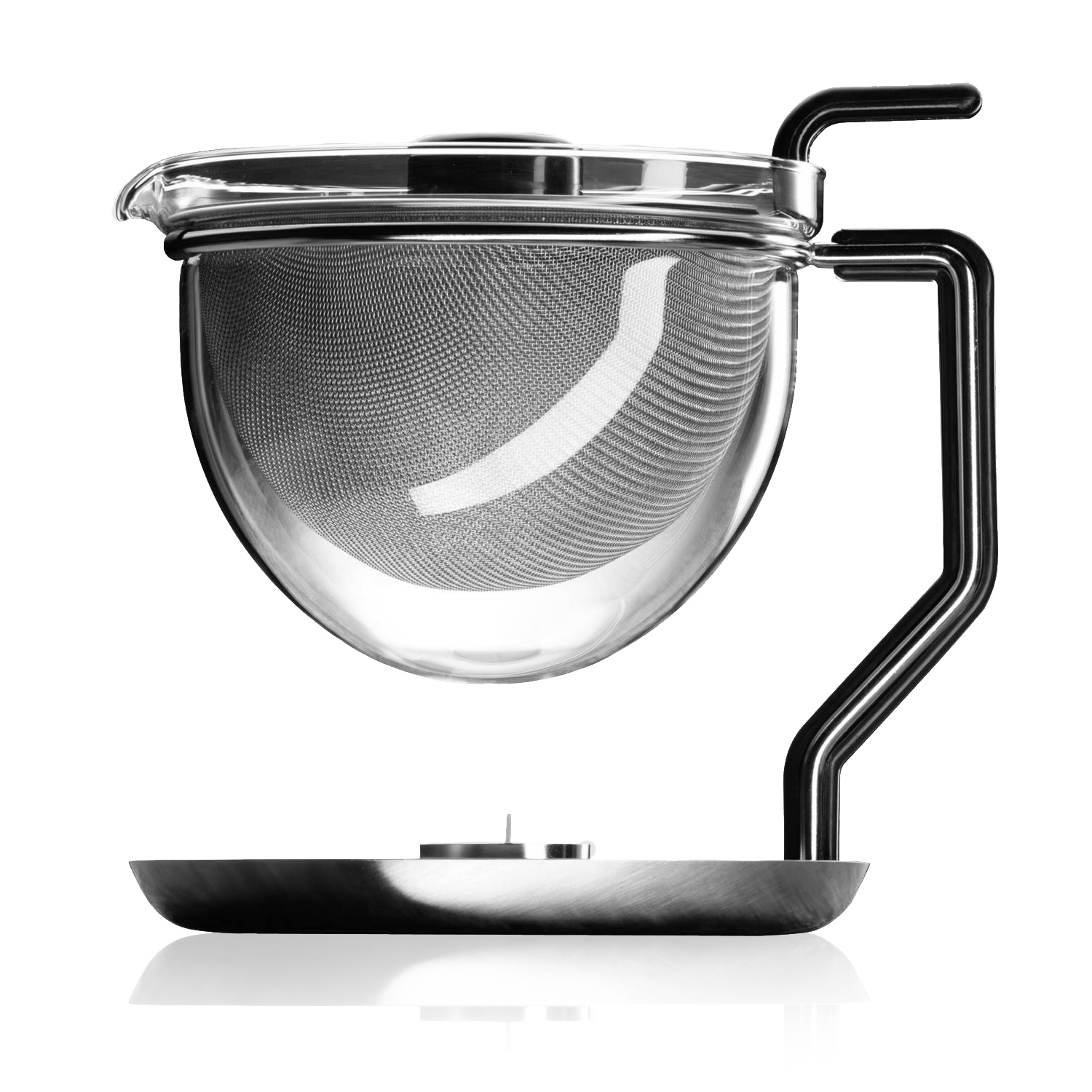
The mandate for designer Tassilo von Grolman was to create a new aesthetic for the enjoyment and enhancement of tea drinking. The result was a teapot with its own unconventional harmony. Function and contemporary design were truly synthesized in the mono classic teapot. The pot made of heat resistant borosilicate glass is cradled in a stainless steel frame.Tea leaves are placed in the stainless steel mesh sieve, and boiling water is poured.The tea leaves unfold freely, as they release their full aroma; after the appropriate steeping time – 3 to 5 minutes – the sieve is removed and placed in a caddy (bowl).l = 24 cmb = 19 cmh = 22 cmd = 17 cmVolume = 1,5 lBorn in 1942, Tassilo von Grolman first trained as a machinist at AEG before attending the Kassel Institute of Design. Subsequently he gathered valuable experience while working with advertising agencies and architectural companies. He established his own company in 1975, and since then has been active in the design of product, packaging and corporate design. He has received numerous awards for his work.Vitae1942 born in Iserlohn, Germany1959 apprenticeship as engine fitter at AEG1962 studies engineering 1968 studies industrial design at the Design Institute in Kassel1973 various activities at the architectural firm and advertising agencies of TBWA and Lürzer/Conrad in Frankfurt1975 to present heads his own design firm in Oberursel, a Frankfurt suburbmono - Home of the German producer of handcrafted design originalsSince 1959 mono’s goal has been to develop designer products that follow no trend, they simply outlast all trends. Striving to produce items that do not decorate but function and have the highest standards of production, material and origin.This has not been a rare occurrence. mono products have become part of permanent museum collections of modern and applied art. mono friends elicit pleasure on a daily basis.The mono manufactory is in the North Rhine-Westphalian town of Mettmann. That is where Wilhelm Seibel I set the cornerstone, in 1895 with the founding of the Britanniawarenfabrik W. Seibel – the basis for the family enterprise, which today is led by the 5th generation. In 1959 the brand mono was established with the introduction of mono-a.Much has changed since then, and much has remained the same in the production process at mono. With stubborn dedication traditional processes were kept under the belief that manual know how, the human eye and high end materials actually do make a difference.Some 30 steps are used until the final flatware product is finished. The product is under constant evaluation, and only then and when the final touch is made, and perfection is reached, is the product released from the manufactory.Many mono products (partially several times) have been recipients of awards, and are in the permanent collection of museums of modern and applied art.
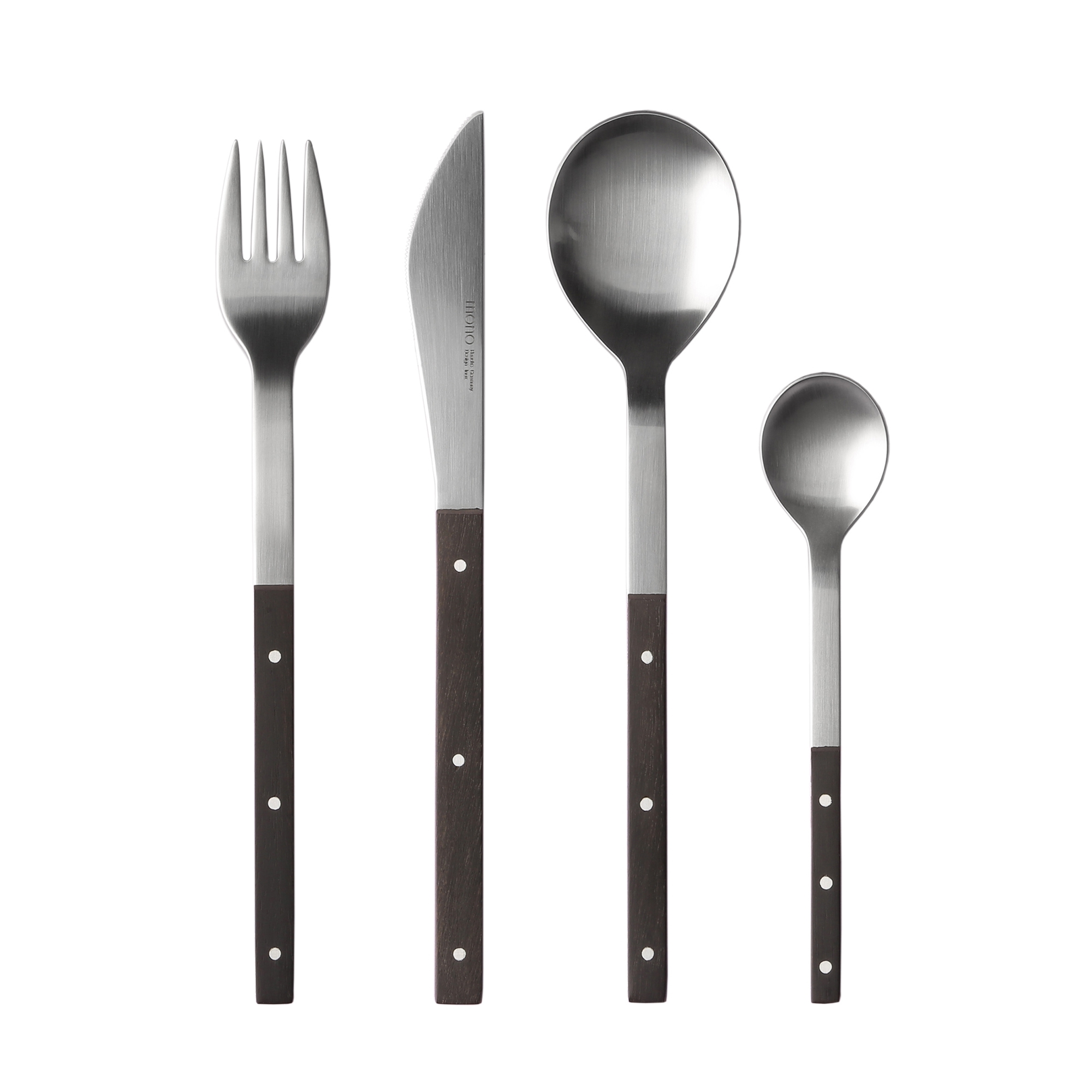
In the early 1960s, the Mono A series was supplemented by Mono E (ebony) and Mono T (teak) by Peter Raacke. The basic shapes of fork and spoon are the same as with Mono A, the cutlery handles of Mono E and Mono T are covered on both sides with riveted wood. This creates an attractive contrast to the stainless steel. Mono E and T can be combined very well with pre-parts from the Mono A series. Both ebony and teak are very robust woods that, with the right care, will last for decades despite daily use and contact with water. However, they are not suitable for cleaning in the dishwasher. The knife blade consists of hardened blade steel, which ensures a long edge retention. Designer: Peter Raacke Release year: 1960 Material: 18/10 stainless steel, matt brushed, ebony consisting of knife, fork, soup spoon and teaspoon
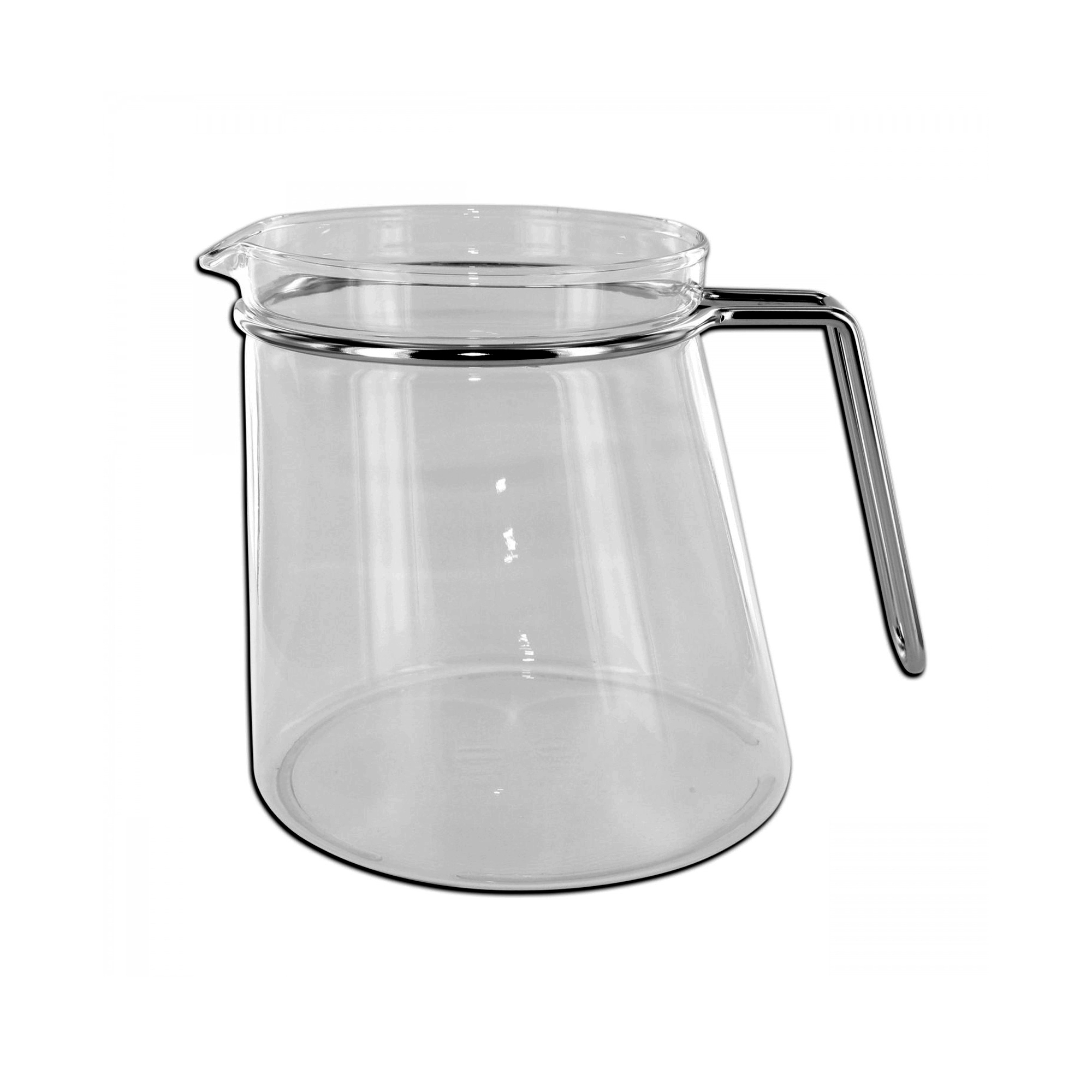
mono ellipse - replacement glass with handle 1,3 l

Replacement strainer for the teapot ellipse 1.3 L (Item No. 17911) The strainer is made of sturdy, taste-neutral, stainless steel mesh Diameter: 11.0 cm mono – The German manufacturer of design originals. Since 1959, mono has worked together with various designers to develop products that do not follow trends, but outlast them — objects designed not to decorate, but to function, and crafted with the highest standards of workmanship, materials, and their origins. This has often been achieved. With numerous awards, mono products are part of various collections in museums of modern and applied art. mono enthusiasts around the world enjoy using them every day. The mono manufactory is located in Mettmann, North Rhine-Westphalia. There, in 1895, Wilhelm Seibel I laid the foundation for the family business by founding the Britaniaware factory W. Seibel, which is now run by the 5th generation. In 1959, the brand mono was established with the invention of the mono-a cutlery. Many mono products have been awarded multiple times and are part of various collections in museums of modern and applied art.
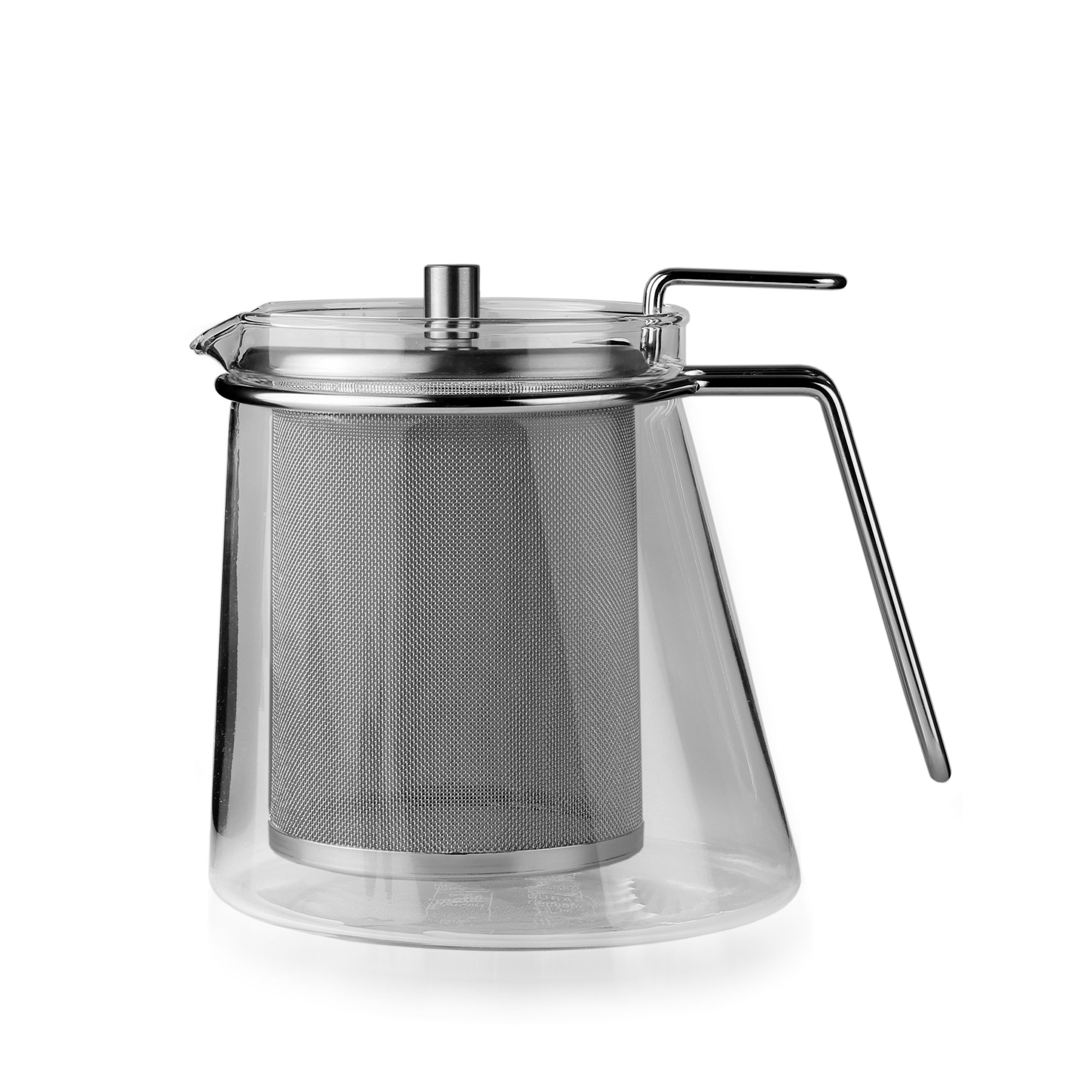
New thinking, confident design, intelligent enjoy. Tea stimulates experts and connoisseurs. mono-ellipse embodies elegance, dynamism and innovation in one. World's first: a heat-resistant borosilicate glass with asymmetric shape top round, bottom elliptical. The silicone-printed footprint protects and insulates.Try it yourself: tea inspires new actions.1,3 lheat resistant Borosilicate glassstainless steel16 x 18 x 12 cmBorn in 1942, Tassilo von Grolman first trained as a machinist at AEG before attending the Kassel Institute of Design. Subsequently he gathered valuable experience while working with advertising agencies and architectural companies. He established his own company in 1975, and since then has been active in the design of product, packaging and corporate design. He has received numerous awards for his work.Vitae1942 born in Iserlohn, Germany1959 apprenticeship as engine fitter at AEG1962 studies engineering 1968 studies industrial design at the Design Institute in Kassel1973 various activities at the architectural firm and advertising agencies of TBWA and Lürzer/Conrad in Frankfurt1975 to present heads his own design firm in Oberursel, a Frankfurt suburbmono - Home of the German producer of handcrafted design originalsSince 1959 mono’s goal has been to develop designer products that follow no trend, they simply outlast all trends. Striving to produce items that do not decorate but function and have the highest standards of production, material and origin.This has not been a rare occurrence. mono products have become part of permanent museum collections of modern and applied art. mono friends elicit pleasure on a daily basis.The mono manufactory is in the North Rhine-Westphalian town of Mettmann. That is where Wilhelm Seibel I set the cornerstone, in 1895 with the founding of the Britanniawarenfabrik W. Seibel – the basis for the family enterprise, which today is led by the 5th generation. In 1959 the brand mono was established with the introduction of mono-a.Much has changed since then, and much has remained the same in the production process at mono. With stubborn dedication traditional processes were kept under the belief that manual know how, the human eye and high end materials actually do make a difference.Some 30 steps are used until the final flatware product is finished. The product is under constant evaluation, and only then and when the final touch is made, and perfection is reached, is the product released from the manufactory.Many mono products (partially several times) have been recipients of awards, and are in the permanent collection of museums of modern and applied art.


small for teapot (0,6 l) large for teapot (1,5 l)

Suitable for your mono-filio teapot 44/222 Material: chrome-nickel stainless steel 18/10

Suitable for your mono-filio teapot 44/444Material: chrome-nickel stainless steel 18/10


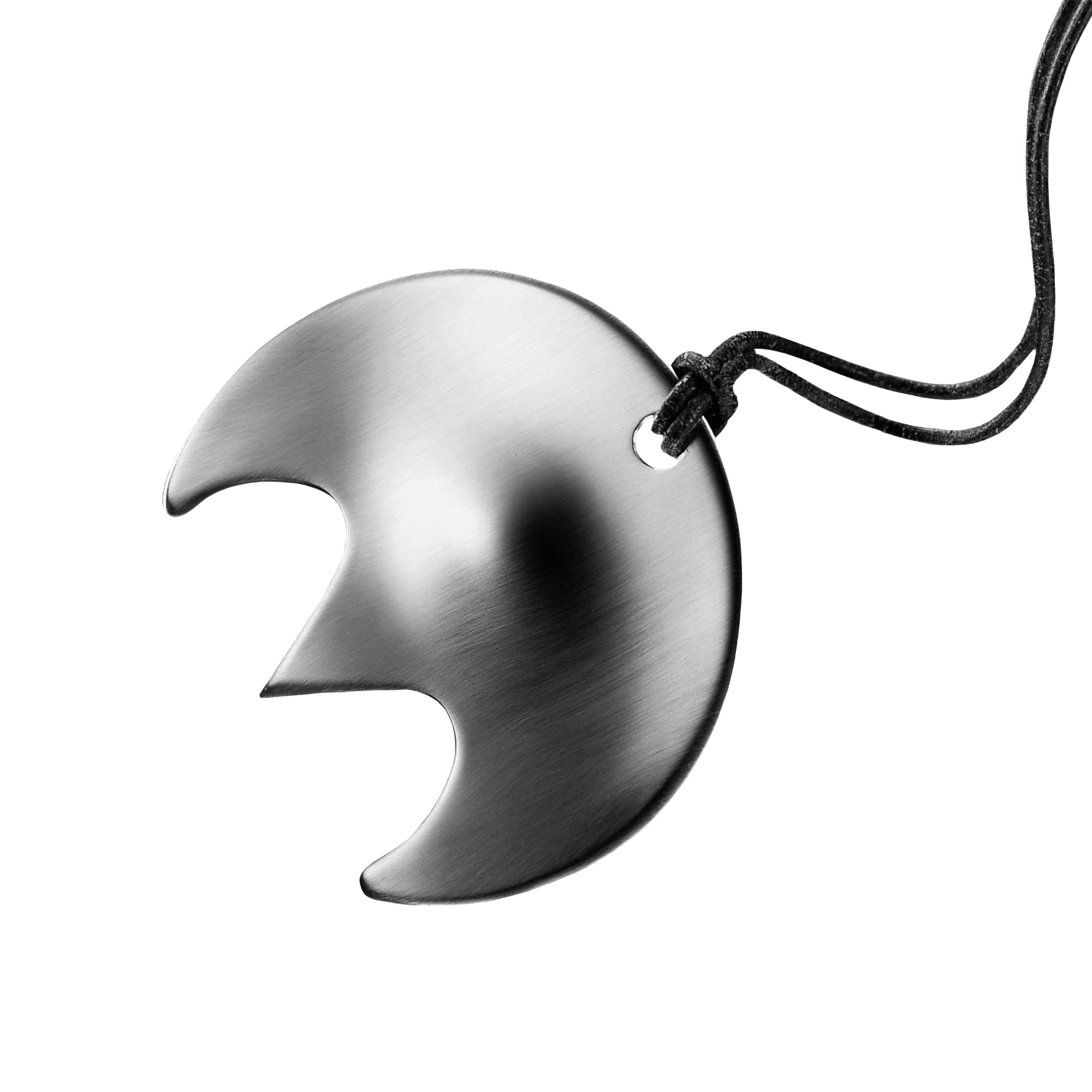
Open walnuts gently and without breakage: The pico tip is simply inserted into the soft part of the nut and the shell is split into two halves by turning it lightly. With the outer tips, the interior can then easily take out.The highlight for jewelery fans: Mono Pico can also be worn as a chain on a longer leather strap.Diameter: 7 cmMaterial 18/10 stainless, polished stainless steel
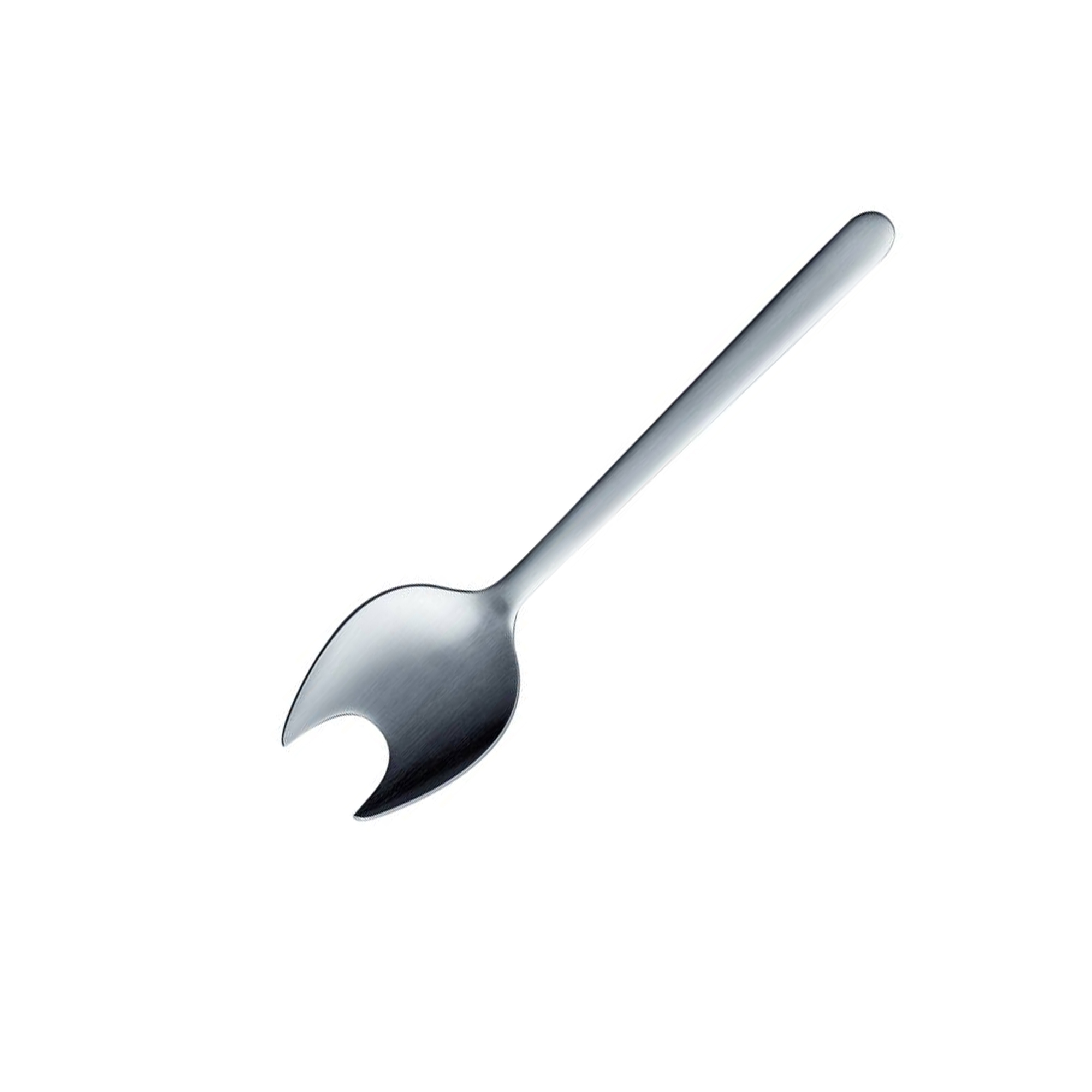
Oysters and lobsters are undoubtedly some of the greatest delights enjoyed by gourmets. Undoubtedly, they are also the hardest to reach, even risking injury. With these congenial special tools, the effort is reduced considerably, and the unique fruits of the sea can be enjoyed as stylishly as they deserve.Oyster fork 14 cmStainless Steel 18/10
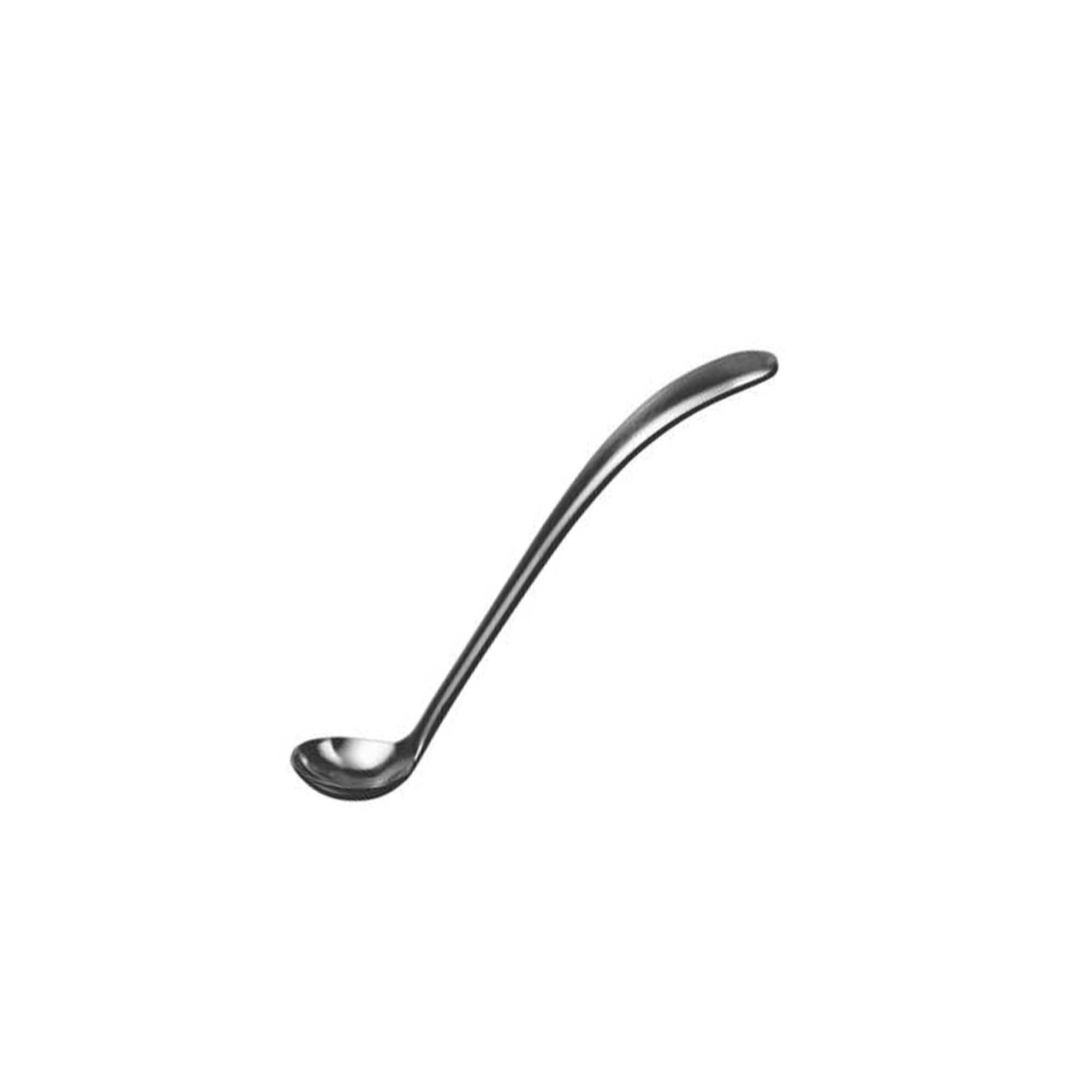
Mustard, spicy sauces or pesto can be served with the handmade mustard spoon.More and more households are turning into strongholds of fine cuisine. They find support in the form of numerous sophisticated accessories from Pott. They inspire and arouse emotions. Often they are ahead of their time, often receiving awards from around the world. But they all have one thing in common: perfection in design and the highest quality.Scoop 10.5 cmStainless Steel 18/10

The designer Peter Raacke, together with the graphic designer Karl-Oskar Blase and then managing director Herbert Seibel, established the brand Mono at the late 1950’s and also designed the flatware experiment Mono Ring in 1962. Mono Ring was in the market for three decades and became a classic. The young designer Mark Braun, 47 years younger than Peter Raacke, only knew Mono Ring from the design literature. He studied the original design intensively and reinterpreted it for its reintroduction. Raacke’s idea of 1962 remains strong: flatware that does not need a drawer and does not have to be placed next to the plate. Instead, it hangs visibly and handy on a cross-shaped rack in the center of the table and diners around the table help themselves. Wilhelm Seibel, Mono’s managing director, together with Mark Braun presented the results to Peter Raacke. After a intensive examination he gave his blessing: “You can do that!” In 2018, a new chapter in flatware history begins for Mono Ring. Revised and refreshed in ist form and available in five contemporary colors. Ist handle combines latest research and high-tech material. Hanging on the rack in the middle of the table – that is the proper place for Mono Ring at home, in diners, in cafeterias, in bistros, and in restaurants. Enjoy your meal. Mono Ring Dessert Fork L 17,4 cm Stainless Steel 18/10, Polyamid Design: Peter Raacke, Mark Braun Prof. Peter Raacke With the design of the legendary mono-a flatware, the designer, born in Hanau in1928, made design history. He further developed many designs that have become part of German daily life. In his teaching capacity at design institutions in Darmstadt, Kassel and Ulm, as well as Professor of Industrial Design at the Faculty of Fine Arts in Hamburg, he influenced many a young designer. In 2003 he was honored with a retrospective – 50 Years of Peter Raacke Design – at the German Technology Museum in Berlin. mono - Home of the German producer of handcrafted design originals Since 1959 mono’s goal has been to develop designer products that follow no trend, they simply outlast all trends. Striving to produce items that do not decorate but function and have the highest standards of production, material and origin. This has not been a rare occurrence. mono products have become part of permanent museum collections of modern and applied art. mono friends elicit pleasure on a daily basis. The mono manufactory is in the North Rhine-Westphalian town of Mettmann. That is where Wilhelm Seibel I set the cornerstone, in 1895 with the founding of the Britanniawarenfabrik W. Seibel – the basis for the family enterprise, which today is led by the 5th generation. In 1959 the brand mono was established with the introduction of mono-a. Much has changed since then, and much has remained the same in the production process at mono. With stubborn dedication traditional processes were kept under the belief that manual know how, the human eye and high end materials actually do make a difference. Some 30 steps are used until the final flatware product is finished. The product is under constant evaluation, and only then and when the final touch is made, and perfection is reached, is the product released from the manufactory. Many mono products (partially several times) have been recipients of awards, and are in the permanent collection of museums of modern and applied art.

The designer Peter Raacke, together with the graphic designer Karl-Oskar Blase and then managing director Herbert Seibel, established the brand Mono at the late 1950’s and also designed the flatware experiment Mono Ring in 1962. Mono Ring was in the market for three decades and became a classic. The young designer Mark Braun, 47 years younger than Peter Raacke, only knew Mono Ring from the design literature. He studied the original design intensively and reinterpreted it for its reintroduction. Raacke’s idea of 1962 remains strong: flatware that does not need a drawer and does not have to be placed next to the plate. Instead, it hangs visibly and handy on a cross-shaped rack in the center of the table and diners around the table help themselves. Wilhelm Seibel, Mono’s managing director, together with Mark Braun presented the results to Peter Raacke. After a intensive examination he gave his blessing: “You can do that!” In 2018, a new chapter in flatware history begins for Mono Ring. Revised and refreshed in ist form and available in five contemporary colors. Ist handle combines latest research and high-tech material. Hanging on the rack in the middle of the table – that is the proper place for Mono Ring at home, in diners, in cafeterias, in bistros, and in restaurants. Enjoy your meal. Mono Ring Teaspoon L 15,9 cm Stainless Steel 18/10, Polyamid Design: Peter Raacke, Mark Braun Prof. Peter Raacke With the design of the legendary mono-a flatware, the designer, born in Hanau in1928, made design history. He further developed many designs that have become part of German daily life. In his teaching capacity at design institutions in Darmstadt, Kassel and Ulm, as well as Professor of Industrial Design at the Faculty of Fine Arts in Hamburg, he influenced many a young designer. In 2003 he was honored with a retrospective – 50 Years of Peter Raacke Design – at the German Technology Museum in Berlin. mono - Home of the German producer of handcrafted design originals Since 1959 mono’s goal has been to develop designer products that follow no trend, they simply outlast all trends. Striving to produce items that do not decorate but function and have the highest standards of production, material and origin. This has not been a rare occurrence. mono products have become part of permanent museum collections of modern and applied art. mono friends elicit pleasure on a daily basis. The mono manufactory is in the North Rhine-Westphalian town of Mettmann. That is where Wilhelm Seibel I set the cornerstone, in 1895 with the founding of the Britanniawarenfabrik W. Seibel – the basis for the family enterprise, which today is led by the 5th generation. In 1959 the brand mono was established with the introduction of mono-a. Much has changed since then, and much has remained the same in the production process at mono. With stubborn dedication traditional processes were kept under the belief that manual know how, the human eye and high end materials actually do make a difference. Some 30 steps are used until the final flatware product is finished. The product is under constant evaluation, and only then and when the final touch is made, and perfection is reached, is the product released from the manufactory. Many mono products (partially several times) have been recipients of awards, and are in the permanent collection of museums of modern and applied art.
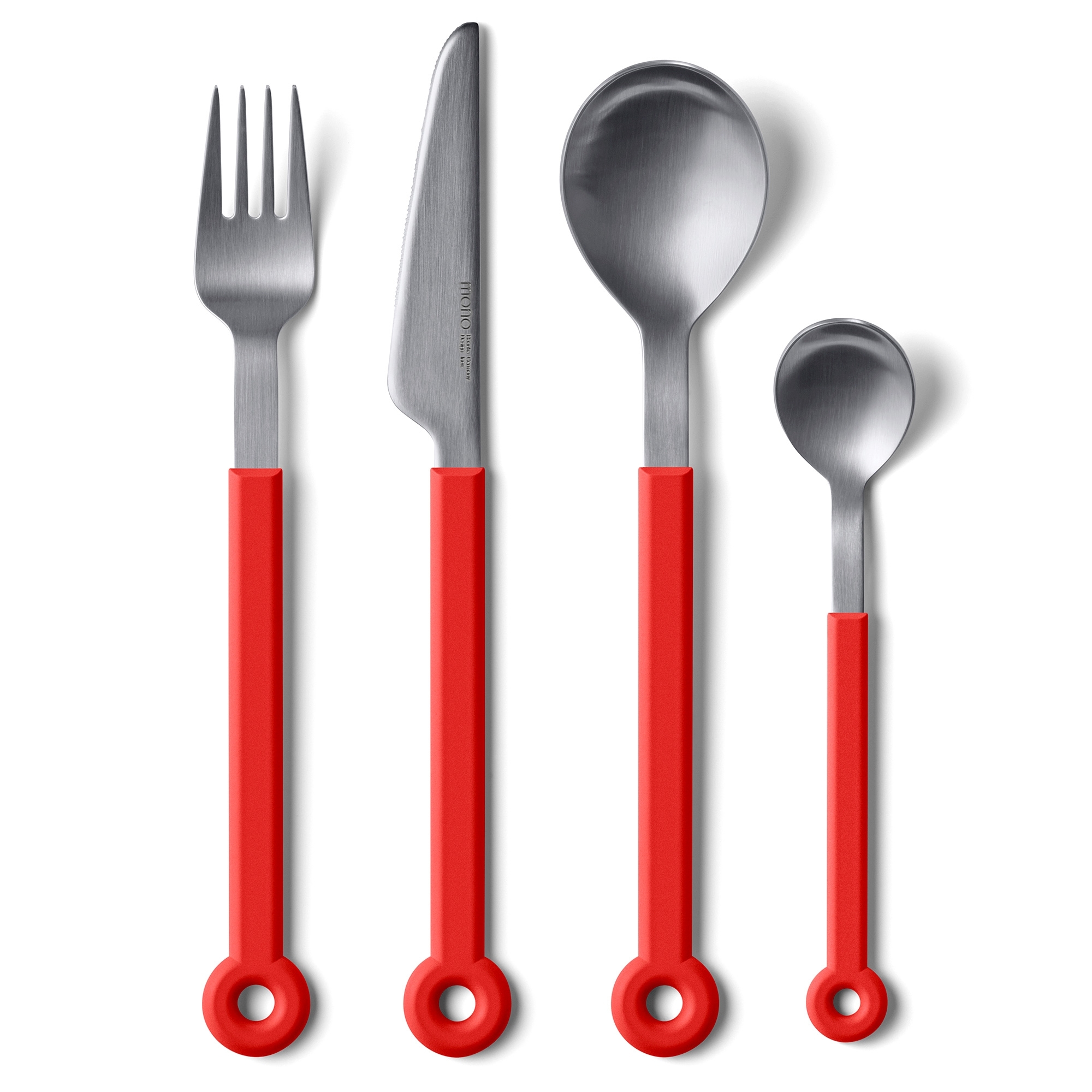
Mono Ring Welcome back! Mono Ring has been missing: on the table, in the office, at friends’ homes, and we missed it too. We were very uneasy about it. So finally we have decided to bring Mono Ring back home. For us the Mono Ring story continues, but for many it is just about to start. This is going to be exciting. The designer Peter Raacke, together with the graphic designer Karl-Oskar Blase and then managing director Herbert Seibel, established the brand Mono at the late 1950’s and also designed the flatware experiment Mono Ring in 1962. Mono Ring was in the market for three decades and became a classic. The young designer Mark Braun, 47 years younger than Peter Raacke, only knew Mono Ring from the design literature. He studied the original design intensively and reinterpreted it for its reintroduction. Raacke’s idea of 1962 remains strong: flatware that does not need a drawer and does not have to be placed next to the plate. Instead, it hangs visibly and handy on a cross-shaped rack in the center of the table and diners around the table help themselves. Wilhelm Seibel, Mono’s managing director, together with Mark Braun presented the results to Peter Raacke. After a intensive examination he gave his blessing: “You can do that!” In 2018, a new chapter in flatware history begins for Mono Ring. Revised and refreshed in ist form and available in five contemporary colors. Ist handle combines latest research and high-tech material. Hanging on the rack in the middle of the table – that is the proper place for Mono Ring at home, in diners, in cafeterias, in bistros, and in restaurants. Enjoy your meal. Table fork, table knife, table spoon and coffee spoon Stainless Steel 18/10, Polyamid Design: Peter Raacke, Mark Braun Prof. Peter Raacke With the design of the legendary mono-a flatware, the designer, born in Hanau in1928, made design history. He further developed many designs that have become part of German daily life. In his teaching capacity at design institutions in Darmstadt, Kassel and Ulm, as well as Professor of Industrial Design at the Faculty of Fine Arts in Hamburg, he influenced many a young designer. In 2003 he was honored with a retrospective – 50 Years of Peter Raacke Design – at the German Technology Museum in Berlin. mono - Home of the German producer of handcrafted design originals Since 1959 mono’s goal has been to develop designer products that follow no trend, they simply outlast all trends. Striving to produce items that do not decorate but function and have the highest standards of production, material and origin. This has not been a rare occurrence. mono products have become part of permanent museum collections of modern and applied art. mono friends elicit pleasure on a daily basis. The mono manufactory is in the North Rhine-Westphalian town of Mettmann. That is where Wilhelm Seibel I set the cornerstone, in 1895 with the founding of the Britanniawarenfabrik W. Seibel – the basis for the family enterprise, which today is led by the 5th generation. In 1959 the brand mono was established with the introduction of mono-a. Much has changed since then, and much has remained the same in the production process at mono. With stubborn dedication traditional processes were kept under the belief that manual know how, the human eye and high end materials actually do make a difference. Some 30 steps are used until the final flatware product is finished. The product is under constant evaluation, and only then and when the final touch is made, and perfection is reached, is the product released from the manufactory. Many mono products (partially several times) have been recipients of awards, and are in the permanent collection of museums of modern and applied art.

The designer Peter Raacke, together with the graphic designer Karl-Oskar Blase and then managing director Herbert Seibel, established the brand Mono at the late 1950’s and also designed the flatware experiment Mono Ring in 1962. Mono Ring was in the market for three decades and became a classic. The young designer Mark Braun, 47 years younger than Peter Raacke, only knew Mono Ring from the design literature. He studied the original design intensively and reinterpreted it for its reintroduction. Raacke’s idea of 1962 remains strong: flatware that does not need a drawer and does not have to be placed next to the plate. Instead, it hangs visibly and handy on a cross-shaped rack in the center of the table and diners around the table help themselves. Wilhelm Seibel, Mono’s managing director, together with Mark Braun presented the results to Peter Raacke. After a intensive examination he gave his blessing: “You can do that!” In 2018, a new chapter in flatware history begins for Mono Ring. Revised and refreshed in ist form and available in five contemporary colors. Ist handle combines latest research and high-tech material. Hanging on the rack in the middle of the table – that is the proper place for Mono Ring at home, in diners, in cafeterias, in bistros, and in restaurants. Enjoy your meal. Table fork, table knife, table spoon, coffee spoon and Dessert Fork Stainless Steel 18/10, Polyamid Design: Peter Raacke, Mark Braun Prof. Peter Raacke With the design of the legendary mono-a flatware, the designer, born in Hanau in1928, made design history. He further developed many designs that have become part of German daily life. In his teaching capacity at design institutions in Darmstadt, Kassel and Ulm, as well as Professor of Industrial Design at the Faculty of Fine Arts in Hamburg, he influenced many a young designer. In 2003 he was honored with a retrospective – 50 Years of Peter Raacke Design – at the German Technology Museum in Berlin. mono - Home of the German producer of handcrafted design originals Since 1959 mono’s goal has been to develop designer products that follow no trend, they simply outlast all trends. Striving to produce items that do not decorate but function and have the highest standards of production, material and origin. This has not been a rare occurrence. mono products have become part of permanent museum collections of modern and applied art. mono friends elicit pleasure on a daily basis. The mono manufactory is in the North Rhine-Westphalian town of Mettmann. That is where Wilhelm Seibel I set the cornerstone, in 1895 with the founding of the Britanniawarenfabrik W. Seibel – the basis for the family enterprise, which today is led by the 5th generation. In 1959 the brand mono was established with the introduction of mono-a. Much has changed since then, and much has remained the same in the production process at mono. With stubborn dedication traditional processes were kept under the belief that manual know how, the human eye and high end materials actually do make a difference. Some 30 steps are used until the final flatware product is finished. The product is under constant evaluation, and only then and when the final touch is made, and perfection is reached, is the product released from the manufactory. Many mono products (partially several times) have been recipients of awards, and are in the permanent collection of museums of modern and applied art.

Mono Ring is the pop star among Mono flatware. It was launched in 1962, well over 1,000,000 pieces of flatware were sold worldwide, and in 1967 Mono Ring even made it to the Olympus of design classics, the Museum of Modern Art in New York. So finally we have decided to bring Mono Ring back home. For us the Mono Ring story continues, but for many it is just about to start. This is going to be exciting. The designer Peter Raacke, together with the graphic designer Karl-Oskar Blase and then managing director Herbert Seibel, established the brand Mono at the late 1950’s and also designed the flatware experiment Mono Ring in 1962. Mono Ring was in the market for three decades and became a classic. The young designer Mark Braun, 47 years younger than Peter Raacke, only knew Mono Ring from the design literature. He studied the original design intensively and reinterpreted it for its reintroduction. Raacke’s idea of 1962 remains strong: flatware that does not need a drawer and does not have to be placed next to the plate. Instead, it hangs visibly and handy on a cross-shaped rack in the center of the table and diners around the table help themselves. Wilhelm Seibel, Mono’s managing director, together with Mark Braun presented the results to Peter Raacke. After a intensive examination he gave his blessing: “You can do that!” In 2018, a new chapter in flatware history begins for Mono Ring. Revised and refreshed in ist form and available in five contemporary colors. Ist handle combines latest research and high-tech material. Hanging on the rack in the middle of the table – that is the proper place for Mono Ring at home, in diners, in cafeterias, in bistros, and in restaurants. Enjoy your meal. 6 Table fork, 6 table knife, 6 table spoon, 6 coffee spoon and stand Stainless Steel 18/10, Polyamid Design: Peter Raacke, Mark Braun The young designer Mark Braun, 47 years younger than Peter Raacke, only knew Mono Ring from the design literature. He studied the original design intensively and reinterpreted it for its reintroduction. mono - Home of the German producer of handcrafted design originals Since 1959 mono’s goal has been to develop designer products that follow no trend, they simply outlast all trends. Striving to produce items that do not decorate but function and have the highest standards of production, material and origin. This has not been a rare occurrence. mono products have become part of permanent museum collections of modern and applied art. mono friends elicit pleasure on a daily basis. The mono manufactory is in the North Rhine-Westphalian town of Mettmann. That is where Wilhelm Seibel I set the cornerstone, in 1895 with the founding of the Britanniawarenfabrik W. Seibel – the basis for the family enterprise, which today is led by the 5th generation. In 1959 the brand mono was established with the introduction of mono-a. Much has changed since then, and much has remained the same in the production process at mono. With stubborn dedication traditional processes were kept under the belief that manual know how, the human eye and high end materials actually do make a difference. Some 30 steps are used until the final flatware product is finished. The product is under constant evaluation, and only then and when the final touch is made, and perfection is reached, is the product released from the manufactory. Many mono products (partially several times) have been recipients of awards, and are in the permanent collection of museums of modern and applied art.
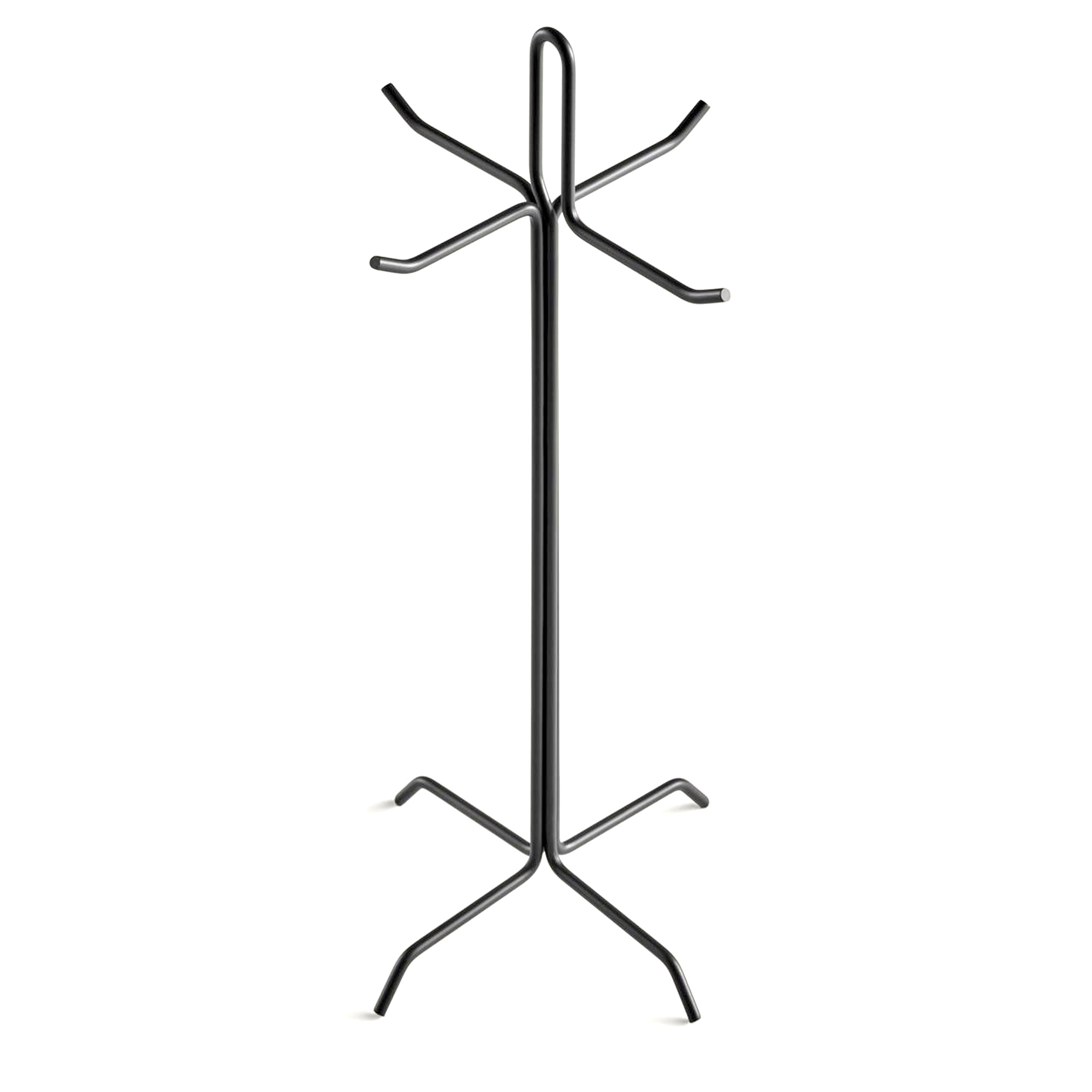
Designer: Peter Raacke, Mark Braun Material: Steel wire, Powder coated Publishing year: 2018 Width: 14.5 cm Height: 31.0 cm Length: 14.5 cm Mono Ring is the pop star among Mono flatware. It was launched in 1962, well over 1,000,000 pieces of flatware were sold worldwide, and in 1967 Mono Ring even made it to the Olympus of design classics, the Museum of Modern Art in New York. In the early 1990s, sales were discontinued. Now Mono Ring is back. Together with Berlin-based designer Mark Braun, under the supervision of former designer Peter Raacke, Mono Ring was carefully revised and is available again in five colors since 2018. Raacke's idea from 1962 remains as strong as ever: a flatware that doesn't need a drawer. Learn more about the full story here. Prof. Peter Raacke With the design of the legendary mono-a flatware, the designer, born in Hanau in1928, made design history. He further developed many designs that have become part of German daily life. In his teaching capacity at design institutions in Darmstadt, Kassel and Ulm, as well as Professor of Industrial Design at the Faculty of Fine Arts in Hamburg, he influenced many a young designer. In 2003 he was honored with a retrospective – 50 Years of Peter Raacke Design – at the German Technology Museum in Berlin. mono - Home of the German producer of handcrafted design originals Since 1959 mono’s goal has been to develop designer products that follow no trend, they simply outlast all trends. Striving to produce items that do not decorate but function and have the highest standards of production, material and origin. This has not been a rare occurrence. mono products have become part of permanent museum collections of modern and applied art. mono friends elicit pleasure on a daily basis. The mono manufactory is in the North Rhine-Westphalian town of Mettmann. That is where Wilhelm Seibel I set the cornerstone, in 1895 with the founding of the Britanniawarenfabrik W. Seibel – the basis for the family enterprise, which today is led by the 5th generation. In 1959 the brand mono was established with the introduction of mono-a. Much has changed since then, and much has remained the same in the production process at mono. With stubborn dedication traditional processes were kept under the belief that manual know how, the human eye and high end materials actually do make a difference. Some 30 steps are used until the final flatware product is finished. The product is under constant evaluation, and only then and when the final touch is made, and perfection is reached, is the product released from the manufactory. Many mono products (partially several times) have been recipients of awards, and are in the permanent collection of museums of modern and applied art.

Mono Ring fondue forks are the perfect complement to the Mono Fondue. They are suitable for both meat and cheese fondue. For meat fondue, the plastic handle serves on the one hand as insulation from the heat-conducting stainless steel, on the other hand, the different colors of the handles help to find your own fork again. Designer: Peter Raacke, Mark Braun Material: Stainless steel 18/10, Matt brushed, Polyamide Made in Germany

The designer Peter Raacke, together with the graphic designer Karl-Oskar Blase and then managing director Herbert Seibel, established the brand Mono at the late 1950’s and also designed the flatware experiment Mono Ring in 1962. Mono Ring was in the market for three decades and became a classic. The young designer Mark Braun, 47 years younger than Peter Raacke, only knew Mono Ring from the design literature. He studied the original design intensively and reinterpreted it for its reintroduction. Raacke’s idea of 1962 remains strong: flatware that does not need a drawer and does not have to be placed next to the plate. Instead, it hangs visibly and handy on a cross-shaped rack in the center of the table and diners around the table help themselves. Wilhelm Seibel, Mono’s managing director, together with Mark Braun presented the results to Peter Raacke. After a intensive examination he gave his blessing: “You can do that!” In 2018, a new chapter in flatware history begins for Mono Ring. Revised and refreshed in ist form and available in five contemporary colors. Ist handle combines latest research and high-tech material. Hanging on the rack in the middle of the table – that is the proper place for Mono Ring at home, in diners, in cafeterias, in bistros, and in restaurants. Enjoy your meal. Mono Ring Table Fork L 21,2 cm Stainless Steel 18/10, Polyamid Design: Peter Raacke, Mark Braun Prof. Peter Raacke With the design of the legendary mono-a flatware, the designer, born in Hanau in1928, made design history. He further developed many designs that have become part of German daily life. In his teaching capacity at design institutions in Darmstadt, Kassel and Ulm, as well as Professor of Industrial Design at the Faculty of Fine Arts in Hamburg, he influenced many a young designer. In 2003 he was honored with a retrospective – 50 Years of Peter Raacke Design – at the German Technology Museum in Berlin. mono - Home of the German producer of handcrafted design originals Since 1959 mono’s goal has been to develop designer products that follow no trend, they simply outlast all trends. Striving to produce items that do not decorate but function and have the highest standards of production, material and origin. This has not been a rare occurrence. mono products have become part of permanent museum collections of modern and applied art. mono friends elicit pleasure on a daily basis. The mono manufactory is in the North Rhine-Westphalian town of Mettmann. That is where Wilhelm Seibel I set the cornerstone, in 1895 with the founding of the Britanniawarenfabrik W. Seibel – the basis for the family enterprise, which today is led by the 5th generation. In 1959 the brand mono was established with the introduction of mono-a. Much has changed since then, and much has remained the same in the production process at mono. With stubborn dedication traditional processes were kept under the belief that manual know how, the human eye and high end materials actually do make a difference. Some 30 steps are used until the final flatware product is finished. The product is under constant evaluation, and only then and when the final touch is made, and perfection is reached, is the product released from the manufactory. Many mono products (partially several times) have been recipients of awards, and are in the permanent collection of museums of modern and applied art.

The designer Peter Raacke, together with the graphic designer Karl-Oskar Blase and then managing director Herbert Seibel, established the brand Mono at the late 1950’s and also designed the flatware experiment Mono Ring in 1962. Mono Ring was in the market for three decades and became a classic. The young designer Mark Braun, 47 years younger than Peter Raacke, only knew Mono Ring from the design literature. He studied the original design intensively and reinterpreted it for its reintroduction. Raacke’s idea of 1962 remains strong: flatware that does not need a drawer and does not have to be placed next to the plate. Instead, it hangs visibly and handy on a cross-shaped rack in the center of the table and diners around the table help themselves. Wilhelm Seibel, Mono’s managing director, together with Mark Braun presented the results to Peter Raacke. After a intensive examination he gave his blessing: “You can do that!” In 2018, a new chapter in flatware history begins for Mono Ring. Revised and refreshed in ist form and available in five contemporary colors. Ist handle combines latest research and high-tech material. Hanging on the rack in the middle of the table – that is the proper place for Mono Ring at home, in diners, in cafeterias, in bistros, and in restaurants. Enjoy your meal. Mono Ring Table Knife L 23 cm Stainless Steel 18/10, Polyamid Design: Peter Raacke, Mark Braun Prof. Peter Raacke With the design of the legendary mono-a flatware, the designer, born in Hanau in1928, made design history. He further developed many designs that have become part of German daily life. In his teaching capacity at design institutions in Darmstadt, Kassel and Ulm, as well as Professor of Industrial Design at the Faculty of Fine Arts in Hamburg, he influenced many a young designer. In 2003 he was honored with a retrospective – 50 Years of Peter Raacke Design – at the German Technology Museum in Berlin. mono - Home of the German producer of handcrafted design originals Since 1959 mono’s goal has been to develop designer products that follow no trend, they simply outlast all trends. Striving to produce items that do not decorate but function and have the highest standards of production, material and origin. This has not been a rare occurrence. mono products have become part of permanent museum collections of modern and applied art. mono friends elicit pleasure on a daily basis. The mono manufactory is in the North Rhine-Westphalian town of Mettmann. That is where Wilhelm Seibel I set the cornerstone, in 1895 with the founding of the Britanniawarenfabrik W. Seibel – the basis for the family enterprise, which today is led by the 5th generation. In 1959 the brand mono was established with the introduction of mono-a. Much has changed since then, and much has remained the same in the production process at mono. With stubborn dedication traditional processes were kept under the belief that manual know how, the human eye and high end materials actually do make a difference. Some 30 steps are used until the final flatware product is finished. The product is under constant evaluation, and only then and when the final touch is made, and perfection is reached, is the product released from the manufactory. Many mono products (partially several times) have been recipients of awards, and are in the permanent collection of museums of modern and applied art.

The designer Peter Raacke, together with the graphic designer Karl-Oskar Blase and then managing director Herbert Seibel, established the brand Mono at the late 1950’s and also designed the flatware experiment Mono Ring in 1962. Mono Ring was in the market for three decades and became a classic. The young designer Mark Braun, 47 years younger than Peter Raacke, only knew Mono Ring from the design literature. He studied the original design intensively and reinterpreted it for its reintroduction. Raacke’s idea of 1962 remains strong: flatware that does not need a drawer and does not have to be placed next to the plate. Instead, it hangs visibly and handy on a cross-shaped rack in the center of the table and diners around the table help themselves. Wilhelm Seibel, Mono’s managing director, together with Mark Braun presented the results to Peter Raacke. After a intensive examination he gave his blessing: “You can do that!” In 2018, a new chapter in flatware history begins for Mono Ring. Revised and refreshed in ist form and available in five contemporary colors. Ist handle combines latest research and high-tech material. Hanging on the rack in the middle of the table – that is the proper place for Mono Ring at home, in diners, in cafeterias, in bistros, and in restaurants. Enjoy your meal. Mono Ring Table Spoon L 21,8 cm Stainless Steel 18/10, Polyamid Design: Peter Raacke, Mark Braun Prof. Peter Raacke With the design of the legendary mono-a flatware, the designer, born in Hanau in1928, made design history. He further developed many designs that have become part of German daily life. In his teaching capacity at design institutions in Darmstadt, Kassel and Ulm, as well as Professor of Industrial Design at the Faculty of Fine Arts in Hamburg, he influenced many a young designer. In 2003 he was honored with a retrospective – 50 Years of Peter Raacke Design – at the German Technology Museum in Berlin. mono - Home of the German producer of handcrafted design originals Since 1959 mono’s goal has been to develop designer products that follow no trend, they simply outlast all trends. Striving to produce items that do not decorate but function and have the highest standards of production, material and origin. This has not been a rare occurrence. mono products have become part of permanent museum collections of modern and applied art. mono friends elicit pleasure on a daily basis. The mono manufactory is in the North Rhine-Westphalian town of Mettmann. That is where Wilhelm Seibel I set the cornerstone, in 1895 with the founding of the Britanniawarenfabrik W. Seibel – the basis for the family enterprise, which today is led by the 5th generation. In 1959 the brand mono was established with the introduction of mono-a. Much has changed since then, and much has remained the same in the production process at mono. With stubborn dedication traditional processes were kept under the belief that manual know how, the human eye and high end materials actually do make a difference. Some 30 steps are used until the final flatware product is finished. The product is under constant evaluation, and only then and when the final touch is made, and perfection is reached, is the product released from the manufactory. Many mono products (partially several times) have been recipients of awards, and are in the permanent collection of museums of modern and applied art.

Table fork, table knife, table spoon and coffee spoon Design: Peter Raacke This 4 piece Mono V set includes table fork, table knife, table spoon, and tea spoon. Mono V is the first completely new flatware concept from the traditional manufactory in over 20 years. In early 2020, we contacted Berlin-based designer Mark Braun with this ambitious project. The idea: a new Mono flatware - resource-saving use of materials, easy to manufacture, highest quality standards, timeless aesthetics, and made in the Mono manufactory in Mettmann Germany. 2.5 years later, Mono V has come to stay. Table fork, table knife, table spoon and coffee spoon Das Mono Besteck des 21. Jahrhunderts. Designer: Mark Braun Material: Stainless steel 18/10, Matt brushed, Hardened blade steel Publishing year: 2022 Mark Braun Mark Braun, born in 1975, is a trained carpenter and studied industrial design. He has been running his own design studio in Berlin since 2006. His portfolio includes furniture, lighting and products for the table. His designs have been honored with the IF Award, Red Dot and German Design Award, among others. Mark Braun was a visiting professor and guest lecturer at HKD Burg Giebichenstein, Halle and ECAL Lausanne. Since 2015 he is professor for industrial design at the HBK Saar. For Mono, Mark Braun designed the reedition of Mono Ring and the Mono Fondue. The following images were taken during a visit of Hometastics to Mark Braun at home and in his studio in Berlin 2019. mono - Home of the German producer of handcrafted design originals Since 1959 mono’s goal has been to develop designer products that follow no trend, they simply outlast all trends. Striving to produce items that do not decorate but function and have the highest standards of production, material and origin. This has not been a rare occurrence. mono products have become part of permanent museum collections of modern and applied art. mono friends elicit pleasure on a daily basis. The mono manufactory is in the North Rhine-Westphalian town of Mettmann. That is where Wilhelm Seibel I set the cornerstone, in 1895 with the founding of the Britanniawarenfabrik W. Seibel – the basis for the family enterprise, which today is led by the 5th generation. In 1959 the brand mono was established with the introduction of mono-a. Much has changed since then, and much has remained the same in the production process at mono. With stubborn dedication traditional processes were kept under the belief that manual know how, the human eye and high end materials actually do make a difference. Some 30 steps are used until the final flatware product is finished. The product is under constant evaluation, and only then and when the final touch is made, and perfection is reached, is the product released from the manufactory. Many mono products (partially several times) have been recipients of awards, and are in the permanent collection of museums of modern and applied art.
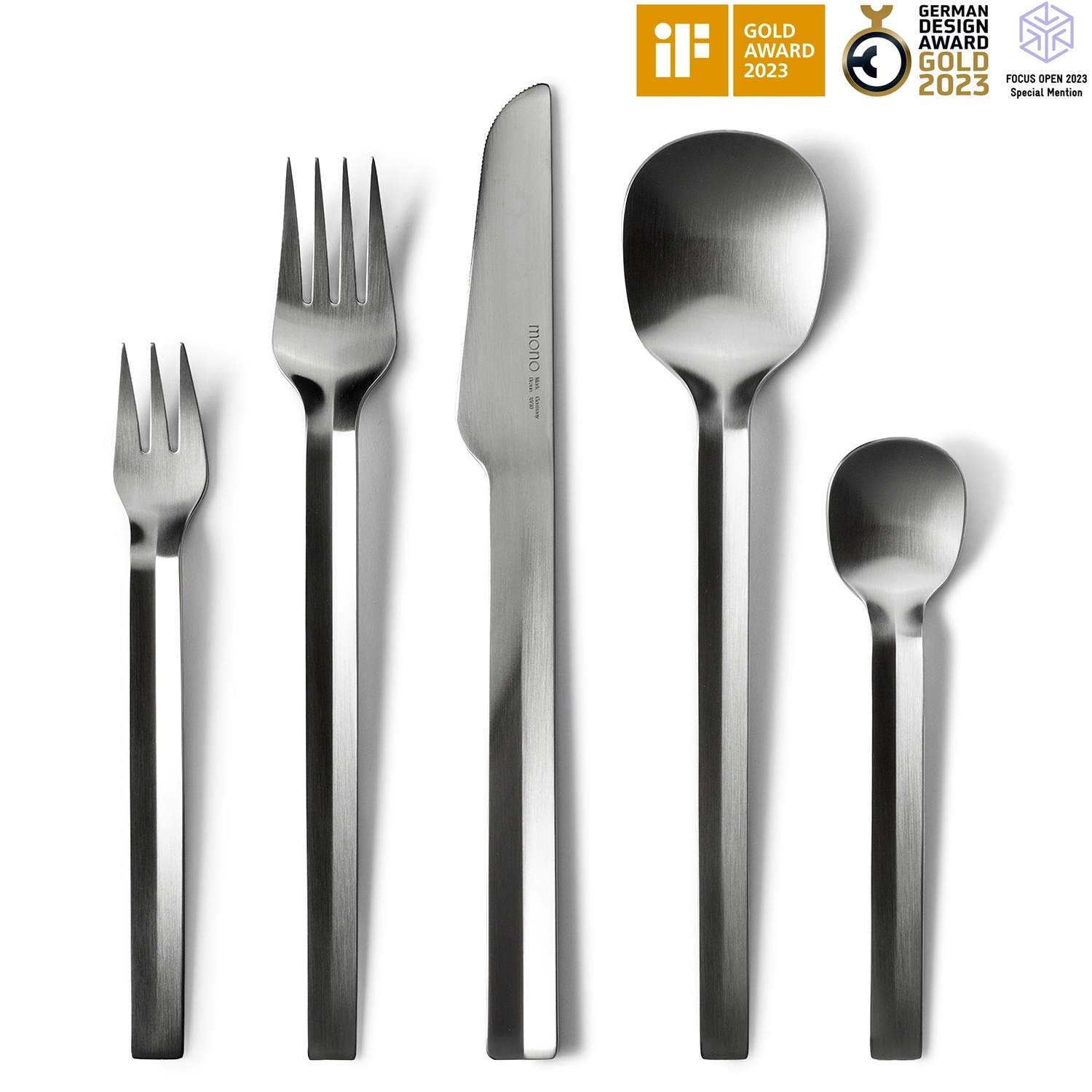
This 5 piece Mono V set includes table fork, table knife, table spoon, and tea spoon. Mono V is the first completely new flatware concept from the traditional manufactory in over 20 years. In early 2020, we contacted Berlin-based designer Mark Braun with this ambitious project. The idea: a new Mono flatware - resource-saving use of materials, easy to manufacture, highest quality standards, timeless aesthetics, and made in the Mono manufactory in Mettmann Germany. 2.5 years later, Mono V has come to stay. Table fork, table knife, table spoon and coffee spoon Das Mono Besteck des 21. Jahrhunderts. Designer: Mark Braun Material: Stainless steel 18/10, Matt brushed, Hardened blade steel Publishing year: 2022 Mark Braun Mark Braun, born in 1975, is a trained carpenter and studied industrial design. He has been running his own design studio in Berlin since 2006. His portfolio includes furniture, lighting and products for the table. His designs have been honored with the IF Award, Red Dot and German Design Award, among others. Mark Braun was a visiting professor and guest lecturer at HKD Burg Giebichenstein, Halle and ECAL Lausanne. Since 2015 he is professor for industrial design at the HBK Saar. For Mono, Mark Braun designed the reedition of Mono Ring and the Mono Fondue. The following images were taken during a visit of Hometastics to Mark Braun at home and in his studio in Berlin 2019. mono - Home of the German producer of handcrafted design originals Since 1959 mono’s goal has been to develop designer products that follow no trend, they simply outlast all trends. Striving to produce items that do not decorate but function and have the highest standards of production, material and origin. This has not been a rare occurrence. mono products have become part of permanent museum collections of modern and applied art. mono friends elicit pleasure on a daily basis. The mono manufactory is in the North Rhine-Westphalian town of Mettmann. That is where Wilhelm Seibel I set the cornerstone, in 1895 with the founding of the Britanniawarenfabrik W. Seibel – the basis for the family enterprise, which today is led by the 5th generation. In 1959 the brand mono was established with the introduction of mono-a. Much has changed since then, and much has remained the same in the production process at mono. With stubborn dedication traditional processes were kept under the belief that manual know how, the human eye and high end materials actually do make a difference. Some 30 steps are used until the final flatware product is finished. The product is under constant evaluation, and only then and when the final touch is made, and perfection is reached, is the product released from the manufactory. Many mono products (partially several times) have been recipients of awards, and are in the permanent collection of museums of modern and applied art.

Mono V is the first completely new flatware concept from the traditional manufactory in over 20 years. In early 2020, we contacted Berlin-based designer Mark Braun with this ambitious project. The idea: a new Mono flatware - resource-saving use of materials, easy to manufacture, highest quality standards, timeless aesthetics, and made in the Mono manufactory in Mettmann Germany. 2.5 years later, Mono V has come to stay. Espresso spoon 11 cm The Mono flatware of the 21st century Designer: Mark Braun Material: Stainless steel 18/10, Matt brushed, Hardened blade steel Publishing year: 2022 Mark Braun Mark Braun, born in 1975, is a trained carpenter and studied industrial design. He has been running his own design studio in Berlin since 2006. His portfolio includes furniture, lighting and products for the table. His designs have been honored with the IF Award, Red Dot and German Design Award, among others. Mark Braun was a visiting professor and guest lecturer at HKD Burg Giebichenstein, Halle and ECAL Lausanne. Since 2015 he is professor for industrial design at the HBK Saar. For Mono, Mark Braun designed the reedition of Mono Ring and the Mono Fondue. The following images were taken during a visit of Hometastics to Mark Braun at home and in his studio in Berlin 2019. mono - Home of the German producer of handcrafted design originals Since 1959 mono’s goal has been to develop designer products that follow no trend, they simply outlast all trends. Striving to produce items that do not decorate but function and have the highest standards of production, material and origin. This has not been a rare occurrence. mono products have become part of permanent museum collections of modern and applied art. mono friends elicit pleasure on a daily basis. The mono manufactory is in the North Rhine-Westphalian town of Mettmann. That is where Wilhelm Seibel I set the cornerstone, in 1895 with the founding of the Britanniawarenfabrik W. Seibel – the basis for the family enterprise, which today is led by the 5th generation. In 1959 the brand mono was established with the introduction of mono-a. Much has changed since then, and much has remained the same in the production process at mono. With stubborn dedication traditional processes were kept under the belief that manual know how, the human eye and high end materials actually do make a difference. Some 30 steps are used until the final flatware product is finished. The product is under constant evaluation, and only then and when the final touch is made, and perfection is reached, is the product released from the manufactory. Many mono products (partially several times) have been recipients of awards, and are in the permanent collection of museums of modern and applied art.
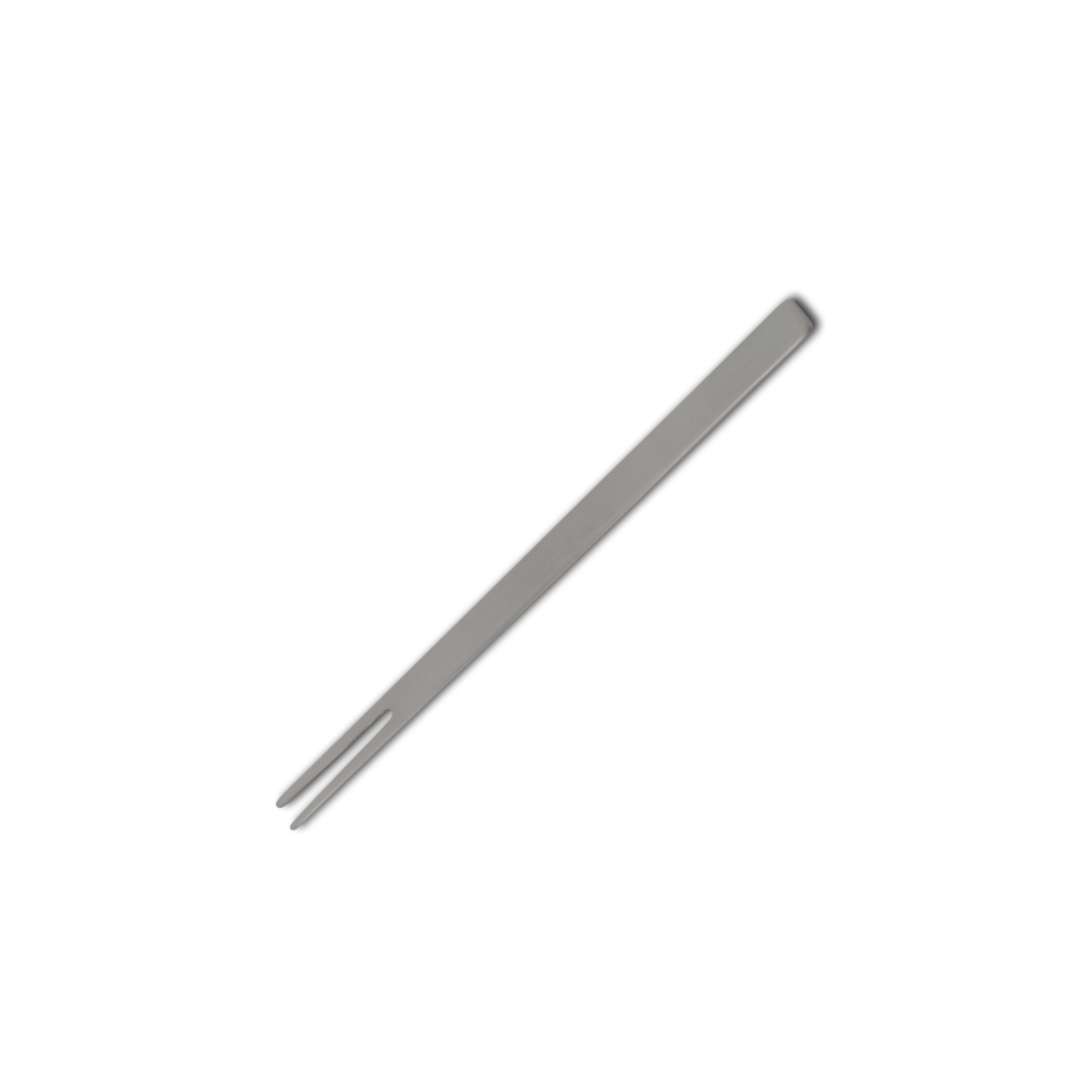
mono-a is the quintessential design of the mono flatware family. Designed in 1958 by Professor Peter Raacke, it continues to stand for the purist's definition of form and function.mono-a is considered a classic, and has been the recipient of numerous domestic and international awards. Today, mono-a is known as the most sold German flatware of the post-war era.canape fork 13 cmStainless Steel 18/10Design: Peter RaackeWith the design of the legendary mono-a flatware, the designer, born in Hanau in1928, made design history. He further developed many designs that have become part of German daily life. In his teaching capacity at design institutions in Darmstadt, Kassel and Ulm, as well as Professor of Industrial Design at the Faculty of Fine Arts in Hamburg, he influenced many a young designer. In 2003 he was honored with a retrospective – 50 Years of Peter Raacke Design – at the German Technology Museum in Berlin.Since 1959 mono’s goal has been to develop designer products that follow no trend, they simply outlast all trends. Striving to produce items that do not decorate but function and have the highest standards of production, material and origin.This has not been a rare occurrence. mono products have become part of permanent museum collections of modern and applied art. mono friends elicit pleasure on a daily basis.The mono manufactory is in the North Rhine-Westphalian town of Mettmann. That is where Wilhelm Seibel I set the cornerstone, in 1895 with the founding of the Britanniawarenfabrik W. Seibel – the basis for the family enterprise, which today is led by the 5th generation. In 1959 the brand mono was established with the introduction of mono-a.Much has changed since then, and much has remained the same in the production process at mono. With stubborn dedication traditional processes were kept under the belief that manual know how, the human eye and high end materials actually do make a difference.Some 30 steps are used until the final flatware product is finished. The product is under constant evaluation, and only then and when the final touch is made, and perfection is reached, is the product released from the manufactory.Many mono products (partially several times) have been recipients of awards, and are in the permanent collection of museums of modern and applied art.
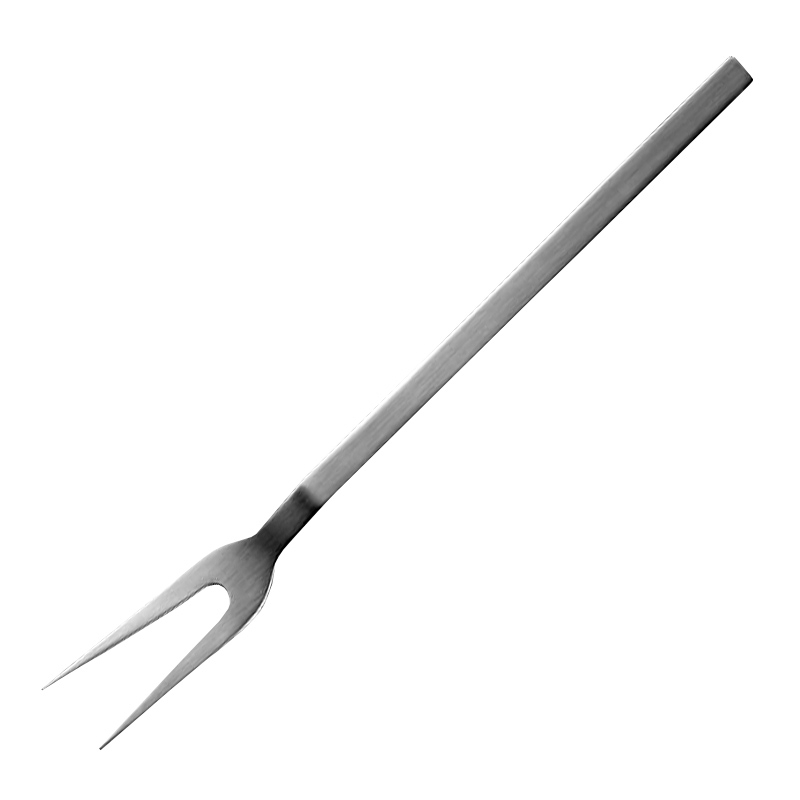
mono-a is the quintessential design of the mono flatware family. Designed in 1958 by Professor Peter Raacke, it continues to stand for the purist's definition of form and function.mono-a is considered a classic, and has been the recipient of numerous domestic and international awards. Today, mono-a is known as the most sold German flatware of the post-war era.carving fork 28 cmStainless Steel 18/10Design: Peter RaackeWith the design of the legendary mono-a flatware, the designer, born in Hanau in1928, made design history. He further developed many designs that have become part of German daily life. In his teaching capacity at design institutions in Darmstadt, Kassel and Ulm, as well as Professor of Industrial Design at the Faculty of Fine Arts in Hamburg, he influenced many a young designer. In 2003 he was honored with a retrospective – 50 Years of Peter Raacke Design – at the German Technology Museum in Berlin.Since 1959 mono’s goal has been to develop designer products that follow no trend, they simply outlast all trends. Striving to produce items that do not decorate but function and have the highest standards of production, material and origin.This has not been a rare occurrence. mono products have become part of permanent museum collections of modern and applied art. mono friends elicit pleasure on a daily basis.The mono manufactory is in the North Rhine-Westphalian town of Mettmann. That is where Wilhelm Seibel I set the cornerstone, in 1895 with the founding of the Britanniawarenfabrik W. Seibel – the basis for the family enterprise, which today is led by the 5th generation. In 1959 the brand mono was established with the introduction of mono-a.Much has changed since then, and much has remained the same in the production process at mono. With stubborn dedication traditional processes were kept under the belief that manual know how, the human eye and high end materials actually do make a difference.Some 30 steps are used until the final flatware product is finished. The product is under constant evaluation, and only then and when the final touch is made, and perfection is reached, is the product released from the manufactory.Many mono products (partially several times) have been recipients of awards, and are in the permanent collection of museums of modern and applied art.
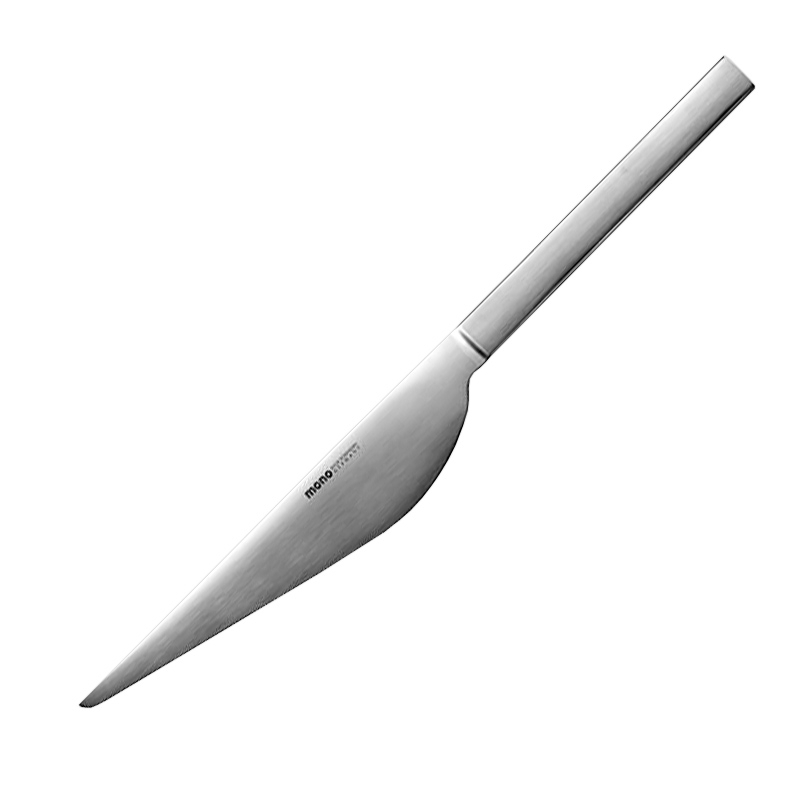
mono-a is the quintessential design of the mono flatware family. Designed in 1958 by Professor Peter Raacke, it continues to stand for the purist's definition of form and function.mono-a is considered a classic, and has been the recipient of numerous domestic and international awards. Today, mono-a is known as the most sold German flatware of the post-war era.carving knife 27 cm Stainless Steel 18/10Design: Peter RaackeWith the design of the legendary mono-a flatware, the designer, born in Hanau in1928, made design history. He further developed many designs that have become part of German daily life. In his teaching capacity at design institutions in Darmstadt, Kassel and Ulm, as well as Professor of Industrial Design at the Faculty of Fine Arts in Hamburg, he influenced many a young designer. In 2003 he was honored with a retrospective – 50 Years of Peter Raacke Design – at the German Technology Museum in Berlin.Since 1959 mono’s goal has been to develop designer products that follow no trend, they simply outlast all trends. Striving to produce items that do not decorate but function and have the highest standards of production, material and origin.This has not been a rare occurrence. mono products have become part of permanent museum collections of modern and applied art. mono friends elicit pleasure on a daily basis.The mono manufactory is in the North Rhine-Westphalian town of Mettmann. That is where Wilhelm Seibel I set the cornerstone, in 1895 with the founding of the Britanniawarenfabrik W. Seibel – the basis for the family enterprise, which today is led by the 5th generation. In 1959 the brand mono was established with the introduction of mono-a.Much has changed since then, and much has remained the same in the production process at mono. With stubborn dedication traditional processes were kept under the belief that manual know how, the human eye and high end materials actually do make a difference.Some 30 steps are used until the final flatware product is finished. The product is under constant evaluation, and only then and when the final touch is made, and perfection is reached, is the product released from the manufactory.Many mono products (partially several times) have been recipients of awards, and are in the permanent collection of museums of modern and applied art.
mono-a is the quintessential design of the mono flatware family. Designed in 1958 by Professor Peter Raacke, it continues to stand for the purist's definition of form and function.mono-a is considered a classic, and has been the recipient of numerous domestic and international awards. Today, mono-a is known as the most sold German flatware of the post-war era.coffee spoon 15 cmStainless Steel 18/10Design: Peter RaackeWith the design of the legendary mono-a flatware, the designer, born in Hanau in1928, made design history. He further developed many designs that have become part of German daily life. In his teaching capacity at design institutions in Darmstadt, Kassel and Ulm, as well as Professor of Industrial Design at the Faculty of Fine Arts in Hamburg, he influenced many a young designer. In 2003 he was honored with a retrospective – 50 Years of Peter Raacke Design – at the German Technology Museum in Berlin.Since 1959 mono’s goal has been to develop designer products that follow no trend, they simply outlast all trends. Striving to produce items that do not decorate but function and have the highest standards of production, material and origin.This has not been a rare occurrence. mono products have become part of permanent museum collections of modern and applied art. mono friends elicit pleasure on a daily basis.The mono manufactory is in the North Rhine-Westphalian town of Mettmann. That is where Wilhelm Seibel I set the cornerstone, in 1895 with the founding of the Britanniawarenfabrik W. Seibel – the basis for the family enterprise, which today is led by the 5th generation. In 1959 the brand mono was established with the introduction of mono-a.Much has changed since then, and much has remained the same in the production process at mono. With stubborn dedication traditional processes were kept under the belief that manual know how, the human eye and high end materials actually do make a difference.Some 30 steps are used until the final flatware product is finished. The product is under constant evaluation, and only then and when the final touch is made, and perfection is reached, is the product released from the manufactory.Many mono products (partially several times) have been recipients of awards, and are in the permanent collection of museums of modern and applied art.
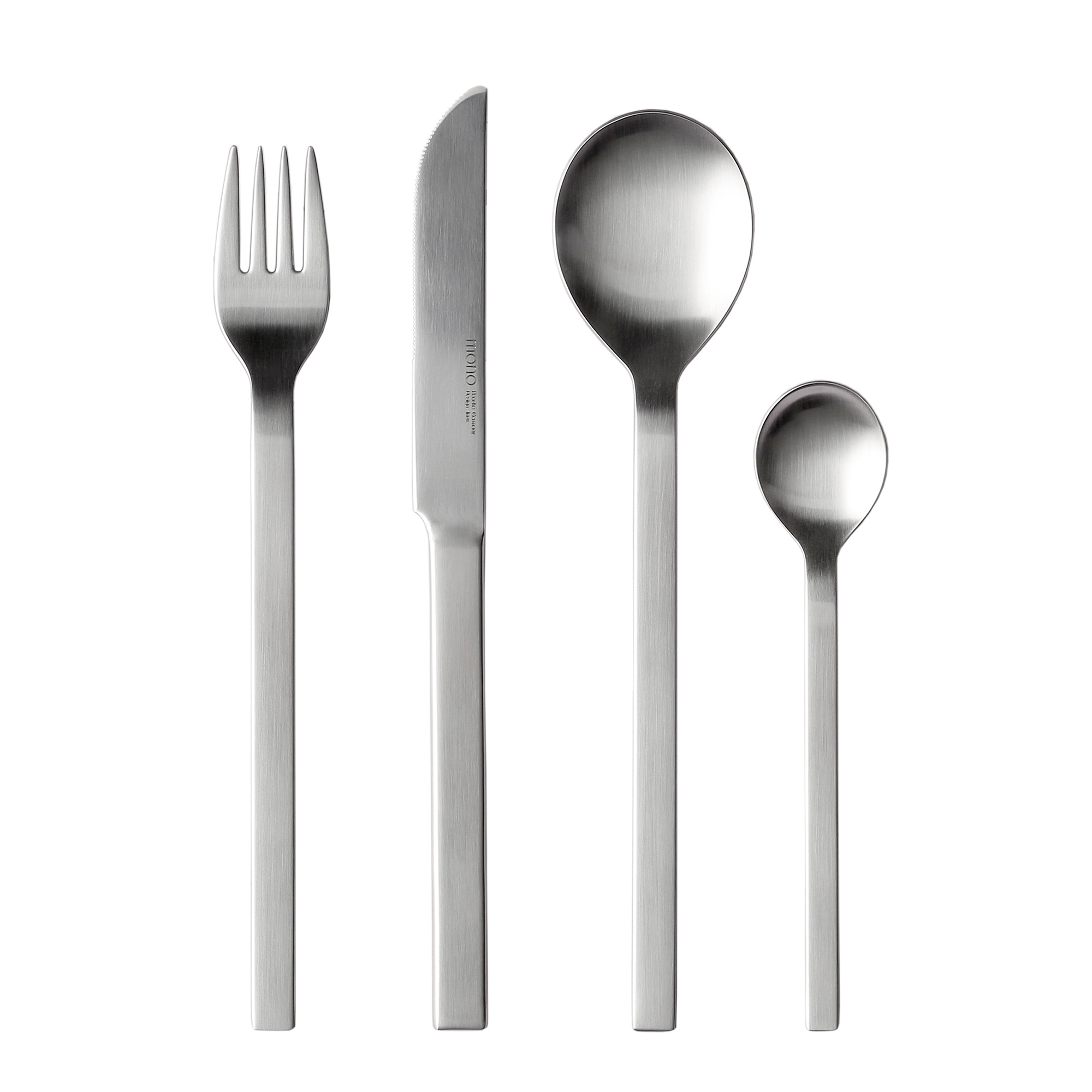
mono-a is the quintessential design of the mono flatware family. Designed in 1958 by Professor Peter Raacke, it continues to stand for the purist's definition of form and function. mono-a is considered a classic, and has been the recipient of numerous domestic and international awards. Today, mono-a is known as the most sold German flatware of the post-war era. Table fork, table knife, table spoon and coffee spoon Design: Peter Raacke Prof. Peter Raacke With the design of the legendary mono-a flatware, the designer, born in Hanau in1928, made design history. He further developed many designs that have become part of German daily life. In his teaching capacity at design institutions in Darmstadt, Kassel and Ulm, as well as Professor of Industrial Design at the Faculty of Fine Arts in Hamburg, he influenced many a young designer. In 2003 he was honored with a retrospective – 50 Years of Peter Raacke Design – at the German Technology Museum in Berlin. mono - Home of the German producer of handcrafted design originals Since 1959 mono’s goal has been to develop designer products that follow no trend, they simply outlast all trends. Striving to produce items that do not decorate but function and have the highest standards of production, material and origin. This has not been a rare occurrence. mono products have become part of permanent museum collections of modern and applied art. mono friends elicit pleasure on a daily basis. The mono manufactory is in the North Rhine-Westphalian town of Mettmann. That is where Wilhelm Seibel I set the cornerstone, in 1895 with the founding of the Britanniawarenfabrik W. Seibel – the basis for the family enterprise, which today is led by the 5th generation. In 1959 the brand mono was established with the introduction of mono-a. Much has changed since then, and much has remained the same in the production process at mono. With stubborn dedication traditional processes were kept under the belief that manual know how, the human eye and high end materials actually do make a difference. Some 30 steps are used until the final flatware product is finished. The product is under constant evaluation, and only then and when the final touch is made, and perfection is reached, is the product released from the manufactory. Many mono products (partially several times) have been recipients of awards, and are in the permanent collection of museums of modern and applied art.
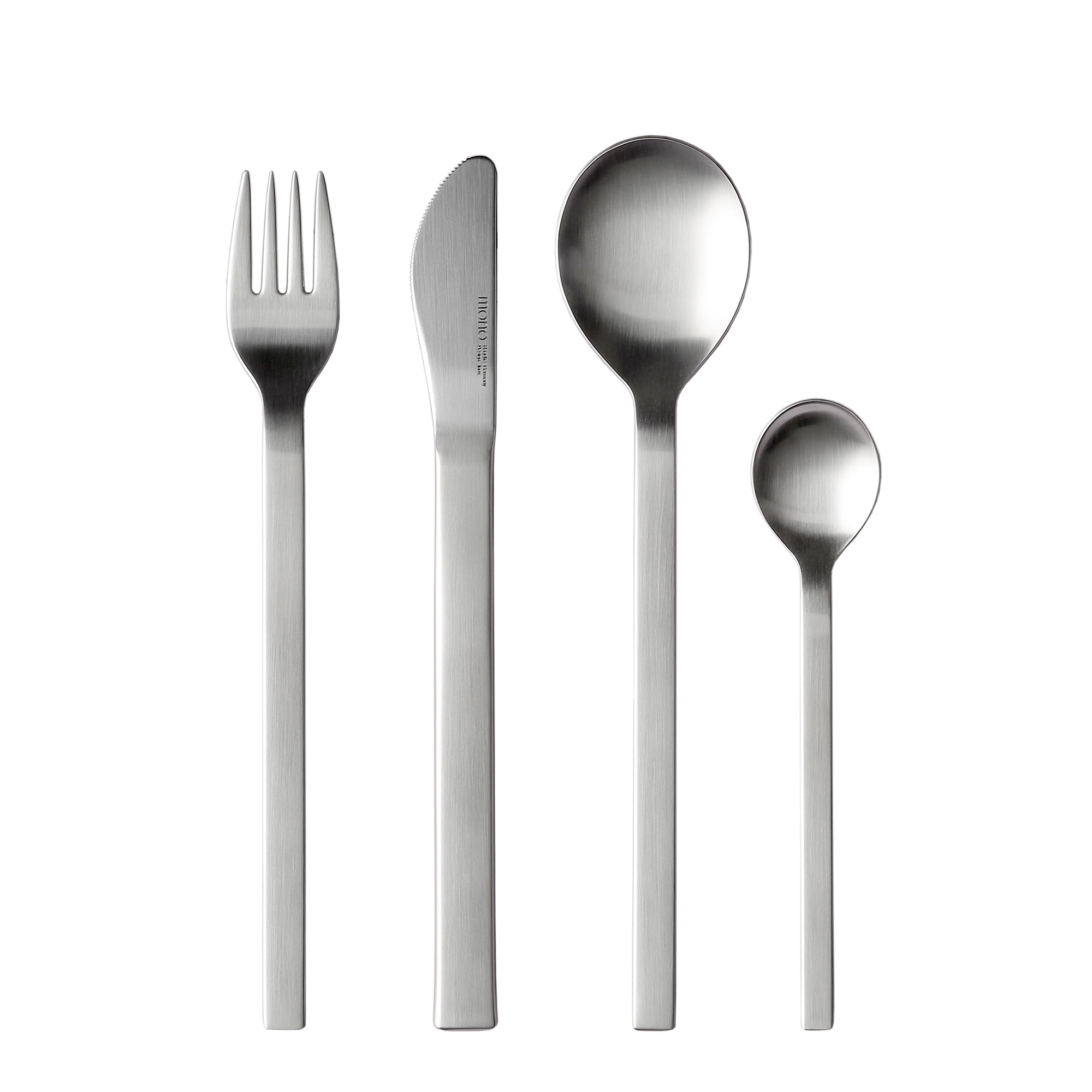
mono-a is the quintessential design of the mono flatware family. Designed in 1958 by Professor Peter Raacke, it continues to stand for the purist's definition of form and function. mono-a is considered a classic, and has been the recipient of numerous domestic and international awards. Today, mono-a is known as the most sold German flatware of the post-war era. 6 Table fork, 6 table knife, 6 table spoon and 6 coffee spoon Design: Peter Raacke Prof. Peter Raacke With the design of the legendary mono-a flatware, the designer, born in Hanau in1928, made design history. He further developed many designs that have become part of German daily life. In his teaching capacity at design institutions in Darmstadt, Kassel and Ulm, as well as Professor of Industrial Design at the Faculty of Fine Arts in Hamburg, he influenced many a young designer. In 2003 he was honored with a retrospective – 50 Years of Peter Raacke Design – at the German Technology Museum in Berlin. mono - Home of the German producer of handcrafted design originals Since 1959 mono’s goal has been to develop designer products that follow no trend, they simply outlast all trends. Striving to produce items that do not decorate but function and have the highest standards of production, material and origin. This has not been a rare occurrence. mono products have become part of permanent museum collections of modern and applied art. mono friends elicit pleasure on a daily basis. The mono manufactory is in the North Rhine-Westphalian town of Mettmann. That is where Wilhelm Seibel I set the cornerstone, in 1895 with the founding of the Britanniawarenfabrik W. Seibel – the basis for the family enterprise, which today is led by the 5th generation. In 1959 the brand mono was established with the introduction of mono-a. Much has changed since then, and much has remained the same in the production process at mono. With stubborn dedication traditional processes were kept under the belief that manual know how, the human eye and high end materials actually do make a difference. Some 30 steps are used until the final flatware product is finished. The product is under constant evaluation, and only then and when the final touch is made, and perfection is reached, is the product released from the manufactory. Many mono products (partially several times) have been recipients of awards, and are in the permanent collection of museums of modern and applied art.